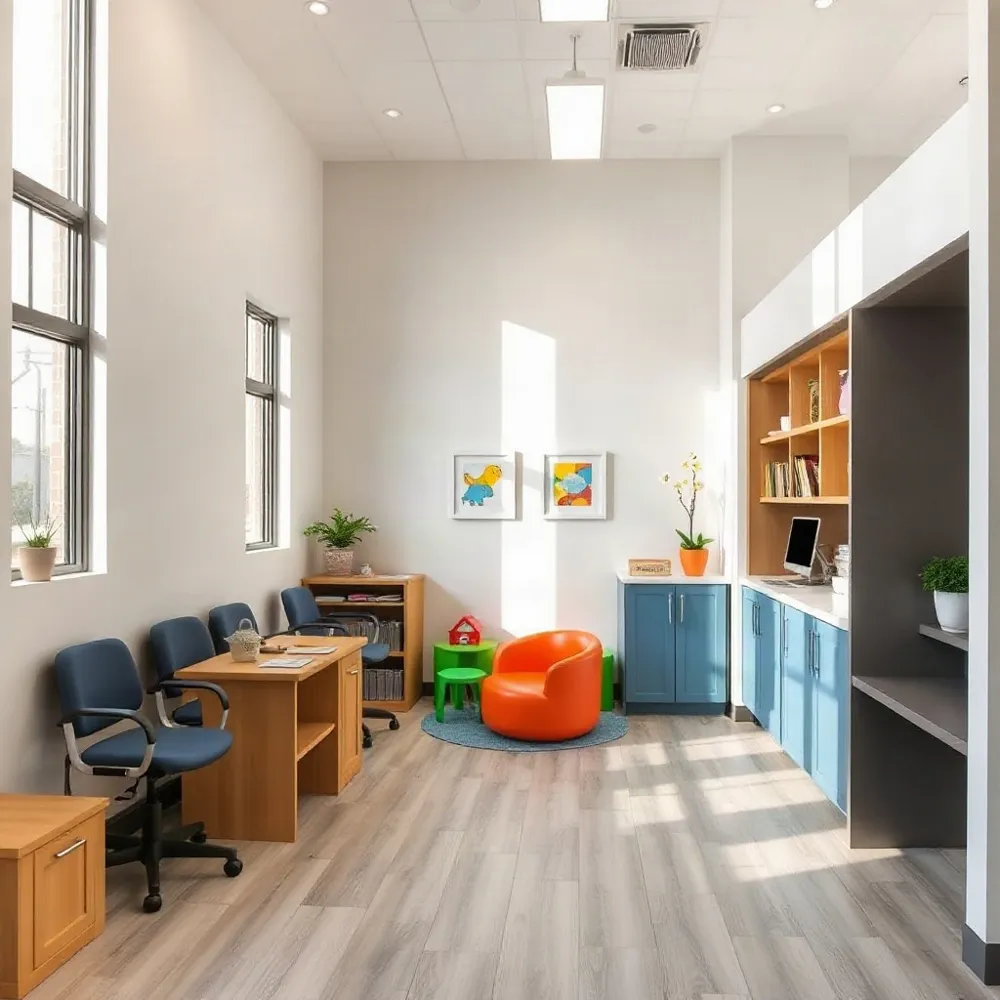
Welcome to a New Era of Patient‑Centered Dental Care
At Veenstra Family Dental, our mission is to blend cutting‑edge technology with genuine empathy, creating a welcoming atmosphere for patients of every age. Comfort isn’t a luxury—it’s a cornerstone of oral‑health outcomes. Ergonomic chairs with adjustable lumbar support, soothing lighting, and noise‑cancelling headphones reduce physical strain and anxiety, while digital intra‑oral scanners, laser dentistry, and high‑speed cordless handpieces shorten procedure times and minimize discomfort. Clear, jargon‑free explanations and visual aids empower patients, fostering trust and shared decision‑making. By pairing modern, minimally invasive tools with personalized communication and calming amenities such as warm blankets, aromatherapy, and guided breathing exercises, we transform routine visits into a stress‑free, restorative experience. This patient‑centered approach not only eases immediate discomfort but also encourages regular preventive care, ultimately supporting long‑term oral health for the whole family.
Personalized Greeting and Clear Communication
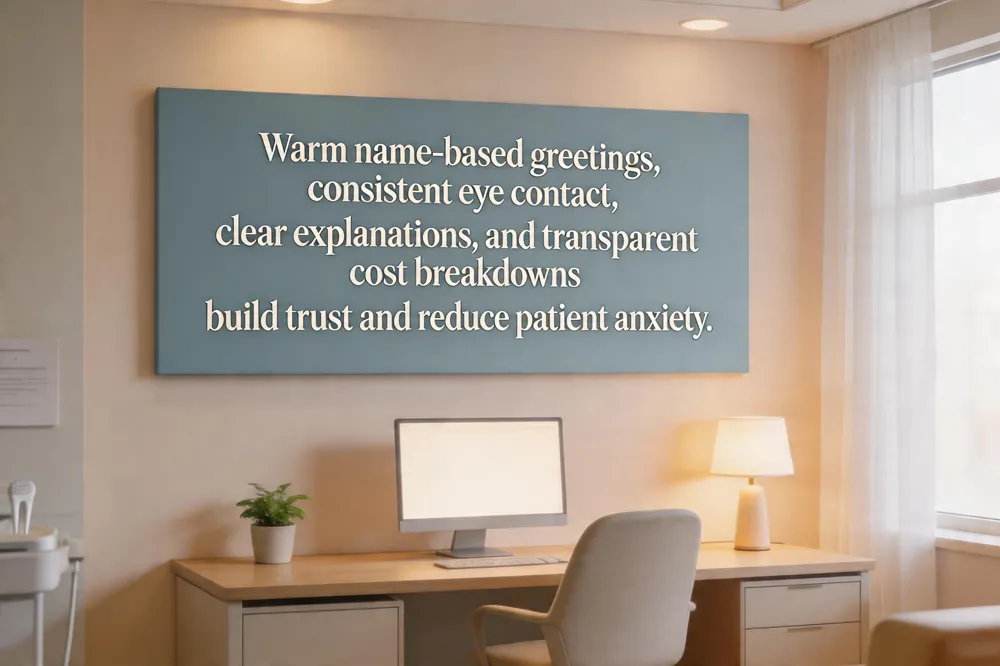 A warm, name‑based greeting sets the tone for a comforting visit. When patients are welcomed by name, they feel valued and more at ease before they even sit in the chair. Staff visibility and consistent eye contact reinforce this personal connection, while clear name tags and a friendly demeanor help patients recognize who is caring for them. Promptly answering call‑button requests shows respect for the patient’s time and reduces anxiety, especially when the waiting area is equipped with soothing music, noise‑cancelling headphones and comfortable seating. Transparent explanations of each procedure step, including visual aids or short videos, demystify treatment and lower fear. Clear cost breakdowns and insurance guidance further build trust.
What are 7 ways to improve patient satisfaction?
- Greet each patient by name and address them personally, creating an immediate connection.
- Maintain eye contact and visible, approachable staff to foster trust.
- Respond quickly to call‑button or assistance requests, minimizing wait time.
- Explain procedures, costs, and after‑care instructions in simple, jargon‑free language with visual aids.
- Offer comfort amenities such as ergonomic chairs, warm blankets, and calming music to reduce physical stress.
- Provide thorough discharge instructions and easy access to follow‑up resources.
- Follow up after the visit with a friendly call or secure message to check on recovery and reinforce commitment to the patient’s well‑being.
Managing Dental Anxiety with Comfort Tools
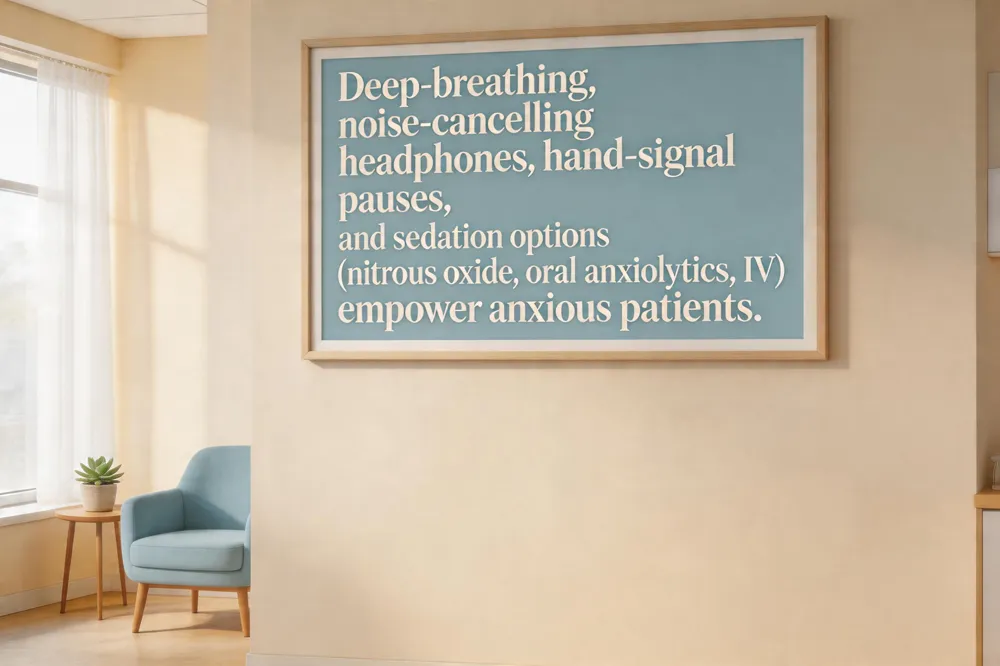 Deep‑breathing and mindfulness techniques, such as a 3‑4‑5 breathing pattern, activate the parasympathetic nervous system and lower heart rate before and during treatment. Noise‑cancelling headphones or soothing music mask the drill’s sound, creating a calmer auditory environment. A simple hand‑signal system lets patients pause the procedure at any moment, giving them control and reducing fear. When needed, Veenstra Family Dental offers a range of sedation options: inhalation nitrous oxide for quick, reversible relaxation; oral anxiolytics for mild‑to‑moderate anxiety; and IV conscious sedation for deeper comfort while keeping the patient awake and able to communicate.
How do people with anxiety go to the dentist? They call the office ahead, discuss concerns, and schedule extra time. During the visit they use breathing exercises, headphones, or a hand signal, and can choose nitrous oxide, oral sedatives, or IV sedation. A nurse stays nearby for reassurance.
What are common dental anxiety symptoms? Rapid heartbeat, sweating, trembling, shortness of breath, nausea, dizziness, dread, panic, crying, avoidance, or aggression.
How can patients calm dental anxiety before a visit? Discuss worries with the team, pick a convenient time, avoid caffeine, practice deep‑breathing or guided imagery, bring a comfort item, and consider a friend or family member for support. If needed, ask about nitrous‑oxide or other sedation options.
Child‑Friendly Strategies for a Stress‑Free Visit
 What strategies help children overcome dental anxiety?
Use the tell‑show‑do approach, keep appointments short, schedule them when the child is well‑rested, and provide positive reinforcement like stickers or a small reward.
What is the rule of 7 in dentistry?
The "rule of 7" guides parents to key milestones: a baby’s first tooth typically erupts by 7 months, the first permanent tooth appears around age 7, and an orthodontic evaluation should be completed by age 7 to ensure optimal oral health.
Our pediatric team at Veenstra Family Dental is trained in these techniques to make every visit safe, comfortable, and confidence‑building.
Financial Options and Access to Care
 Understanding the financial side of full‑mouth extractions and dentures helps patients plan confidently. A clear cost breakdown, insurance possibilities, low‑income assistance, and personalized plans ensure everyone can achieve a comfortable smile.
How much does it cost to have all teeth removed and dentures placed in the United States?
The total cost varies by extraction type and denture choice. Simple extractions run $150‑$250 per tooth; surgical extractions $400‑$800 each. A conventional acrylic full‑arch denture costs $1,200‑$2,500 per arch, while implant‑supported dentures range $3,500‑$6,000 per arch. Fixed All‑on‑4 solutions can reach $15,000‑$30,000 per arch. Adding extraction fees, most patients budget $3,000‑$8,000 for removable dentures and $10,000‑$35,000 for implant‑based options. Veenstra Family Dental creates individualized treatment plans, reviews insurance coverage, and offers flexible financing.
How can low‑income patients obtain free or reduced‑cost permanent dentures?
First, check Medicaid dental benefits, which often cover permanent dentures at little or no cost. If Medicaid isn’t available, contact local health departments or community health centers that run grant programs. Dental schools (e.g., Rutgers, Princeton) provide supervised care at reduced prices, and charities such as Smiles Change Lives and the ADA Foundation award dentures to qualifying adults. Clinical trials may also supply free dentures. Veenstra Family Dental assists patients in verifying eligibility, completing paperwork, and connecting with these resources.
Modern Technology, Ergonomic Design, and Pain Management
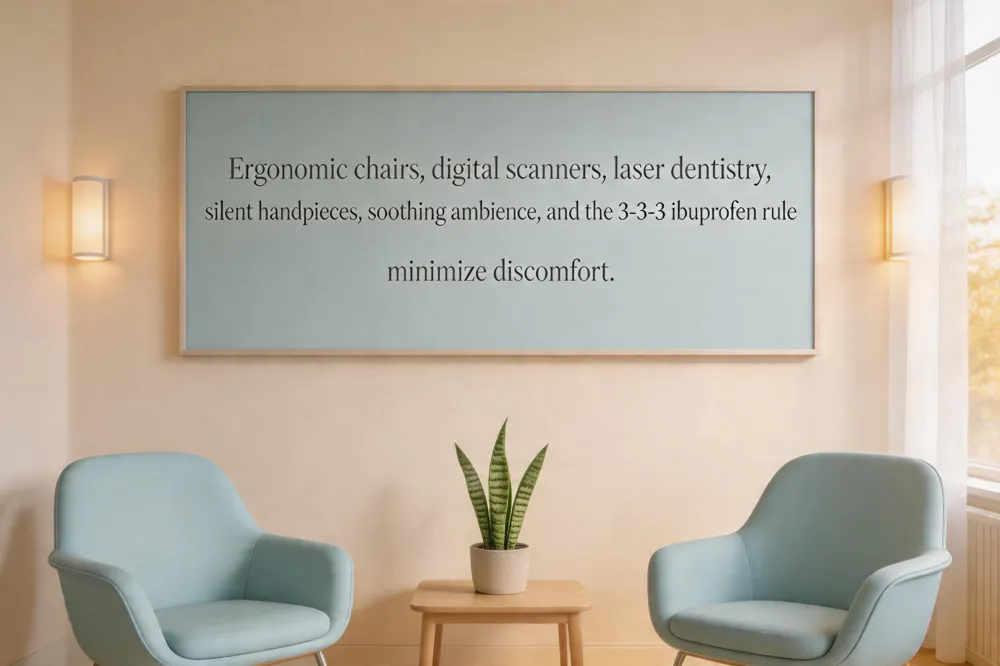 At Veenstra Family Dental, patient comfort begins the the chair. Our ergonomic dental chairs feature adjustable headrests, lumbar support, and plush memory‑foam cushions, allowing every patient—child or adult—to sit in a relaxed, pain‑free position throughout treatment.
Modern, minimally invasive technology further eases the experience. Digital intra‑oral scanners eliminate uncomfortable impression trays, while laser dentistry and silent, high‑speed handpieces reduce noise, vibration, and procedure time. Noise‑reduction equipment, such as sound‑proofing panels and noise‑cancelling headphones, paired with soft lighting, calming music, and subtle aromatherapy, creates a spa‑like ambience that soothes the nervous system.
For post‑procedure pain, we recommend the 3‑3‑3 rule: take three 200 mg ibuprofen tablets every three hours, for up to three days, unless your dentist advises otherwise. This guideline helps control inflammation while minimizing medication overuse.
Our team communicates each step clearly, offers distraction tools like headphones and stress balls, and monitors comfort continuously, ensuring a personalized, anxiety‑free visit for patients of all ages.
Follow‑Up Care, Education, and Ongoing Support
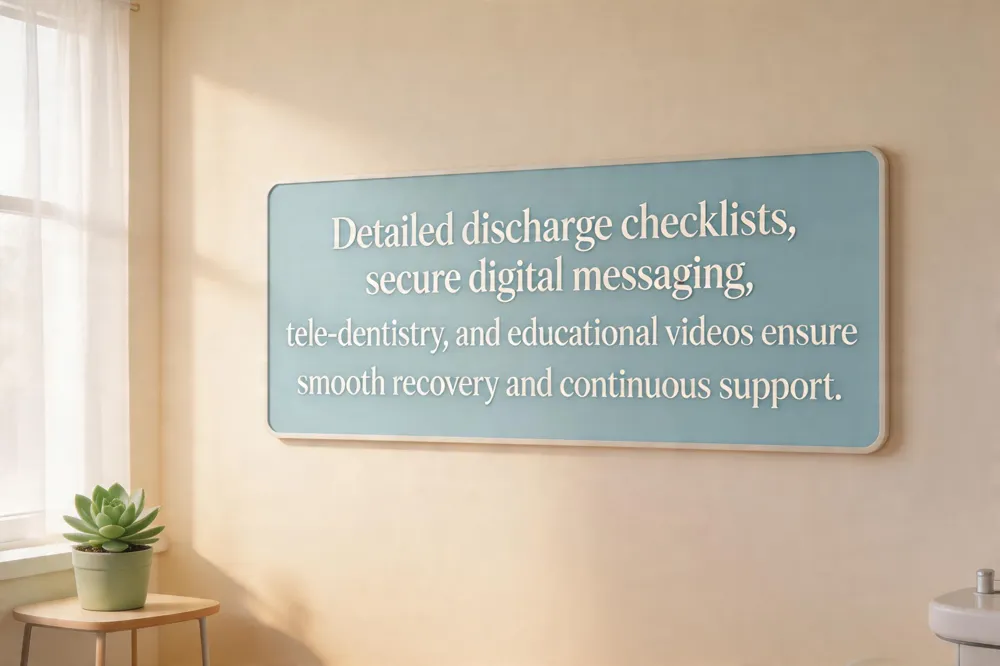 A smooth transition from the dental chair to home begins with clear discharge instructions and a concise checklist that outlines medication schedules, diet recommendations, and signs of complications to watch for. Modern practices enhance this phase with secure digital messaging platforms, allowing patients to send post‑visit questions and receive timely, encrypted responses from the dental team. Tele‑dentistry and virtual check‑in systems further reduce anxiety by offering quick remote assessments, especially when a complication arises or a follow‑up is needed. To empower patients, many offices provide short education videos and visual aids that explain proper oral‑care techniques, what to expect during healing, and how to manage any lingering discomfort.
What are common dental anxiety symptoms? Patients with dental anxiety often exhibit physical signs such as a rapid or pounding heartbeat, sweating, trembling, shortness of breath, nausea, stomach discomfort, or dizziness that can lead to fainting. Emotionally, they may feel intense dread, panic, or cry, while behaviorally they might avoid appointments, use humor or aggression to mask fear, or withdraw from the dental team. Recognizing these symptoms enables dentists to tailor supportive strategies and create a more comfortable experience.
Commitment to Comfort, Care, and Confidence
At Veenstra Family Dental we treat every visit as a holistic experience that blends modern technology with a soothing atmosphere. Our ergonomic chairs with adjustable headrests, lumbar support, and plush cushions keep patients of any age comfortably seated, while noise‑cancelling headphones, soft lighting, and gentle music mask the sounds of drills. Clear, jargon‑free explanations—often supported by intra‑oral scans or short videos—give patients a transparent view of each step, and a simple hand‑signal system lets them pause whenever needed. Minimal‑invasive tools such as digital scanners, laser dentistry, and silent high‑speed handpieces shorten treatment time and reduce vibration, further easing anxiety. We also offer tailored anxiety‑reduction options, from guided breathing exercises to nitrous‑oxide or oral sedation, and provide personal comfort kits (blankets, pillows, stress balls). Ready to feel relaxed and confident? Schedule a personalized appointment today and discover how Veenstra’s patient‑centered approach makes dental care a calm, welcoming experience.