Why Shade and Texture Matter in Modern Dentistry
Today’s patients expect their front‑tooth restorations to look just like their natural teeth. Matching the hue, value, and chroma (shade) while reproducing the smooth, glossy surface of enamel (texture) creates a seamless smile that feels authentic and boosts confidence. Accurate shade and texture also protect the restoration’s longevity, reducing discoloration and the need for frequent adjustments. At Veenstra Family Dental in Midland Park, NJ, our compassionate team combines digital shade‑matching devices, nanohybrid composites, and meticulous layering techniques to achieve both perfect color and natural feel. By isolating the field with a rubber dam and using high‑intensity LED curing lights, we ensure a durable bond and a result that patients of ages love and trust.
Mastering Shade Selection: From Value to Final Hue
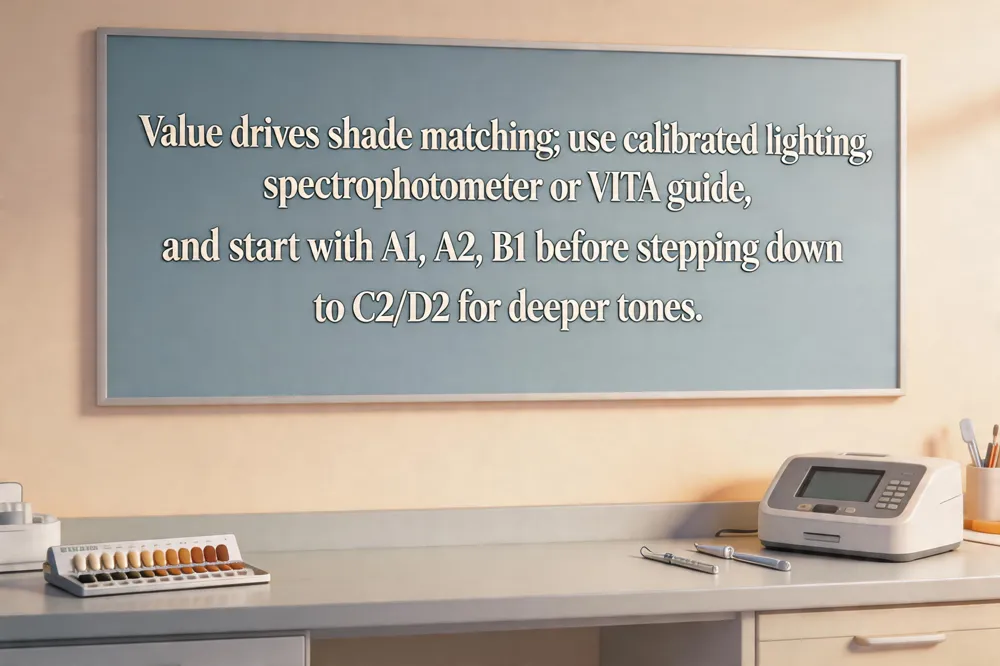 Accurate shade matching begins with value, the lightness or darkness of the tooth, because the eye perceives even the differences instantly. In Veenstra Family Dental we first clean the tooth, isolate it with a rubber dam, and assess the middle third under calibrated 5500 K lighting (or natural north‑facing daylight). Using a digital spectrophotometer or a VITA Classical guide, we select the most common shades A1, A2, and B1—A1 for light, translucent teeth; A2 for medium tones; B1 for modestly darker or yellowish teeth. When a patient’s dentition is deeper or more saturated, we step down to shades such as C2 or D2 and fine‑tune with custom shade tabs. What are the best shades for composite bonding? The most frequently chosen are A1, A2, and B1, covering the majority of natural tooth colors in the U.S.; darker cases may require C2/D2. What is the most noticeable factor in shade matching? Value is paramount—its correct determination drives a seamless, lifelike restoration. What should be considered when selecting shade for an anterior composite restoration? Match value first, then adjust chroma and hue, evaluate under standardized lighting, consider thickness and translucency, and confirm with a try‑in mock‑up before final cure. This systematic, patient‑centric approach ensures consistent, natural results for every age group.
From Macro‑Fill to Nano‑Hybrid: Evolution of Dental Composites
 Dental composites have come a long way. Early macro‑filled materials used large particles that gave good strength but a rough surface that didn’t blend well with natural teeth. The next generation—micro‑filled composites—introduced tiny fillers, creating a smooth, glossy finish ideal for front‑to restorations, though they were less durable. Hybrid composites combined both sizes to strike a balance of strength and polishability, making them a versatile choice for many cases. Today, nano‑filled and nano‑hybrid composites use nanoscale fillers that provide excellent polish retention, high fracture resistance, and a translucency that mimics natural enamel. The newest “omnichrome” or bulk‑fill nano‑hybrid systems allow deep, fast curing while maintaining color stability. For anterior smiles, dentists often select nano‑filled or layered shade systems to match hue, value, and chroma, while posterior restorations benefit from hybrid or bulk‑fill composites that prioritize strength and wear resistance. At Veenstra Family Dental in Midland Park, NJ, we combine these modern materials with digital shade‑matching and compassionate, family‑focused care to deliver personalized, lasting aesthetics for patients of all ages.
Flowable Composites and Incremental Placement: Building Strong Foundations
 At Veenstra Family Dental we use low‑viscosity flowable composites as a flexible foundation for small defects and liner applications. Their thin consistency lets the material flow into the deepest pits and margins, sealing the cavity while providing a shade that blends with surrounding teeth. Because they contain a higher resin‑to‑filler ratio, they cure quickly and are ideal for Class V lesions or shallow preparations.
Incremental placement builds the restoration layer by layer, usually no thicker than 2 mm. Each thin increment is light‑cured before the next is added, which controls polymerization shrinkage, improves depth of cure, and reduces marginal gaps. Techniques such as horizontal or snow‑plow layering allow precise contouring and optimal stress distribution. Using a rubber dam for isolation and high‑intensity LED lights (≥1000 mW/cm²) ensures complete cure and a smooth, enamel‑like surface that patients love.
Layering and Stamp Techniques: Replicating Natural Tooth Anatomy
 At Veenstra Family Dental we use a precise, step‑by‑step layering protocol to recreate the natural dentin‑enamel‑translucent architecture of anterior teeth. First a high‑opacity dentin‑shade composite is placed to rebuild the bulk of the tooth and cured. Thin enamel‑shade layers, each more translucent, are then added and cured, allowing the restoration to mimic the natural gradation of value, chroma and translucency. The final surface is polished with nano‑filled polishing kits to achieve a gloss that matches natural enamel texture.
The stamp technique captures the tooth’s original occlusal anatomy with a silicone or flowable‑resin stamp. After the cavity is filled, the stamp is pressed onto the uncured composite and light‑cured, reproducing cusps, fissures and contacts in one step. This saves chair‑time, improves marginal accuracy and reduces the need for extensive carving.
Tools for seamless texture include nanohybrid composites, progressive polishing discs, silicone points and diamond‑impregnated pastes, all of which give a smooth, stain‑resistant surface.
Clinical Protocols for Consistent Anterior Restorations
 Achieving a natural‑looking, long‑lasting anterior composite restoration begins with meticulous isolation. At Veenstra Family Dental we place a rubber‑dam to keep saliva and debris away, creating a dry field that protects the bond and preserves shade accuracy. Once the tooth is prepared, we use high‑intensity LED curing lights (≥1000 mW/cm²) to fully polymerize each thin composite increment, ensuring deep cure without compromising color or strength. After shaping, the restoration is refined with a step‑down polishing system—starting with coarse silicon carbide brushes or diamond discs and progressing to fine polishing pastes and rubber points—to replicate the smooth, glossy texture of natural enamel (Ra < 0.2 µm). Finally, we educate patients on daily oral‑hygiene habits, avoidance of staining foods, and regular professional polishing appointments to maintain the matched shade and surface shine for years to come.
Integrating Technology and Business Principles at Veenstra Family Dental
 At Veenstra Family Dental in Midland Park, NJ, state‑of‑the‑art digital shade‑matching devices and intra‑oral scanners give patients a precise, natural‑looking smile. These tools capture exact Lab* values, ensuring the composite’s hue, value, and chroma match the surrounding teeth under standardized lighting. The practice follows the 4 P’s of composite dentistry: Potential – using advanced nanohybrid composites that mimic enamel texture; Precision – layering dentin, enamel, and translucent shades with a spectrophotometer guide; Predictability – employing rubber‑dam isolation and LED curing lights for consistent bond strength; and Profitability – delivering durable, aesthetic results that reduce retreatments. For post‑operative comfort, Veenstra applies the 3‑3‑3 rule: three 200 mg ibuprofen tablets every three hours, for up to three days. The newest filling technique, SonicFill, uses sonic vibration to flow a nano‑filled composite into the cavity, minimizing drilling, cutting chair time, and enhancing patient comfort while achieving a seamless, long‑lasting restoration.
Achieving Seamless Aesthetics with Advanced Composite Techniques
Successful anterior composite restorations rely on three pillars: precise shade matching, realistic texture, and strategic layering. Matching hue, value and chroma under standardized lighting ensures the restoration blends seamlessly with neighboring teeth, while nanofilled composites and polishing systems reproduce the glossy, enamel‑like surface. Incremental layering of dentin, enamel and translucent shades recreates natural depth and opalescence, and proper rubber‑dam isolation protects the bond and color stability. At Veenstra Family Dental in Midland Park, NJ, we combine digital spectrophotometers, LED curing lights and compassionate care to deliver consistent, lifelike results for patients of every age. We invite you to discover how modern composite techniques can give you a durable, beautiful smile that feels as natural as your own teeth today.