One Practice, Every Generation: Simplifying Dental Health for Your Family
Defining the Multigenerational Advantage
Family dentistry represents a comprehensive approach to oral care, designed to serve every member of your family from infancy through the senior years. This model consolidates your family's dental needs into a single, trusted practice. It eliminates the logistical challenge of coordinating care between different pediatric, adult, and geriatric specialists. The core benefit is profound simplicity: one location, one dental team, and one consistent philosophy of care for your entire household. This structure fosters a sense of community and shared responsibility for oral health, making regular dental visits a coordinated family activity rather than a series of disjointed appointments.
A Lifelong Partnership: Continuity of Care and Trust
At the heart of family dentistry is the development of a long-term, trusting relationship between your family and the dental team. Seeing the same professionals for years, and even decades, allows them to build an unparalleled understanding of your collective dental history. They become familiar with individual personalities, anxieties, and preferences. This continuity is invaluable for spotting hereditary patterns, such as a predisposition to gum disease or specific alignment issues, enabling proactive, personalized care. For patients, especially children and seniors, this familiarity dramatically reduces anxiety and builds a foundation of comfort, making dental visits a positive experience rather than a source of stress.
From First Tooth to Wisdom Teeth: Age-Specific Expertise Under One Roof
A family dentist is trained to address the unique oral health needs of each life stage. This expertise ensures every family member receives age-appropriate care without the need for referrals to separate offices.
- For Children: Care begins with the first tooth or by the first birthday. Services include gentle exams, preventive fluoride treatments, dental sealants to protect grooves from decay, and early assessments for bite and alignment. The goal is to establish a positive, fear-free foundation for a lifetime of healthy smiles.
- For Teens & Adults: As needs evolve, the practice manages everything from routine cleanings and cavity prevention to more complex restorative work like crowns or bridges. They coordinate orthodontic evaluations, wisdom tooth assessments, and provide cosmetic consultations, offering a seamless transition through adulthood.
- For Seniors: Family dentistry adapts to address age-related concerns such as dry mouth (a common side effect of medications), gum disease, root decay, and tooth loss. They provide compassionate solutions including dentures, dental implants, and tailored gum therapies to maintain function, comfort, and overall health.
The Cornerstone of Prevention for Lasting Health
Prevention is the guiding principle of family dentistry. The focus extends beyond fixing problems to actively preventing them through consistent, proactive care. This includes the essential regimen of twice-yearly checkups and professional cleanings for everyone. These visits allow for the early detection of issues like small cavities, early gum disease, or signs of oral cancer, when treatment is simplest and most cost-effective. Furthermore, the dental team acts as educators for the whole family, providing tailored advice on effective brushing and flossing techniques, nutritional guidance, and the importance of protective products like fluoride toothpaste and mouthguards for sports.
Technology, Comfort, and Convenience for Busy Families
Modern family dental practices integrate advanced technology to enhance comfort, accuracy, and efficiency. Digital X-rays use significantly less radiation than traditional films and provide immediate, detailed images. Intraoral cameras allow patients to see what the dentist sees, demystifying procedures. Many offices also utilize tools for early cavity detection and offer minimally invasive treatments like air abrasion. From a scheduling perspective, the convenience is unmatched. Practices often allow for block or back-to-back appointments, enabling a parent, child, and grandparent to be seen in a single trip, saving countless hours over the year. Centralized record-keeping ensures your complete dental history is always accessible, streamlining care and emergency management.
Beyond the Clinic: Education, Community, and Whole Health
A family dental practice often serves as a health hub for the community. Dentists emphasize the critical mouth-body connection, educating patients on how oral health impacts systemic conditions like diabetes, heart disease, and stroke. They empower families with knowledge, offering workshops, screenings, and resources that promote wellness beyond the dental chair. This holistic, educational approach encourages accountability and reinforces healthy behaviors as a shared family value. By supporting local health initiatives, family dentistry extends its positive impact, fostering a culture of health awareness that benefits patients and the wider community alike.
| Topic Covered | Primary Benefit | Example Services or Actions |
|---|---|---|
| Multigenerational Model | Simplified logistics & unified care | Single location for all family appointments |
| Continuity of Care | Builds trust & enables personalized plans | Tracking hereditary conditions over decades |
| Age-Specific Expertise | Tailored treatments for each life stage | Sealants for kids, gum therapy for seniors |
| Preventive Focus | Stops problems early, promotes health | Regular cleanings, patient education, screenings |
| Modern Convenience | Uses tech for comfort, eases scheduling | Digital X-rays, block booking for family visits |
| Holistic Health Role | Links oral & overall wellness, educates community | Discussing diet, managing health condition links |
A Lifelong Partnership: Continuity of Care and Trust
The Value of a Familiar Smile
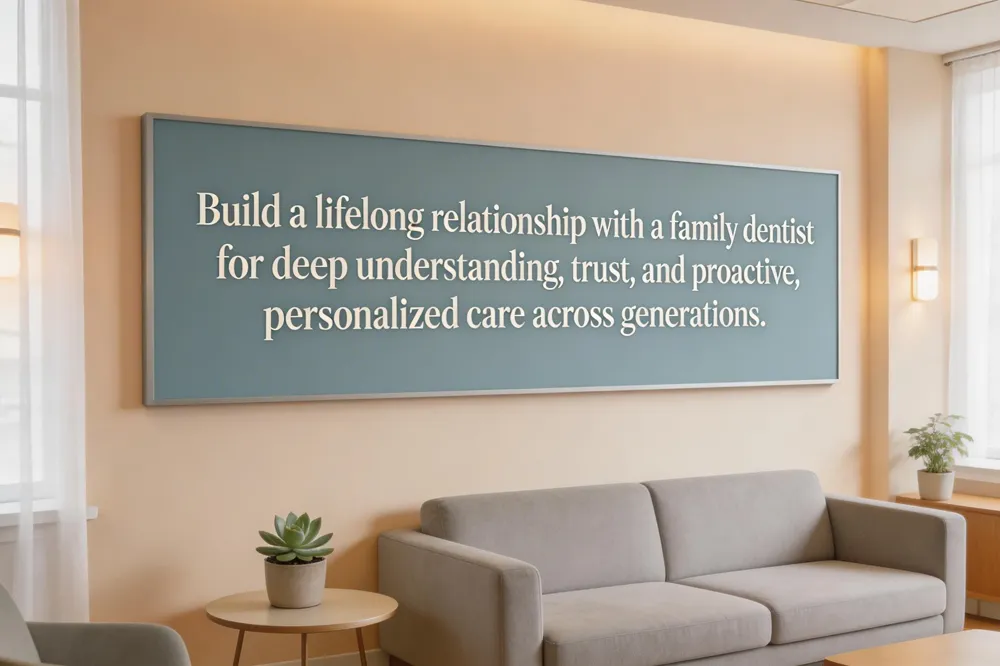
One of the most significant benefits of a family dentist is the ability to build a lifelong relationship with a dentist. When every family member, from grandparents to grandchildren, sees the same family dentist, that provider develops a deep understanding of your family's unique oral health landscape. This continuity of care fosters a profound sense of comfort and trust and familiarity, which is especially important for reducing children's dental anxiety and ensuring consistent, high-quality dental care at every location for older adults.
Understanding Your Family's Dental Story
A family dentist doesn't just treat individual patients; they manage a collective history. By seeing patients across generations, dentists can spot hereditary patterns in dental health, which is a key part of multigenerational oral health support. They might notice a tendency towards gum disease, a pattern of tooth misalignment, or a propensity for cavities. This knowledge allows for proactive, personalized treatment plans. For example, knowing a teenager's parent had early gum disease might prompt more frequent cleanings or specific hygiene coaching for that teen. This is the Family Dentistry Promotes Multigenerational Oral Health advantage in action, helping in preventing generational dental issues.
Efficient and Personalized Treatment Planning
Centralized care coordination for families and record-keeping is a major convenience and a powerful tool for effective care. With all family dental histories in one place, your dentist can quickly access information, track progress over decades, and avoid repeating tests or questions. This efficiency means more time is spent on actual care and personalized discussions. During an emergency, this comprehensive history allows for quicker, more accurate diagnosis and treatment, as the dentist already understands underlying conditions, past procedures, and potential sensitivities, showcasing the benefits of having a trusted family dentist.
Building a Legacy of Healthy Habits
This long-term partnership goes beyond fixing problems; it's about building a foundation. The trust established with a family dentist encourages open communication. Patients of all ages are more likely to share concerns, ask questions, and adhere to recommended treatments. Parents can get consistent advice on their children's oral development, from teething to orthodontics. Seniors can discuss age-related changes like dry mouth or implant options with a professional who knows their entire dental journey. This continuity transforms the dentist from a service provider into a trusted family dental provider, fostering lifelong oral health management.
Key Aspects of Long-Term Family Dental Care
| Feature | Benefit for Children & Teens | Benefit for Adults & Seniors | Overall Family Advantage |
|---|---|---|---|
| Hereditary Pattern Tracking | Early intervention for inherited conditions. | Informed management of chronic issues. | Proactive, personalized prevention plans. |
| Centralized Health Records | Seamless tracking of developmental milestones. | Efficient management of complex treatment history. | Saves time, avoids redundant tests and questions. |
| Established Trust & Comfort | Reduces fear, builds positive lifelong associations. | Encourages open discussion of sensitive age-related issues. | Creates a safe, Welcoming Environment for Family Dentistry for all. |
| Consistent Preventative Guidance | Establishes strong hygiene habits from the start. | Tailored advice for changing oral health needs with age. | Unified family approach to maintaining health. |
| Coordinated Emergency Care | Quick, calm handling of childhood dental injuries. | Rapid response informed by full medical/dental history. | Peace of mind knowing all records are in one trusted place. |
From First Tooth to Wisdom Teeth: Age-Specific Expertise Under One Roof
The Family Dentist's Age-Appropriate Skill Set
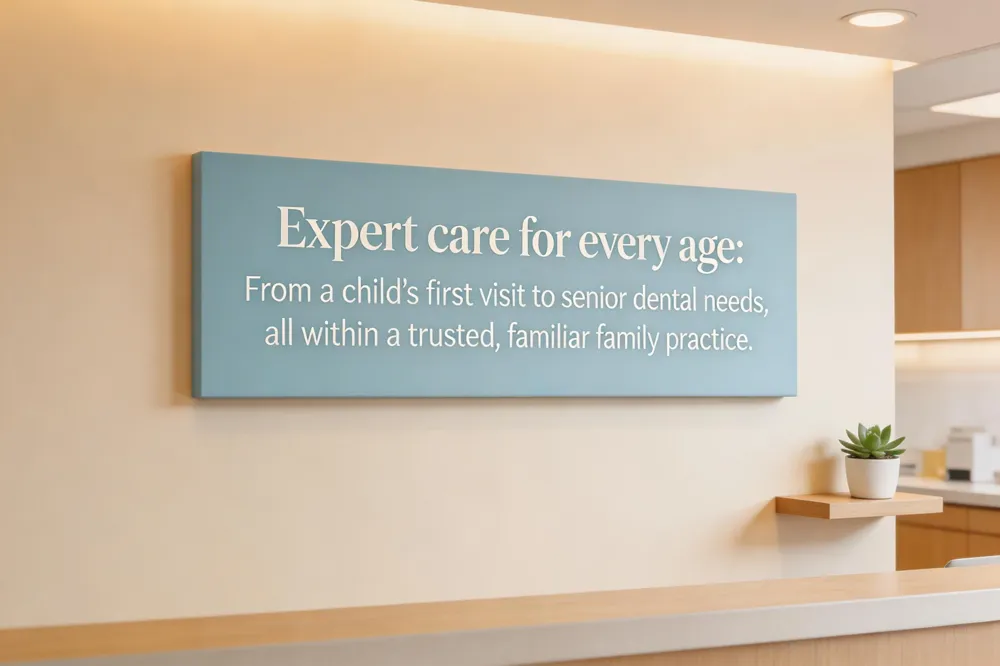
A family dentist is more than a general practitioner. They possess specialized training to provide comprehensive care for all ages, covering the full spectrum of dental needs that arise from infancy through the senior years. This expertise is central to their ability to treat every member of your family effectively and with deep understanding. Unlike practices that focus on a single age group, a family dental practice is equipped to manage the unique developmental milestones and age-related conditions of patients across generations, offering multigenerational oral health support.
Caring for Children: Building a Healthy Foundation
For infants, toddlers, and children, family dentists provide gentle, early care. The American Dental Association recommends a child's first dental visit by their first birthday or when the first tooth appears. This early introduction helps familiarize children with the dental environment in a positive, low-stress way, leveraging a kid-friendly waiting areas and gentle chairside manner. Family dentists perform pediatric-specific services such as early assessments for tooth alignment and decay, gentle cleanings tailored to small mouths, and protective treatments like professional fluoride applications and dental sealants. These sealants act as a barrier on the chewing surfaces of back teeth, dramatically reducing the risk of cavities in hard-to-clean areas. This approach is part of a family-focused dental approach that builds comfort and trust.
Guiding Teens and Young Adults Through Transitional Years
As children grow into teenagers, their dental needs evolve. Family dentists are adept at managing this transitional phase as part of dental care for children and teens. They provide regular evaluations for wisdom teeth, often coordinating referrals for extraction when necessary. They also offer orthodontic evaluations for teens and can manage treatments like clear aligners or traditional braces, either in-house or through trusted specialist networks. This period is also crucial for reinforcing positive oral hygiene habits as teens gain more independence, ensuring they understand the connection between diet, hygiene, and long-term oral health, a key aspect of preventive dentistry for the whole family.
Comprehensive Care for Adults and Seniors
For adults, family dentistry for adults and seniors provides consistent maintenance and addresses common issues like cavities, gum disease, and tooth wear. Services include routine cleanings, restorative work like fillings and crowns, and cosmetic treatments. As patients enter their senior years, the focus adapts to address age-specific concerns. Family dentists are skilled in managing conditions prevalent in older adults, such as dry mouth (which can increase decay risk), gum disease, and tooth loss, offering geriatric dental care for seniors. They offer solutions ranging from specialized gum care to restorative options like dentures, bridges, and dental implants, always considering the patient's overall health and any related systemic conditions, which is part of tailored care for all life stages.
A Unified, Evolving Treatment Philosophy
The true value of this age-specific expertise lies in its seamless integration. A family dentist doesn't just treat a child and an adult as separate patients; they see them as part of a continuum. They understand how early childhood habits influence adult oral health and how hereditary conditions might manifest across generations. This holistic family-centered approach allows for treatment plans that are not only appropriate for a patient's current age but also proactive for their future dental journey, supporting lifelong oral health management.
| Life Stage | Common Services & Focus Areas | Unique Benefits in a Family Practice Setting |
|---|---|---|
| Infants & Children (First tooth to ~12) | First exams, fluoride treatments, sealants, cavity prevention, habit counseling (e.g., thumb-sucking). | Early, positive exposure reduces lifelong dental anxiety. Parents receive guided education as part of family dentistry education for parents and children. |
| Teens & Young Adults (~13-21) | Wisdom tooth evaluations, orthodontic care, sports mouthguards, reinforcement of hygiene independence. | Continuity from childhood care; dentist already understands dental history and growth patterns, ensuring consistent dental care. |
| Adults (22-64) | Routine cleanings, restorative work (fillings, crowns), gum disease management, cosmetic procedures. | Consistent preventive care helps catch issues early. Dentist understands personal and family health history, enabling personalized care with family history. |
| Seniors (65+) | Management of dry mouth, gum disease, tooth loss; treatments include dentures, implants, and oral cancer screenings. | Compassionate care adapted to changing health needs; focus on maintaining nutrition and quality of life, addressing geriatric dental care for seniors. |
The Cornerstone of Prevention for Lasting Health
A Proactive Philosophy
Family dentistry is fundamentally built on a preventive philosophy. Instead of waiting for problems to arise, these practices focus on stopping them before they start. This proactive stance is the most effective and economical way to maintain oral health for every generation. For families, this means collectively working to avoid painful, complex, and expensive dental issues down the road.
Building Healthy Habits from the Start
Preventive care begins with establishing excellent daily routines. Family dentists are educators, teaching patients of all ages the proper techniques for brushing and flossing. They use clear, age-appropriate language to explain why these habits matter. This education is tailored; a dentist might show a child how to brush with a fun, interactive model, while discussing the impact of diet on gum health with a grandparent. By empowering the whole family with knowledge, healthy behaviors become shared, reinforced activities at home.
The Power of Regular Check-Ups and Cleanings
The core of preventive dentistry for the whole family is the regular dental visit, typically recommended every six months. These appointments are far more than just a quick polish. They are comprehensive assessments that include:
- Professional Cleanings: Dental hygienists remove plaque and tartar that regular brushing cannot, preventing the buildup that leads to cavities and gum disease.
- Early Detection Screenings: Dentists perform thorough examinations to spot the earliest signs of tooth decay, gum inflammation, oral cancer, and other issues. This early detection of dental issues is a key benefit of family dentistry.
- Diagnostic Imaging: Technologies like digital X-rays allow dentists to see problems developing between teeth or below the gum line long before they cause symptoms.
Catching a small cavity early means a simple, minimally invasive filling. Detecting gum disease in its initial stage can prevent bone loss and tooth loss. This early intervention translates to simpler, less invasive, and more affordable treatments for every family member.
Specialized Preventive Treatments by Age
Beyond check-ups, family dentistry offers specific preventive treatments designed for different life stages:
| Treatment | Primary Age Group | Purpose | Key Benefit |
|---|---|---|---|
| Dental Sealants | Children & Teens | Applied to chewing surfaces of back teeth. | Creates a barrier against decay-causing bacteria. |
| Fluoride Treatments | All ages, especially children. | Strengthens tooth enamel. | Makes teeth more resistant to acid attacks from plaque. |
| Orthodontic Evaluations | Children & Teens | Assess jaw and tooth alignment. | Guides timely intervention for straighter smiles. |
| Oral Cancer Screenings | Adults & Seniors | Visual and tactile exam of oral tissues. | Enables early detection of potentially serious conditions. |
| Gum Disease Monitoring | Adults & Seniors | Measures pocket depth around teeth. | Prevents progression to periodontitis and tooth loss. |
Linking Oral Health to Overall Wellness
Modern family dentistry embraces a holistic view, recognizing that the mouth is a window to the body's overall health. During preventive visits, dentists are often the first to notice signs of systemic conditions like diabetes, nutritional deficiencies, or osteoporosis, which can manifest as oral symptoms. By maintaining good oral health, families also support their general well-being, reducing risks associated with heart disease, stroke, and complications from diabetes.
The Economic Wisdom of Prevention
Investing in regular preventive care is one of the smartest financial decisions a family can make for its health. The cost of a routine cleaning and exam is significantly lower than the cost of treating a root canal, crown, or gum surgery. By preventing major dental problems, families avoid unexpected, high-cost emergencies and preserve their natural teeth for a lifetime. This approach makes dental care more predictable and manageable within a family budget.
| Preventive Action | Potential Problem Prevented | Long-Term Benefit for Family |
|---|---|---|
| Bi-annual cleanings | Tartar buildup, gum disease | Avoids complex periodontal therapy. |
| Early cavity filling | Deep decay, root infection | Prevents need for root canal or extraction. |
| Routine X-rays | Hidden decay between teeth | Catches issues before they become painful. |
| Sealant application | Cavities in molars | Protects children's teeth during cavity-prone years. |
| Patient education | Poor brushing/flossing habits | Establishes lifelong healthy routines for all. |
Technology, Comfort, and Convenience for Busy Families
Modern Dental Technology Enhances Safety and Precision
Advanced technology is a standard feature in today's family dental practices, elevating the quality and comfort of comprehensive care for all ages. Digital X-rays are a prime example, using up to 90% less radiation than traditional film X-rays, providing parents and seniors with greater peace of mind.
Digital impressions, intraoral cameras, and early cavity detection devices allow for more precise diagnostics. These tools enable dentists to spot potential problems in their earliest stages, often before they cause discomfort, leading to simpler, more conservative treatments. For restorative work, same-day crown milling technology can create a permanent restoration in a single visit, eliminating the need for temporary crowns and a second appointment.
Creating a Welcoming Atmosphere for All Ages
Family-focused practices intentionally design their spaces to reduce anxiety and create a positive family oriented dental environment. For children, this often means kid-friendly waiting areas equipped with toys, books, and entertainment. The staff is specially trained to communicate with young patients using simple, age-appropriate language and a gentle 'tell-show-do' approach.
For older patients, including seniors who may have had negative dental experiences in the past, the focus is on compassion and patience. A consistent, familiar environment and team help build comfort over time. Many practices also offer amenities for adults, such as sedation options or noise-canceling headphones, to help manage anxiety and ensure a relaxed visit.
Streamlined Scheduling and Logistical Ease
One of the most tangible benefits of a family dentist is the logistical convenience it offers busy households. Parents can schedule back-to-back appointments for multiple family members on the same day, often during a single trip to the office. This block scheduling saves significant time and eliminates the need to coordinate care across different specialists or locations.
Many practices now offer online booking portals and flexible hours, including early mornings, evenings, and weekends, to accommodate work and school schedules. For families with members in multi-location dental networks, this flexibility is amplified, as care can be accessed near work, home, or school with seamless continuity of care.
Centralized Records and Informed Care
Having all family members treated at one practice means dental histories are centralized and easily accessible. This comprehensive record system allows the dental team to track development, monitor changes over time, and identify potential hereditary patterns in conditions like gum disease or tooth alignment.
In an emergency, whether for a child's chipped tooth or a senior's lost crown, having a dentist who knows the full medical and dental history enables faster, more effective treatment. This centralization also simplifies interactions with dental insurance, as all claims are typically managed through one familiar office.
Adapting to Special Needs and Changing Generations
Modern family dental practices are equipped to adapt their approach to meet diverse needs. For patients with special needs, dentists can allow extra time, collaborate closely with caregivers, and modify techniques to ensure a comfortable experience. They are also increasingly providing treatments that bridge oral and overall health, such as screening for and managing sleep apnea with custom oral appliances.
This adaptability ensures the practice can serve the family as it evolves—from treating a toddler's first cavity to providing a grandparent with dental implants—all within a trusted, familiar setting, providing tailored care for all life stages.
| Technology Feature | Patient Benefit | Applicable Age Group |
|---|---|---|
| Digital X-rays & Imaging | Lower radiation exposure, instant results for better diagnosis | All ages, especially children and pregnant patients |
| Intraoral Cameras | Allows patient to see issues, promotes understanding of treatment | Teens and adults for education, all ages for diagnosis |
| Same-Day Crown Milling | Single-visit convenience, no temporary crowns needed | Adults and seniors requiring restorative work |
| Air Abrasion & Laser Dentistry | Often needle-free, minimally invasive treatment options | Great for children and anxious patients of any age |
| Online Scheduling Portals | 24/7 booking, simplifies managing multiple family appointments | Busy parents and adult caregivers |
Beyond the Clinic: Education, Community, and Whole Health

What is the [3-3-3 rule for brushing teeth](. /meet-our-experienced-dental-team-committed-to-your-oral-health#guidelines-and-best-practices-for-maintaining-optimal-oral-health)?
The 3-3-3 rule offers a straightforward framework for maintaining a clean, healthy smile. It encourages brushing your teeth three times a day, ideally after meals, to consistently disrupt plaque and bacteria buildup. Each of these brushing sessions should last for three minutes, providing enough time to clean every surface of your teeth thoroughly. Finally, you should replace your toothbrush every three months, or sooner if the bristles become frayed, to ensure your tool remains effective. While brushing twice daily is the standard minimum, this more proactive routine can be particularly helpful for individuals prone to cavities, those wearing braces, or people managing gum sensitivity.
Expanding the Family Circle Through Education
A family dental practice's role extends far beyond treating immediate dental issues. It acts as a central hub for patient education tailored to every generation. For children, this involves fun, interactive lessons on proper brushing techniques and the importance of a healthy diet. For teenagers and adults, education might focus on the connection between oral health and overall health, such as diabetes or heart health. For seniors, discussions often center on managing age-related changes like dry mouth. This generational education empowers each family member with knowledge, turning the home into an extension of the dental office where healthy habits are shared and reinforced.
Fostering Accountability and Shared Habits
When an entire family attends the same practice, oral health becomes a collective goal. Scheduling back-to-back family appointments isn't just a time-saver; it creates a shared experience. Children see their parents and grandparents prioritizing check-ups, which normalizes dental care. Families can discuss what they learned during their visits, compare notes on proper flossing techniques, and encourage one another. This built-in support system fosters accountability, making it more likely that everyone will adhere to good hygiene practices between visits. It transforms individual responsibility into a team effort, strengthening family bonds through a common focus on wellness.
The Oral-Systemic Health Connection
Modern family dentistry embraces a holistic view, recognizing that the mouth is a window to the body's overall health. Dentists are often the first to detect signs of systemic issues, such as nutritional deficiencies, osteoporosis, or uncontrolled diabetes, which can manifest as oral symptoms. By monitoring patients across decades, a family dentist can track changes that may indicate broader health concerns. This long-term, comprehensive perspective allows for early referrals and coordinated care with other healthcare providers. Educating families on this vital link underscores that dental visits are not just about a bright smile but are a critical component of maintaining whole-body health.
Strengthening Community Wellness
Many family dental practices extend their impact beyond their patient roster through community outreach. These initiatives might include hosting educational workshops at local schools, participating in health fairs with free oral cancer screenings, or partnering with organizations to provide care for underserved populations. These efforts promote widespread oral health awareness and improve access to care. For families, choosing a practice involved in the community means supporting a business that invests in the broader well-being of their neighborhood, aligning personal health with community health.
A Legacy of Health Across Generations
The ultimate benefit of a family-focused dental approach is the establishment of a lasting health legacy. From a child's first tooth to a senior's dental implants, consistent care under one roof builds a detailed familial health history. This continuity allows dentists to identify hereditary patterns, such as a predisposition to gum disease or specific alignment issues, enabling proactive, personalized strategies for each generation. It creates a foundation where positive oral health is not an individual achievement but a family tradition, passed down and nurtured through every stage of life.
| Life Stage | Common Educational Focus | Typical Community Engagement | Family Health Legacy Impact |
|---|---|---|---|
| Children & Teens | Brushing/flossing techniques, cavity prevention, nutritional guidance. | School visit programs, free sealant clinics. | Establishes early positive habits, reduces dental anxiety for life. |
| Adults | Gum disease prevention, oral-systemic health links, cosmetic care options. | Health fair screenings, oral cancer awareness events. | Models proactive care for younger generations, manages hereditary risks. |
| Seniors | Managing dry mouth, caring for dentures/implants, medication interactions. | Partnerships with senior centers, mobile dentistry services. | Provides tailored care that maintains quality of life and nutrition. |
| Whole Family | Shared hygiene practices, importance of regular check-ups, emergency preparedness. | Educational workshops, supporting local health initiatives. | Creates a unified culture of health accountability and continuous care. |
Building a Legacy of Healthy Smiles Together: The Power of Family Dentistry
Defining the Multigenerational Advantage
Family dentistry is built on a simple, powerful principle: providing comprehensive oral care for every generation in one practice. This means infants, children, teens, adults, and seniors can all receive tailored treatment from the same trusted team. This approach transforms dental care from a series of isolated appointments into a coordinated family health strategy.
Unlike seeking separate providers for different age groups, a family dental practice serves as a central hub. It consolidates records, schedules, and care plans, eliminating the logistical puzzle of managing multiple dental relationships. This unified system is the foundation for building lasting oral health across decades.
A Lifelong Partnership: Continuity of Care and Trust
One of the most significant benefits is the continuity of care that develops over years. When a dentist treats multiple generations, they build an unparalleled understanding of your family’s dental history, habits, and even hereditary patterns. This deep familiarity allows for highly personalized and proactive care.
Long-term relationships foster tremendous comfort and trust. Children who grow up visiting the same practice often carry less dental anxiety into adulthood. For seniors, consistent care with a familiar team ensures their changing needs are met with compassion and expertise. This continuity turns the dental office into a known, supportive environment for all.
From First Tooth to Wisdom Teeth: Age-Specific Expertise Under One Roof
A family dentist is trained to handle the unique requirements of each life stage. The practice is equipped to deliver specialized care without requiring referrals to outside offices for common needs. This comprehensive expertise covers the entire lifespan of a family.
- Pediatric Care: This includes early assessments, gentle cleanings, cavity prevention with fluoride treatments and sealants, and guidance on teething and proper hygiene habits from the very first tooth.
- Adolescent & Teen Care: Services adapt to address orthodontic evaluations, wisdom tooth management, sports mouthguards, and reinforcing positive oral hygiene independence.
- Adult Care: Focus shifts to maintaining health with preventive cleanings, restoring function with crowns or fillings, treating gum disease, and offering cosmetic solutions.
- Geriatric Care: Tailored approaches address age-related concerns like dry mouth, gum recession, tooth loss solutions (dentures, implants), and the oral health implications of systemic conditions like diabetes.
The Cornerstone of Prevention for Lasting Health
Preventive care is the engine of family dentistry. The goal is to stop problems before they start through regular check-ups, professional cleanings, and patient education. This proactive stance is more comfortable and cost-effective than treating advanced issues across multiple family members.
Regular visits allow for the early detection of cavities, gum disease, and oral cancer. Furthermore, dentists can often spot early signs of systemic health issues, such as diabetes or nutritional deficiencies, which may first appear in the mouth. This makes dental care a critical component of overall family wellness.
Technology, Comfort, and Convenience for Busy Families
Modern family dentistry integrates advanced technology to enhance care for every age. Digital X-rays significantly reduce radiation exposure, while intraoral cameras allow patients to see what the dentist sees. Tools like laser dentistry enable minimally invasive procedures with greater comfort and faster healing.
Convenience is a major practical benefit. Practices often allow for coordinated scheduling, where appointments for grandparents, parents, and children can be booked back-to-back. This saves families considerable time and simplifies healthcare logistics, making it easier to keep everyone on track with regular care.
Beyond the Clinic: Education, Community, and Whole Health
The role of a family dentist extends beyond the treatment chair. They act as educators for the entire household, offering age-appropriate guidance on brushing, flossing, and nutrition. They empower parents to model and monitor good habits, creating a home environment that supports healthy smiles.
Many family practices also engage with their wider community through health fairs, educational workshops, and preventive programs. This outreach promotes oral health awareness and accessibility. By focusing on collective well-being and fostering a supportive atmosphere, family dentistry helps instill positive attitudes toward oral health that can last for generations.
| Core Principle | Benefit for Children & Teens | Benefit for Adults & Seniors | Practice Implementation Example |
|---|---|---|---|
| Continuity of Care | Builds trust, reduces lifelong anxiety. | Enables monitoring of hereditary/age-related changes. | Single patient record for entire family history. |
| Preventive Focus | Establishes foundational healthy habits. | Catches issues early, preventing complex procedures. | Biannual check-ups and hygiene education for all. |
| Age-Specific Expertise | Manages development from first tooth to braces. | Addresses gum disease, restoration, cosmetic needs. | Dedicated treatment plans for each life stage. |
| Convenience & Comfort | Kid-friendly environment eases fear. | Streamlined scheduling for busy households. | Block appointments for multiple family members. |