Introducing a Comfort‑First Philosophy
A comfort‑first approach places the patient’s physical ease and emotional well‑being at the heart of every dental visit, no matter the age or procedure. Modern practices use gentle techniques, clear communication, and a calming environment to reduce anxiety while delivering high‑quality restorative care. Heat therapy has become a valuable, non‑pharmacologic tool in this philosophy: after the initial 24‑48 hours of post‑surgical swelling, moist warm compresses (15‑20 minutes, 40‑45 °C) improve local blood flow, relax jaw muscles, and provide natural analgesia without risking burns when a cloth barrier is used. Veenstra Family Dental embraces these evidence‑based methods, offering personalized after‑care instructions, optional thermotherapy devices, and a welcoming office staffed by clinicians trained to blend modern technology with compassionate, family‑focused service. This commitment ensures patients experience smoother recoveries, less reliance on medication, and a truly comfortable dental experience.
Heat Therapy Basics and Safety
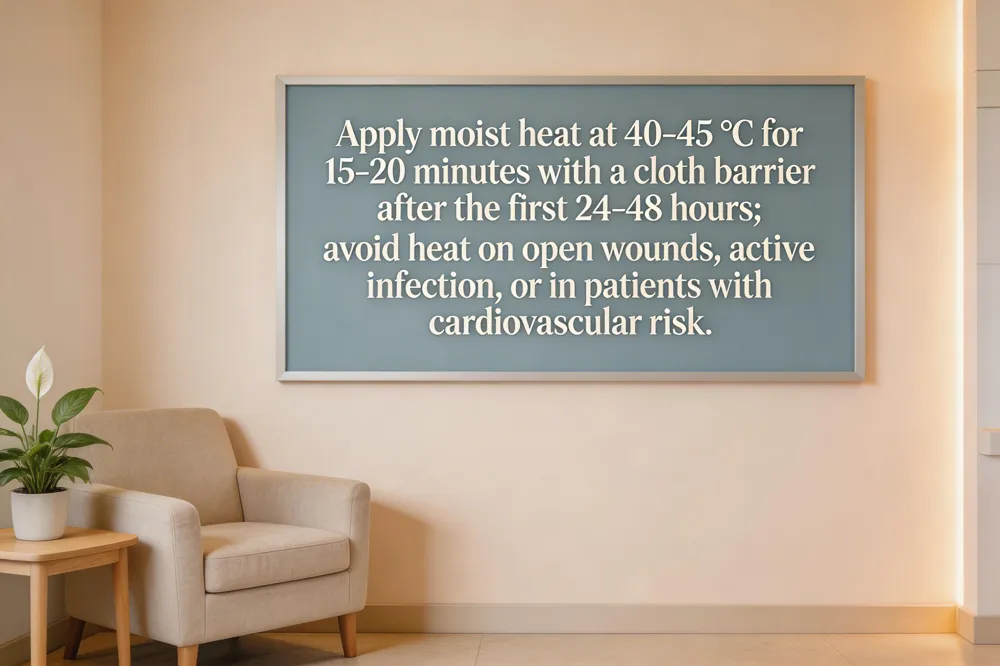 Heat therapy works by widening blood vessels, which boosts local circulation and delivers oxygen, nutrients, and immune cells to sore jaw muscles and surrounding soft tissues. This vasodilation helps relax tight or spasm‑prone muscles, eases dull throbbing aches, and can modestly reduce inflammation once the acute swelling phase has passed.
Safety guidelines – Apply moist heat (warm, damp towel or low‑setting heating pad) for 15‑20 minutes, then wait at least 20 minutes before the next session. Always place a thin cloth between skin and the heat source, keep the temperature between 40‑45 °C (104‑113 °F), and stop if you feel burning, redness, or discomfort.
Potential drawbacks – Over‑heating can cause skin burns, erythema, or increased pain. Heat may also raise heart rate and lower blood pressure, which can be risky for patients with cardiovascular disease. Using heat on fresh wounds, active infection, or swollen tissue can worsen inflammation and delay healing.
When heat is contraindicated – Do not use heat during the first 24‑48 hours after extractions or oral surgery, on open wounds, in the presence of active infection, or in patients with diabetes, peripheral neuropathy, vascular disease, or compromised sensation.
Why does heat help my tooth pain? It relaxes jaw muscles and improves blood flow to the surrounding tissue, easing chronic, low‑level discomfort after the swelling subsides. Sharp, sudden pain or visible swelling responds better to cold therapy.
Disadvantages of heat therapy? Burns, increased inflammation if used too early, and possible cardiovascular strain in vulnerable individuals.
Safety precautions for heat or cold? Never apply directly to skin; limit sessions to 10‑20 minutes; use a barrier; stay hydrated; discontinue if irritation appears; consult a dentist if you have medical conditions.
Does heat help tooth nerve pain? No – heat can exacerbate nerve inflammation; cold compresses are safer for direct tooth pain.
Will heat draw out a tooth abscess? No – heat may worsen infection; seek professional care promptly.
Will a heating pad help a toothache? Only after swelling is controlled, primarily to relax surrounding muscles; it does not treat the underlying cause and should not replace dental evaluation.
Heat Use After Oral Surgery
 Recovering from a tooth extraction or wisdom‑teeth surgery can be uncomfortable, but knowing when and how to useheat therapy can make a big difference.
Timing after extractions – In the first 24‑48 hours, cold packs are the safest choice because they constrict blood vessels, reduce swelling, and protect the clot that forms in the socket. After this initial period, you can begin gentle heat therapy to relax jaw muscles and improve blood flow.
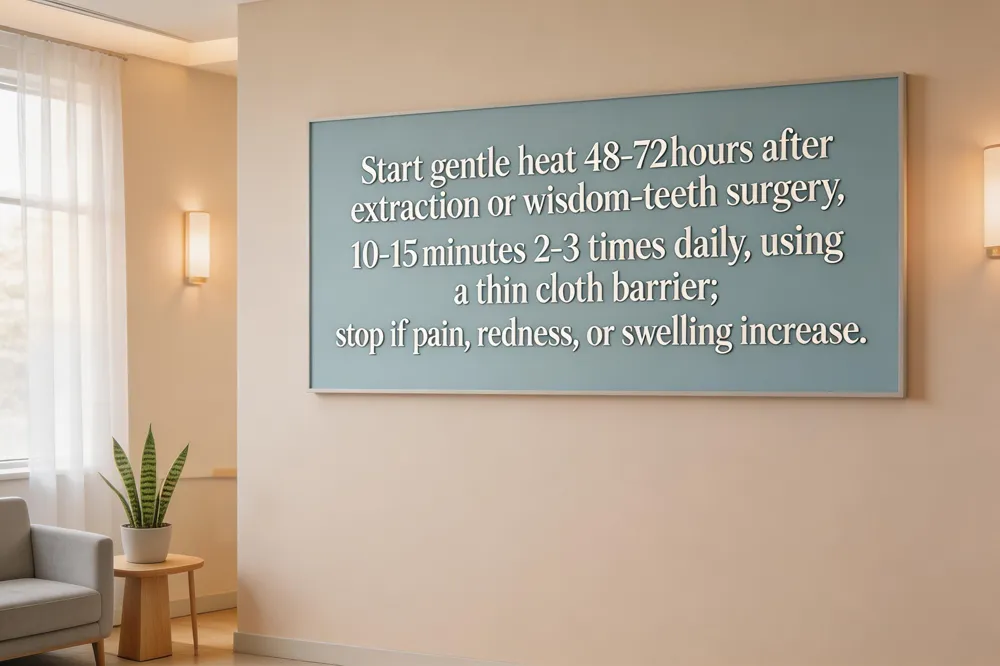
Wisdom‑teeth protocols – Wait until the first day or two when the swelling starts to subside and the clot is stable. Apply a warm (not hot) compress or a low‑setting heating pad to the cheek over the extraction site for 10‑15 minutes, 2‑3 times daily. Always place a thin cloth between the skin and the heat source to prevent burns. Stop immediately if you notice increased pain, redness, or swelling and revert to ice or contact our office.
Practical steps for patients – 1) Use a moist warm towel or a commercially available heat pack set to a comfortable temperature (≈40‑45 °C). 2) Limit each session to 15‑20 minutes, then allow at least a 20‑minute break before the next application. 3) Combine heat with gentle jaw exercises—slow opening and closing motions—to promote circulation. 4) Continue for the next 3‑4 days, then taper off as comfort improves.
Frequently asked questions
- Can I use a heating pad after tooth extraction? No during the first 24‑48 hours; switch to a low‑heat compress after swelling eases.
- How to apply heat after wisdom teeth removal? Follow the protocol above, avoiding direct contact with the socket.
- When to use heat after wisdom teeth removal? Begin after 24‑48 hours, preferably 48‑72 hours, for 5‑7 minutes per side, 3 times daily.
- Hot or cold compress for tooth infection? Start with cold to control inflammation; transition to warm only once swelling subsides and infection is under control.
- Is heat or ice better after dental work? Ice is best for the first 24‑48 hours; heat is useful thereafter for muscle tension and stiffness.
Our team at Veenstra Family Dental tailors post‑operative care to each patient, combining evidence‑based heat therapy with NSAIDs or acetaminophen as needed, ensuring a comfortable, speedy recovery for patients of all ages.
Medication Strategies for Dental Pain
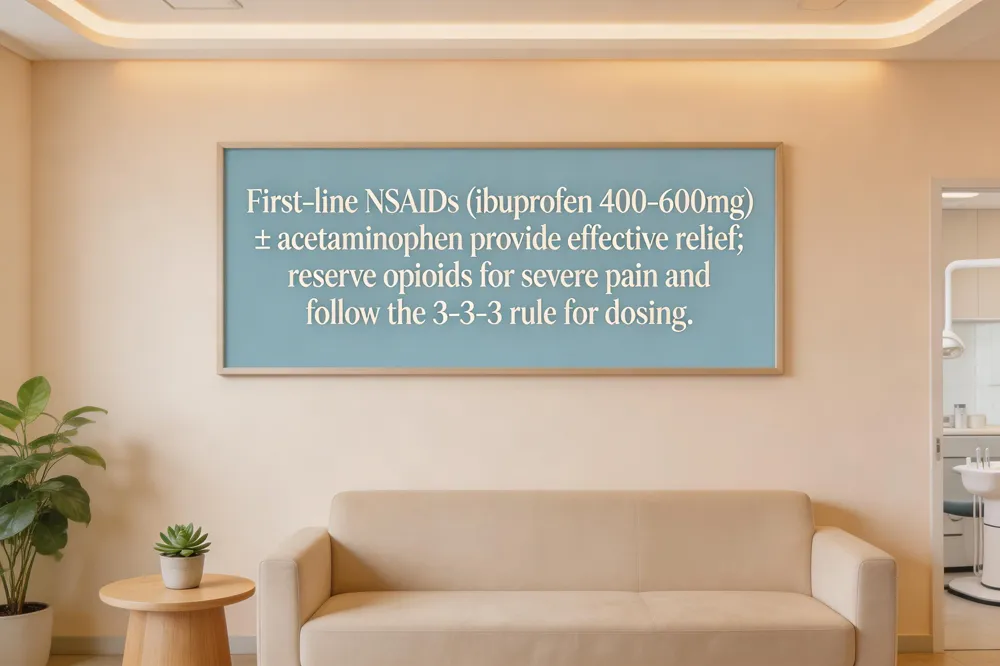 Managing dental discomfort starts with evidence‑based, non‑opioid options. First‑line NSAIDs such as ibuprofen (Advil, Motrin) are the cornerstone because they reduce both inflammation and pain. For most healthy adults, the over‑the‑counter dose is 200‑400 mg every 4‑6 hours, not exceeding 1,200 mg daily; a dentist may safely increase the limit to 2,400 mg for short‑term use. Combination therapy—pairing ibuprofen 400‑600 mg with acetaminophen 1,000 mg every 6‑8 hours—provides synergistic relief and often lessens the need for stronger medication. Opioid stewardship is critical: opioids like hydrocodone or oxycodone are reserved for severe pain that does not respond to NSAIDs and acetaminophen, and the lowest effective dose and shortest duration are emphasized to avoid dependence.
Home‑remedy adjuncts can further comfort patients. Warm salt‑water rinses, moist heat (15‑20 minutes after the first 24‑48 hours post‑surgery) to relax jaw muscles, and cold packs (10‑15 minutes, wrapped in a cloth) to numb acute swelling are safe, cost‑effective measures.
Frequently Asked Questions
- Dental pain killer tablet name – Common OTC tablets include ibuprofen (Advil/Motrin), acetaminophen (Tylenol), and naproxen (Aleve). Prescription combos may contain codeine + acetaminophen (Tylenol #3) or hydrocodone + acetaminophen (Vicodin).
- Best medicine for tooth nerve pain – Ibuprofen 400‑600 mg every 6‑8 hours is first‑line; acetaminophen can be added or alternated. Topical benzocaine (Orajel) offers temporary numbness.
- Ibuprofen for dental pain dose – OTC: 200‑400 mg every 4‑6 hours (max 1,200 mg/24 h). Prescription: up to 2,400 mg daily under supervision.
- Tramadol for dental pain dosage – Start 50 mg every 6 hours, may increase to 100 mg; max 400 mg per day.
- What is the 3‑3‑3 rule for dental pain? – Take three 200 mg ibuprofen tablets (600 mg total) every three hours, repeat three times a day for up to three days; seek dental care if pain persists.
- Dental pain relief home remedies – Warm salt‑water rinses, ice packs, clove oil drops, and cooled tea‑bag compresses can provide temporary relief while professional treatment is arranged.
Our modern, family‑focused practice blends these evidence‑based strategies with personalized care, ensuring every patient—young or old—receives gentle, effective pain management in a welcoming environment.
Comfort‑Focused Care in Restorative Dentistry
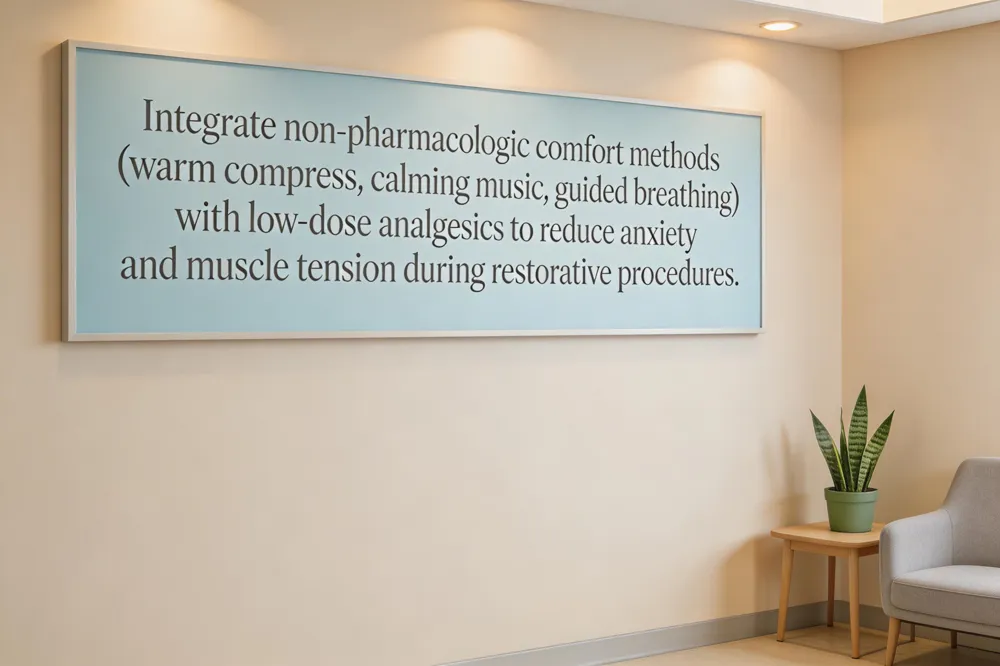 What is comfort‑focused treatment?
Comfort‑focused treatment is a patient‑centered approach that blends gentle non‑pharmacologic methods (warm compresses, calming music, aromatherapy, guided breathing) with low‑dose analgesics only when needed. By easing pain, anxiety, and muscle tension, the dentist can work efficiently while patients—young and old—feel safe and relaxed in a modern, welcoming office.
What is comfort‑focused treatment?
Comfort‑focused treatment is a patient‑centered approach that blends gentle non‑pharmacologic methods (warm compresses, calming music, aromatherapy, guided breathing) with low‑dose analgesics only when needed. By easing pain, anxiety, and muscle tension, the dentist can work efficiently while patients—young and old—feel safe and relaxed in a modern, welcoming office.
Which is an example of comfort therapy? A common comfort‑therapy technique is a warm, moist heat pack applied to the cheek for 15‑20 minutes after the first 24‑48 hours post‑procedure. Heat (40‑45 °C) relaxes the masseter and temporalis muscles, improves local blood flow, and reduces jaw stiffness without risking burns when a cloth barrier is used.
What is a restorative procedure? Restorative procedures repair or replace damaged teeth—fillings, crowns, bridges, root canals, and implants—restoring function, aesthetics, and oral health for patients of all ages.
Is heat or ice better after dental work? Ice is best for the initial 24‑48 hours to curb swelling and numb pain. After swelling eases, switch to heat for 15‑20 minutes per session (with 20‑minute breaks) to relax muscles and promote healing. If swelling worsens, contact your dentist promptly.
Practical After‑Care Checklist
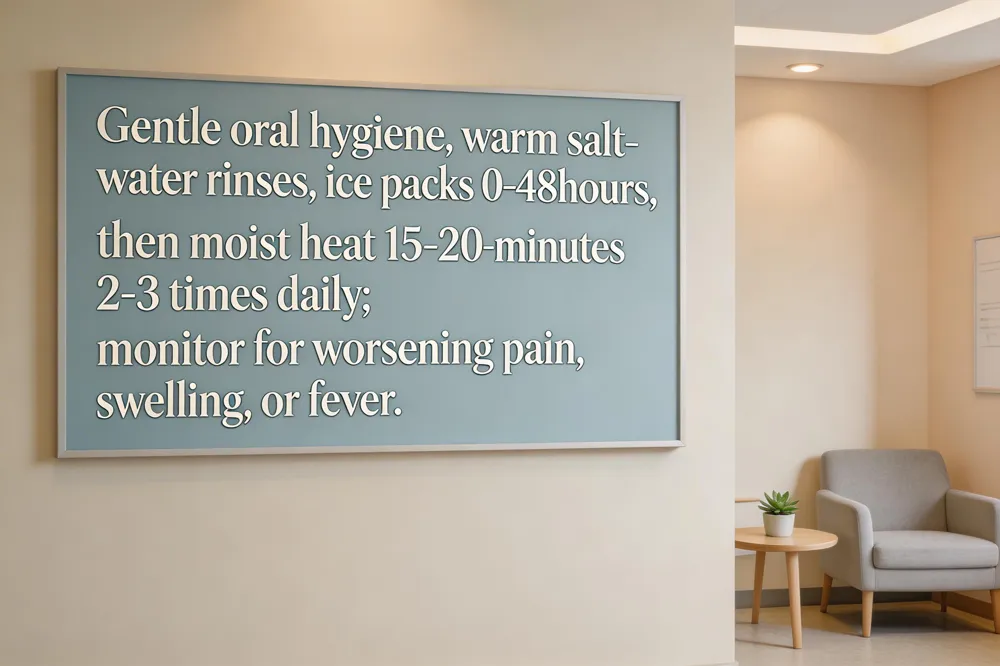 After any dental procedure, start with a gentle oral‑hygiene routine: brush with a soft brush, rinse with warm salt water 2‑3 times daily, and avoid vigorous flossing for the first 24 hours. Use ice packs for the first 24‑48 hours (10‑15 minutes on, 15‑minutes off) to control swelling. After 24‑48 hours, switch to Moist heat (warm, damp towel) or low‑setting heating pad for 15‑20 minutes, followed by a 20‑minute break; repeat 2‑3 times daily to relax jaw muscles and improve circulation. Seek professional help if pain or swelling worsens, if you develop fever, or if the clot seems displaced. Frequently asked questions cover safe temperatures, barrier use, and when to combine heat with NSAIDs—our caring team tailors guidance for patients of all ages, using modern, comfort‑first techniques.
Putting Comfort First in Every Visit
Heat therapy can be a safe, effective ally after oral surgery or restorative work when used at the right time—typically 24‑48 hours post‑procedure. Warm, moist compresses (40‑45 °C) for 15‑20 minutes, with a cloth barrier and a 20‑minute break, improve blood flow, relax jaw muscles, and act as a natural analgesic without risking burns. Patients are empowered to choose non‑pharmacologic relief, complementing NSAIDs or acetaminophen, and to monitor swelling, stopping heat if pain or inflammation worsens. Veenstra Family Dental invites you to discuss your unique healing needs; our team will tailor a heat‑therapy plan, answer safety questions, and ensure your comfort throughout every stage of care. Call us today for personalized guidance.