Welcome to a New Era of Dental Care
Computer‑Aided Design and Computer‑Aided Manufacturing (CAD/CAM) has transformed restorative dentistry. A high‑resolution intra‑oral scanner captures a 3‑D digital impression in seconds, eliminating messy trays and improving accuracy to 10‑20 µm. The virtual model is then refined on a computer and milled or 3‑D printed from high‑strength ceramics such as lithium disilicate or zirconia, allowing a permanent crown, bridge or veneer to be finished in a single visit.
For patients, this means a more comfortable experience, fewer appointments, no temporary restorations, and a restoration that fits precisely, reducing adjustments and the risk of secondary decay. Aesthetic outcomes are enhanced by digital shade‑matching and AI‑driven design tools that reproduce natural tooth shape and translucency.
At Veenstra Family Dental in Midland Park, NJ, we have integrated a state‑of‑the‑art CEREC system, rapid scanners, and AI‑assisted software into our family‑focused practice. The result is same‑day, custom‑crafted restorations delivered in a warm, welcoming environment, giving every age group the modern, compassionate care they deserve.
How CAD Improves Accuracy in Dental Restorations
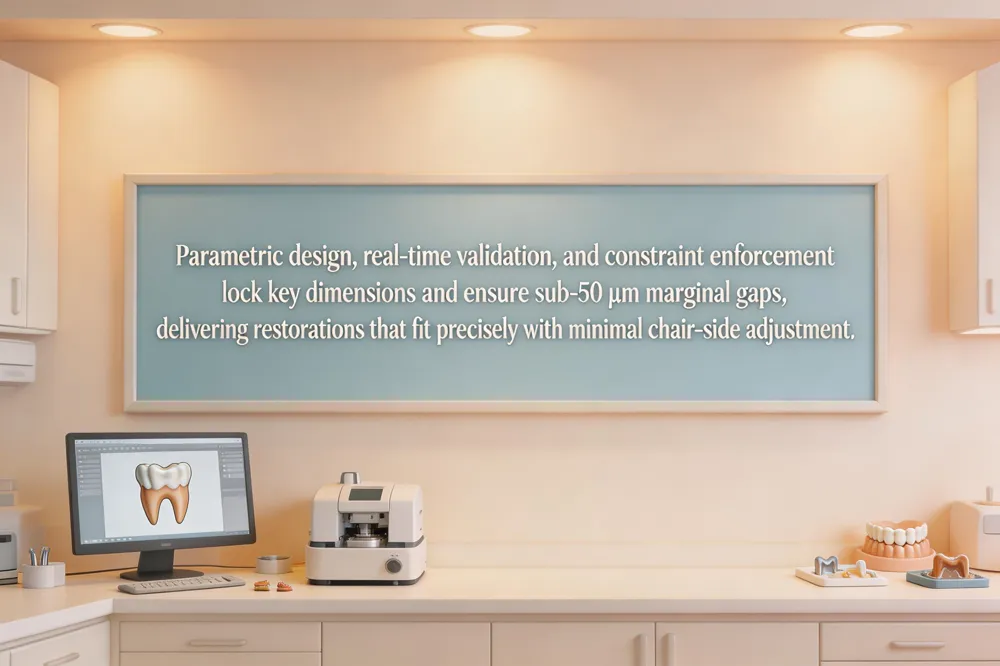 How does CAD improve accuracy?
Parametric design relationships allow the software to lock key dimensions—such as tooth height, occlusal contacts, and margin thickness—so that any change to one feature automatically updates all related components. This ensures that the final restoration retains the exact geometry captured by a digital intra‑oral scan, which modern scanners record with 10‑20 µm precision, far surpassing traditional silicone impressions.
Real‑time validation tools continuously compare the virtual model against clinical standards (e.g., marginal gap ≤50 µm). If a design exceeds tolerance, the system flags the issue instantly, letting the clinician correct it before milling or printing. This proactive checking eliminates costly post‑fabrication adjustments.
Constraint enforcement and feedback keep the design within material limits and anatomical boundaries. For example, when milling lithium disilicate or zirconia blocks, the software enforces minimum thickness and curvature constraints, preventing over‑reduction of tooth structure. The combined effect of these intelligent features delivers restorations that fit accurately, require fewer chair‑side adjustments, and provide a comfortable, same‑day experience for patients of all ages.
Advantages and Limitations of CAD/CAM in Modern Dentistry
 CAD/CAM technology lets us capture a digital scan of your teeth in seconds and design a crown, bridge, or veneer on a computer before it is milled or 3‑D printed. Because the restoration can be fabricated in‑office, most patients receive a final, same‑day result, eliminating weeks of waiting and the discomfort of temporary crowns. The digital workflow provides sub‑100‑micron precision, producing a fit that is consistently accurate and reduces the need for adjustments, which translates into better marginal integrity and a lower risk of secondary decay. High‑strength ceramics such as lithium disilicate and zirconia are milled to mimic natural translucency and color, giving restorations an aesthetic that blends seamlessly with surrounding teeth. Ad the benefits, the initial investment for scanners, software, and milling units can exceed $100,000, and clinicians and staff require thorough training to master the new workflow. Ongoing maintenance, occasional material waste, and the occasional need for chair‑side adjustments also add cost. In short, CAD/CAM offers speed, precision, and superior aesthetics, but practices must weigh the financial and training commitments against these advantages.
Understanding CAD‑CAM Systems and Their Workflows
 CAD‑CAM systems in dentistry combine computer‑aided design (CAD) and computer‑aided manufacturing (CAM) to create precise restorations. The workflow starts with an intra‑oral scanner that captures a high‑resolution 3‑D digital impression (10‑20 µm accuracy) of the prepared tooth, eliminating traditional impression trays and improving patient comfort. The scan is imported into digital design software where clinicians customize shape, size, shade and occlusion; newer AI‑driven tools can suggest optimal tooth morphology automatically. Once the design is finalized, the file is sent to either a milling unit or a 3‑D printer. Milling subtracts material from a solid block of zirconia, lithium disilicate or hybrid ceramic, while 3‑D printing adds layer‑by‑layer resin or ceramic, each achieving sub‑100 µm tolerances. Because the entire process—scan, design, fabrication—can be completed chair‑side, many crowns, bridges and veneers are placed in a single appointment, eliminating temporary restorations and reducing overall treatment time.
Cost Considerations for Permanent Dentures
 Permanent dentures can be delivered as fixed full‑arch restorations or as removable implant‑retained (snap‑in) options. Fixed full‑arch restorations typically involve 4‑6 implants, a milled‑zirconia or lithium‑disilicate framework, and laboratory‑fabricated crowns. The average price for a full‑arch fixed denture ranges from $15,000 to $50,000, with most patients paying $20,000‑$30,000 after implants, abutments, and lab fees are included. Removable implant‑retained dentures use fewer implants (often 2‑4) and a lightweight acrylic or hybrid‑ceramic base; they usually cost $1,500‑$6,000 per arch, averaging $3,000‑$4,000. Material choice (zirconia, porcelain, acrylic), the need for bone grafts or extractions, and the dentist’s expertise all influence the final amount. Geographic location and practice overhead also affect pricing, but patients can generally expect several thousand dollars, with fixed full‑arch solutions falling in the $20‑$30 k range.
Emerging Trends Shaping Dentistry in 2025
 In 2025 dentistry is being reshaped by AI‑driven diagnostics that deliver rapid, accurate assessments and enable personalized treatment planning for each patient. Advanced algorithms analyze digital radiographs and intra‑oral scans to detect caries, periodontal disease, and early lesions with sensitivity and specificity over 90%, allowing clinicians to intervene earlier and tailor preventive strategies. Same‑day 3‑D printing and chair‑side CAD/CAM milling now produce custom crowns, bridges, veneers, and even temporary restorations within a single appointment, slashing wait times from weeks to hours and eliminating the discomfort of temporary appliances. Tele‑health platforms combined with laser‑based, minimally invasive procedures expand access to care, letting patients receive virtual consultations, digital smile designs, and precise soft‑tissue treatments without the need for extensive drilling. Finally, "emotional dentistry" places patient comfort and psychological well‑being at the forefront, using calming office design, clear communication, and empathetic staff to reduce anxiety and enhance the overall dental experience. Together, these innovations create a faster, more accurate, and patient‑centered dental journey for families across all ages.
Special Focus: CAD‑CAM Denture Challenges, System Types, Software, and Future Directions
 CAD/CAM dentures offer speed and precision, but they also have drawbacks. The digital workflow can generate more material waste and requires a high upfront investment in scanners, software, and milling or printing units. Any error in the initial scan or design may lead to a poor fit, demanding costly remakes, and fine‑tuning occlusal vertical dimensions or aesthetics can be tricky, sometimes causing speech or cosmetic issues.
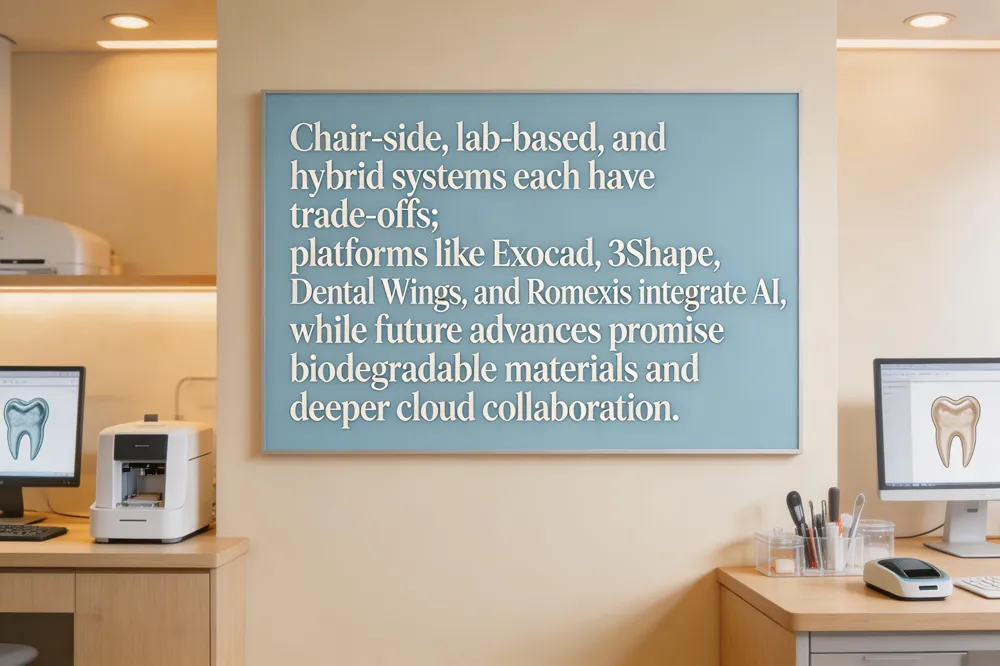
Three main system categories are used today. Chair‑side mills let clinicians design and mill crowns or veneers in‑single appointment, lab‑based high‑precision mills handle complex full‑arch prostheses, and hybrid setups blend milling with 3‑D printing for flexible material choices.
The most common design platforms are Exocad, 3Shape Dental System, Dental Wings, and Planmeca’s Romexis suite. These programs integrate directly with intra‑oral scanners, guide tool paths for milling or printing, and now include AI‑driven design assistants.
In 2025, breakthroughs such as AI‑enhanced intra‑oral scanners with optical coherence tomography, 5‑axis chair‑side mills, biodegradable 3‑D‑printable restorative materials, and advanced laser systems entered routine practice, further reducing chair time and enhancing patient comfort.
Laser dentistry uses focused light beams to cut or reshape tissue with minimal anesthesia, offering painless, bloodless procedures and faster healing.
AI is already embedded in CAD/CAM workflows, automating design steps, optimizing machining paths, and predicting fit issues. Looking ahead, deeper AI integration, cloud‑based collaboration, hybrid manufacturing, and sustainable material cycles will shape the next generation of digital dental care.
Putting It All Together – What Patients Can Expect
Modern CAD/CAM workflows combine intra‑oral scans, AI‑assisted design and fast milling or 3‑D printing to deliver crowns, bridges, veneers and implant components in a single visit. At Veenstra Family Dental in Midland Park, families enjoy comfortable digital impressions, same‑day restorations without temporaries, and ceramic options such as lithium disilicate and zirconia. Our practice remains committed to integrating emerging tools—scanners, cloud‑based case sharing and AI‑driven analytics—to keep care fast, accurate and compassionate.