Introduction
Tooth sensitivity, clinically known as dentin hypersensitivity, affects up to 57% of U.S. adults according to the American Dental Association. It occurs when the protective enamel layer wears away or gums recede, exposing dentin tubules that transmit thermal, chemical, or tactile stimuli directly to the nerve pulp. This exposure triggers sharp, short‑lived pain when you sip a cold drink, bite into ice cream, or brush with a hard toothbrush. The discomfort can be so frequent that many people avoid favorite foods, limit hot or cold beverages, and even skip routine oral‑care tasks, which can further compromise oral health. Understanding the underlying cause and recognizing the impact on daily life are the first steps toward effective, personalized treatment that restores comfort and confidence.
Understanding the Roots of Sensitivity
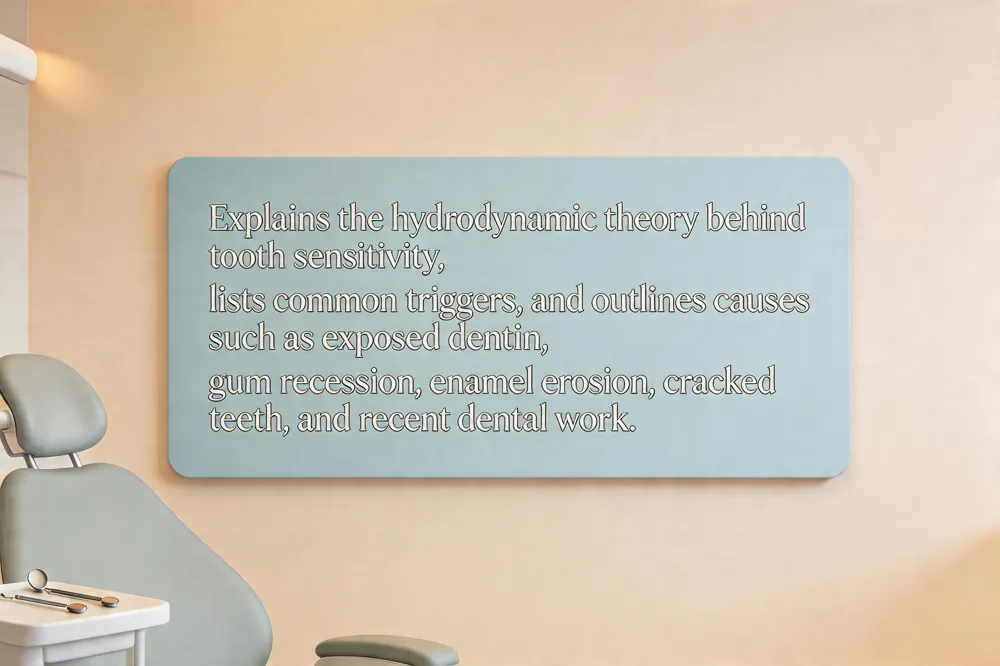 Tooth sensitivity is most often explained by the hydrodynamic theory: stimuli such as cold, heat, sweet, or acidic foods cause fluid movement within dentin tubules, which then triggers nerve endings and produces a sharp, brief pain. Common triggers include drinking iced water, biting into ice cream, sipping citrus juice, or using a hard‑bristled toothbrush. Underlying causes are usually exposed dentin—whether from gum recession, enamel erosion due to acidic foods or reflux, cracked or fractured teeth, aggressive brushing, or recent dental work like fillings, crowns, or whitening treatments.
Tooth sensitivity causes – Exposed dentin from gum recession, enamel loss, cracked teeth, bruxism, and dental procedures that irritate the pulp.
Why are my teeth sensitive all of a sudden? – Sudden sensitivity often signals freshly exposed dentin after whitening, a new restoration, a cracked tooth, or rapid enamel erosion from acidic foods or aggressive brushing. Gum recession can also reveal root surfaces, making them reactive to temperature and sweet stimuli. A prompt exam at Veenstra Family Dental identifies the exact cause and tailors treatment.
How long does tooth sensitivity last? – Mild cases may improve within a few weeks using desensitizing toothpaste or fluoride varnish. More serious issues—cavities, cracked teeth, gum recession, or failing restorations—may require fillings, crowns, gum grafts, or root canal therapy, with relief taking several weeks to months. Most patients notice improvement in 2–4 weeks, but persistent pain warrants a dental visit.
Natural and At‑Home Strategies
 Can tooth sensitivity be cured naturally?
Yes, many people find that simple at‑home measures dramatically reduce or even eliminate dentin hypersensitivity. The key is to stop the stimulus that drives fluid movement in exposed dentin tubules. Switching to a soft‑bristled toothbrush and brushing gently at a 45‑degree angle prevents further enamel wear and gum recession. Using a desensitizing toothpaste that contains potassium nitrate, stannous fluoride, or arginine blocks the tubules and calms the nerve. A daily salt‑water rinse (½ tsp salt in warm water) can soothe inflamed gums and promote a mild occlusion of dentin. Dietary adjustments—limiting acidic foods and drinks, sipping them through a straw, and waiting at least 30 minutes before brushing after consumption—protect the remaining enamel from erosion. If grinding is a factor, a night‑guard can halt the mechanical wear that aggravates sensitivity.
Can tooth sensitivity be cured naturally?
Yes, many people find that simple at‑home measures dramatically reduce or even eliminate dentin hypersensitivity. The key is to stop the stimulus that drives fluid movement in exposed dentin tubules. Switching to a soft‑bristled toothbrush and brushing gently at a 45‑degree angle prevents further enamel wear and gum recession. Using a desensitizing toothpaste that contains potassium nitrate, stannous fluoride, or arginine blocks the tubules and calms the nerve. A daily salt‑water rinse (½ tsp salt in warm water) can soothe inflamed gums and promote a mild occlusion of dentin. Dietary adjustments—limiting acidic foods and drinks, sipping them through a straw, and waiting at least 30 minutes before brushing after consumption—protect the remaining enamel from erosion. If grinding is a factor, a night‑guard can halt the mechanical wear that aggravates sensitivity.
Tooth sensitivity treatment at home
- Choose a soft‑bristled brush; use short, circular motions with light pressure.
- Brush twice daily with a fluoride or nitrate‑based desensitizing toothpaste; consider an OTC gel for extra protection.
- Rinse once a day with a warm salt‑water rinse.
- Avoid extreme temperatures and acidic beverages; use a straw and rinse with water afterward.
- Floss daily to keep plaque away from the gum line and prevent recession. If symptoms persist, a professional evaluation is essential to rule out decay, gum disease, or cracked teeth.
Professional In‑Office Solutions
 When tooth sensitivity persists despite at‑home care, Veen Stra Family Dental in Midland Park, NJ offers a suite of evidence‑based, in‑office treatments that target the root cause—exposed dentin tubules—using the latest technology.
Fluoride varnish: A high‑concentration fluoride coating is painted on the sensitive area, forming calcium‑fluoride crystals that temporarily seal tubules and promote remineralization.
Bonding and sealants: Tooth‑colored resin or glass‑ionomer sealants are bonded to exposed roots or cervical lesions, creating a durable barrier that blocks thermal and chemical stimuli.
Laser therapy: Low‑level diode or Er:YAG lasers remodel the dentin surface, coagulating proteins and permanently occluding tubules, often in a single painless session.
Micro‑abrasion: A gentle abrasive slurry removes superficial enamel loss, allowing remineralizing agents to rebuild a smoother surface.
Gum grafts: When recession exposes root dentin, connective‑tissue grafts cover the root, restoring natural protection and reducing sensitivity.
FAQs Can tooth nerve sensitivity go away? Yes—most cases improve once the underlying cause is treated with agents like fluoride varnish, bonding, or laser therapy; severe cases may need root‑canal treatment.
What medication is used for hypersensitive teeth? Topical desensitizing agents containing potassium nitrate, stannous fluoride, or glutaraldehyde are applied by the dentist; OTC NSAIDs can aid temporary discomfort.
How to stop sensitive teeth pain immediately? Rinse with warm salt water, apply a desensitizing gel or fluoride varnish, take ibuprofen if needed, avoid extreme temperatures, and switch to a soft‑bristled brush with potassium‑nitrate toothpaste.
A personalized care plan, guided by digital imaging and laser diagnostics, ensures lasting relief for patients of all ages.
Advanced Dental Technologies Powering Relief
 Modern dentistry in Midland Park, NJ, leverages a suite of cutting‑edge tools that make diagnosing and treating tooth sensitivity faster, more accurate, and far less invasive. Digital imaging—including high‑resolution cone‑beam CT (CBCT) and intra‑oral radiographs—creates 3‑D views of bone, nerves, and tooth structure, allowing the dentist to pinpoint exposed dentin or gum recession with pinpoint precision. Intra‑oral scanners replace messy impressions, capturing an exact 3‑D map of the whole mouth in minutes, which feeds directly into CAD/CAM software. With CAD/CAM, clinicians design and mill same‑day crowns, bridges, or veneers that seal sensitive areas while preserving healthy tooth tissue. Laser dentistry, such as diode or Er:YAG lasers, gently seals dentin tubules, remodels gum tissue, and can even remineralize enamel without the need for drills or injections.
What are the advanced technologies in dentistry?
Modern dentistry relies on a suite of advanced digital and laser tools that enhance diagnosis, treatment planning, and patient care. CAD/CAM systems allow clinicians to design and mill same‑day crowns, bridges, and veneers with precise, computer‑generated fits. Cone‑beam computed tomography (CBCT) and digital radiography provide high‑resolution 3‑D images for accurate assessment of bone structure and pathology. Intra‑oral cameras, optical scanners, and dental lasers improve visualization, enable minimally invasive procedures, and facilitate precise soft‑tissue work. Integrated practice‑management software and electronic health records streamline patient data and interdisciplinary communication.
Pediatric dentist Midland Park, NJ
A pediatric dentist in Midland Park, NJ offers specialized, child‑focused preventive and restorative care that promotes healthy smiles from the first tooth onward. Using gentle examinations, fluoride treatments, sealants, and kid‑friendly digital imaging and laser dentistry, they diagnose and treat problems quickly while minimizing discomfort. The practice emphasizes education on proper brushing, nutrition, and oral‑health habits, ensuring children grow up with confident, healthy teeth.
Veenstra Family Dental’s Patient‑Centric Approach
 Veenstra Family Dental combines modern technology with a warm, family‑focused environment to make every visit comfortable for patients of all ages.
Midland Park Family Dentistry: Midland Park Family Dentistry is a family‑centered practice that offers comprehensive preventive, restorative, cosmetic, and implant services. Led by Dr. Doug Veenstra and Dr. Eric Veenstra, the team uses digital X‑rays, 3‑D imaging, intra‑oral scanners, laser treatments, and in‑house 3‑D printing to deliver precise, minimally invasive care.
Midland family dental care: At Veenstra Family Dental, each patient receives a personalized treatment plan that addresses unique needs. Gentle techniques, same‑day CAD/CAM restorations, and tailored oral‑hygiene education ensure long‑term health while fostering a relaxed atmosphere for children and adults.
Veenstra Family Dental: Located in Midland Park, NJ, this practice blends compassionate care with cutting‑edge technology. Services range from routine cleanings to advanced restorative work, orthodontics, and cosmetic veneers. The staff emphasizes clear communication, easy scheduling, and a welcoming environment that treats patients like friends.
Best dentist in Bergen County NJ: Veenstra Family Dental consistently ranks among the top practices in Bergen County. With decades of experience, state‑of‑the‑art equipment, and a commitment to community education, the office delivers exceptional clinical results and a personalized, friendly experience that patients trust.
Conclusion
Key takeaways: Dentin hypersensitivity affects up to 57 % of adults and is most often triggered by exposed dentin from enamel erosion, gum recession, or aggressive brushing. The hydrodynamic theory explains how fluid movement in tubules causes pain. Proven at‑home options include potassium‑nitrate or stannous‑fluoride toothpaste, while in‑office treatments such as fluoride varnish, resin‑based bonding, and low‑level laser desensitization can provide relief. Veenstra Family Dental in Midland Park, NJ, uses imaging, laser therapy and restorations to diagnose and treat case. If you experience sudden pain from hot, cold, sweet or acidic stimuli, schedule a check‑up soon—prevention prevents worsening and restores comfort.