Welcome to a Stress‑Free First X‑Ray
Pediatric dental X‑rays are a vital window into a child’s oral health. They reveal cavities hidden between teeth, monitor the eruption of permanent teeth, and assess jaw development—information that cannot be seen during a routine visual exam. Early detection lets the dentist intervene with gentle, preventive care, often avoiding more extensive treatment later.
At Veenstra Family Dental we use state‑of‑the‑art digital X‑ray technology that emits up to 90 % less radiation than traditional film. The dose from a single bitewing image is comparable to a few days of natural background radiation, and the ALARA principle ensures we keep exposure as low as reasonably achievable. Protective measures include a lead apron and, when needed, a thyroid collar to shield the child’s body and sensitive organs.
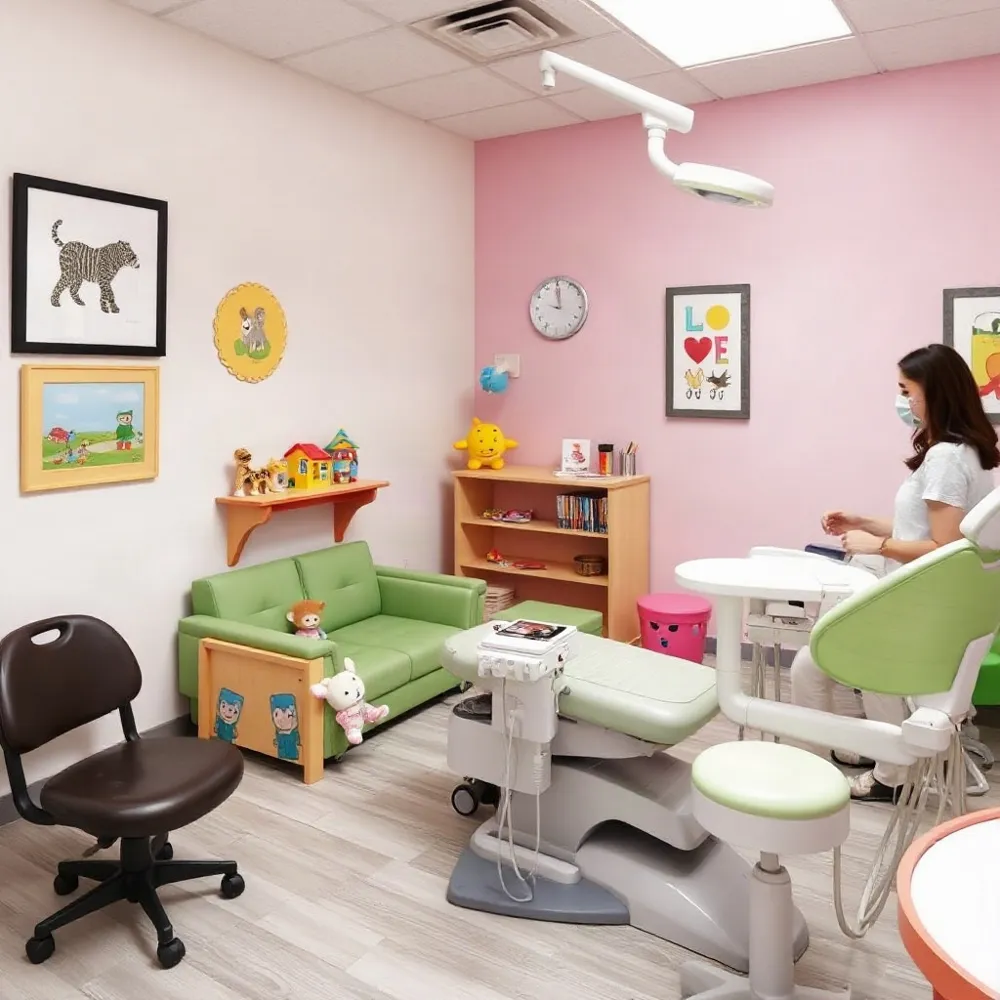
Creating a welcoming, child‑friendly atmosphere is our priority. Parents are invited to stay in the room, and children may bring a favorite toy or blanket for comfort. Our team explains the procedure in simple, reassuring language, uses playful storytelling, and offers positive reinforcement—stickers or a small prize—once the quick, painless image is captured. The result is a calm, confident experience that sets the tone for a lifetime of healthy smiles.
The Basics of Pediatric Dental Imaging
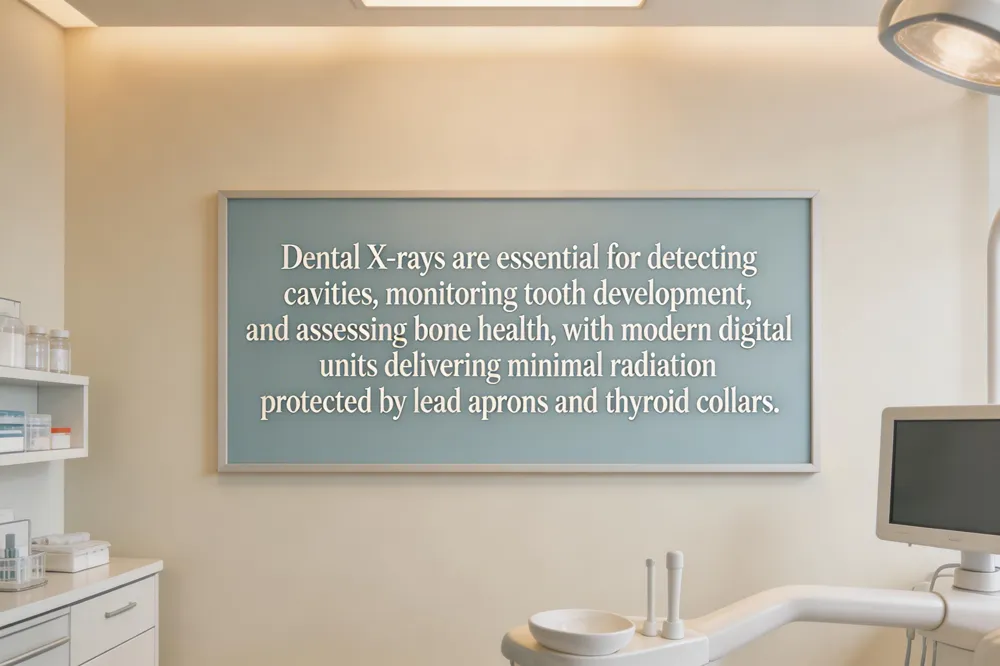 Dental X‑rays are a vital diagnostic tool that let dentists see beneath the surface of teeth and gums, spotting cavities, monitoring tooth development, and evaluating bone health. Modern digital X‑ray machines emit only a fraction of the radiation of older film units—roughly the amount of natural background radiation a child receives in a day—making the exposure minimal and safe when protective lead aprons and thyroid collars are used. The first dental radiograph was taken in April 1896 by Dr. C. Edmund Kells, who also invented the first film holder to keep the image steady in the mouth.
Common Oral‑Health Guidelines
- 7‑4 rule: The first four primary teeth usually appear around seven months of age, and thereafter new teeth erupt roughly every four months, so by 2½ years most baby teeth are present.
- 3‑3‑3 rule: Though not an official guideline, it suggests brushing three times a day for three minutes each and waiting three hours after meals before bedtime; professional advice favors twice‑daily brushing for two minutes.
- Rule of 7: Around age 7 children should have their first orthodontic evaluation to catch early alignment issues.
These guidelines help parents schedule timely dental visits and ensure that X‑rays are taken only when clinically necessary, adhering to the ALARA principle and the Image Gently initiative for pediatric imaging.
Timing: When Should Your Child Have Their First X‑Ray?
 Age recommendations – Most children receive their first bitewing radiographs when the back primary teeth begin to touch, which typically occurs around age 3, but can be earlier or later. In practice, many families see the first X‑ray between ages 4‑5, and by age 5‑6 a baseline set is common.
Toddler (≈2‑3 years) – A dentist‑ray is only taken if there are signs of decay, trauma, or developmental concerns. Modern digital sensors use child‑specific settings and a lead apron with a thyroid collar, keeping radiation exposure to less than a day of natural background radiation.
3‑year‑old – Bitewing images may be considered when the primary molars are in contact. If the child is low‑risk, imaging might be postponed; high‑risk children (frequent cavities, family history) may benefit from a quick, painless digital X‑ray.
4‑year‑old – The same criteria apply; the dentist evaluates oral‑hygiene habits, any symptoms, and the caries‑risk score before deciding.
Children under 6 – X‑rays are performed only when clinically indicated. The ALARA principle (As Low As Reasonably Achievable) guides the use of low‑dose digital radiography, protective aprons, and selective imaging of only the needed mouth sections.
Risk‑based decision making – Low‑risk children usually need an X‑ray once a year, while high‑risk kids may require them every six months. The goal is early detection of hidden cavities, monitoring of permanent‑tooth eruption, and planning orthodontic treatment while keeping radiation exposure minimal. At Veenstra Family Dental in Midland Park, NJ, we tailor each imaging schedule to your child’s unique needs, using state‑of‑the‑art digital X‑rays and a calm, child‑friendly environment.
Frequency and Safety: How Often and How Many X‑Rays Are Safe?
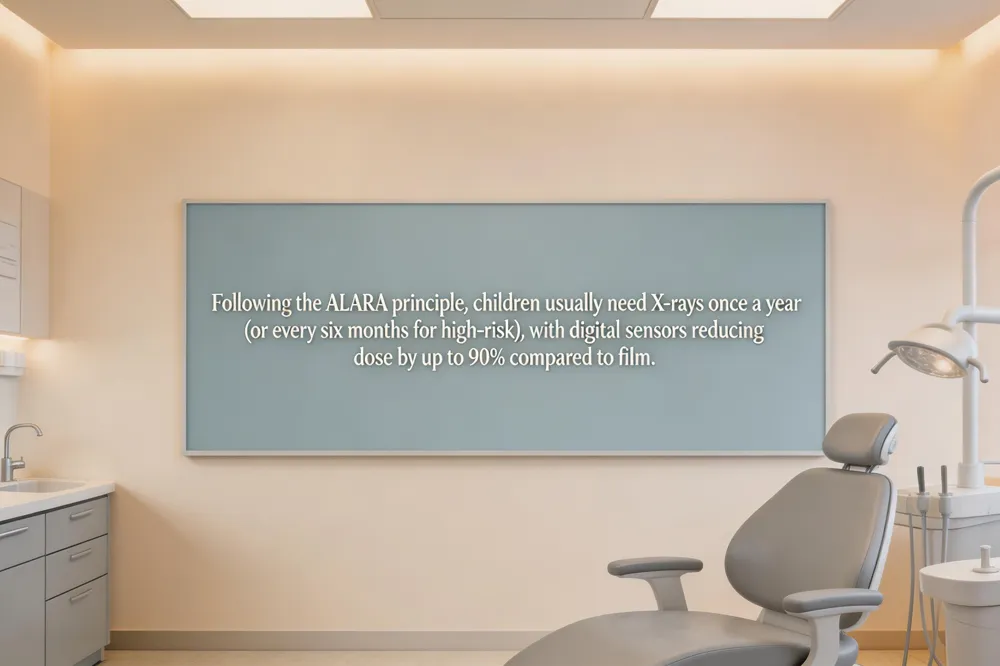 ALARA principle and cumulative exposure – Pediatric dentists follow the “As Low As Reasonably Achievable” guideline, using child‑specific exposure settings, lead aprons, and thyroid collars to protect the body. Each X‑ray delivers a dose comparable to only a few days of natural background radiation; however, the dose does add up, so unnecessary repeats are avoided.
Digital X‑ray dose comparison – Modern digital sensors emit up to 90 % less radiation than traditional film. A single bite‑wing image is roughly equivalent to a day of background radiation, while a panoramic scan is comparable to a short airplane flight. This minimal exposure makes digital X‑rays safe and painless for children.
Answering the questions – Kids typically need dental X‑rays once a year, but the exact schedule is customized to age, oral‑health status and and risk factors. There is no fixed “safe” number of X‑rays; each image is taken only when clinically necessary, keeping the cumulative dose as low as possible. Veenstra Family Dental in Midland Park, NJ, tailors every X‑ray plan to your child’s unique needs, using the latest digital technology and strict safety protocols.
The Procedure: What Happens During a Child’s X‑Ray?
 At Veenstra Family Dental we use Dental X‑rays reveal cavities, tooth development, and bone health. A dental assistant gently places the sensor on a tooth or in the mouth, and for Bite‑wing X‑ray: child bites a small sensor; panoramic X‑ray: child stands still with chin support the child simply bites down on it for a few seconds while the machine emits a quick, safe burst of radiation. For Panoramic X‑ray: child stands still with chin support or occlusal views the child is positioned on a comfortable chair with a chin support; the sensor is placed in the mouth and the child is asked to stay still for less than a second. Throughout the process we use calming, Explaining the X‑ray process to a child helps reduce anxiety and sets clear expectations, let the child hold a Preparing a child includes ... allowing them to bring a comfort item, and keep a parent in the room for reassurance. Protective lead aprons and thyroid collars are used during pediatric X‑ray procedures to shield the body are draped over the chest and neck to shield the body from scattered radiation, adhering to the The ALARA principle (As Low As Reasonably Achievable) guides pediatric radiography to minimize exposure and Image Gently guidelines. Because the images are digital, they appear instantly on a screen; the dentist can then show the child and parent the enlarged picture, explain any findings, and discuss next steps in a friendly, visual way. This quick, painless “photo” of the teeth provides the detailed view needed to Dental X‑rays allow dentists to see beneath the surface of teeth and gums, identifying cavities, monitoring tooth development, and assessing bone health while keeping radiation exposure minimal.
Your Rights, Choices, and Finding the Right Dentist
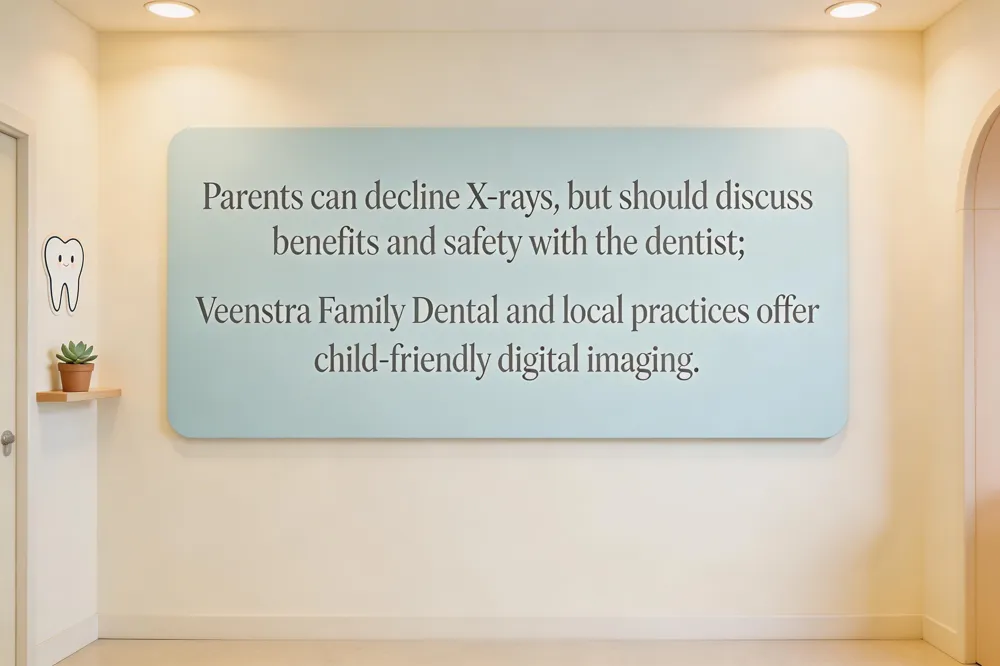 Parents have the legal right to decline dental X‑rays for their child. If you choose to refuse, understand that X‑rays reveal hidden cavities, tooth‑development stages, and bone health that a visual exam cannot show. Modern digital X‑ray systems emit radiation comparable to a few days of natural background exposure, and protective lead aprons and thyroid collars keep the dose as low as reasonably achievable.
When you’re unsure, talk openly with the dentist. Explain your concerns and ask the provider to describe the specific benefits for your child’s situation. The dentist can outline why an X‑ray is clinically indicated, discuss any alternative diagnostic options, and reassure you about safety protocols such as the Image Gently initiative and ALARA guidelines.
If you live in the Midland Park area, Veenstra Family Dental offers family‑focused care with state‑of‑the‑art digital imaging, a calm office environment, and flexible scheduling. Nearby Wyckoff families have convenient choices: the Office of Dr. Elliot Frey, DMD provides comprehensive preventive and restorative services, while Wyckoff & Associates, led by Dr. Keith Wyckoff, offers personalized treatment plans, same‑day crowns, and orthodontic options. All three practices accept major insurance, provide emergency care, and prioritize a welcoming, child‑friendly atmosphere.
Your Child’s First X‑Ray: Confident, Safe, and Simple
Before the X‑ray, we take a few easy steps to make the experience smooth for your child. First, we explain the procedure in simple, reassuring language and let them ask questions. A short pre‑visit or a quick “show‑and‑tell” with the sensor can demystify the equipment. We encourage them to bring a favorite comfort item, such as a stuffed animal or blanket, and we use the "tell‑show‑do" technique so they know exactly what will happen. During the appointment the child wears a lead apron and a thyroid collar, which shield the body and sensitive glands from any scattered radiation. Our modern digital X‑ray system emits up to 90 % less radiation than older film units—equivalent to less than a day of natural background exposure—while delivering crystal‑clear images in a fraction of a second. The entire process is quick, painless, and follows the ALARA principle to keep dose as low as reasonably achievable. Ready to give your child a confident start? Call Veenstra Family Dental in Midland Park, NJ, or book online today to schedule a friendly, safe X‑ray visit.