Early Dental Care: A Parent’s First Step
Tooth decay is the most common chronic disease of childhood, affecting more than half of children by kindergarten and occurring more often than asthma. Visiting a pediatric dentist by age one creates a ‘dental home’ where a caring team knows the child’s history, monitors growth, and delivers preventive care such as fluoride varnish and sealants. This early partnership builds trust, so children feel comfortable and less anxious during later appointments. It also catches problems before they require extensive treatment, saving families an average of $300‑$360 per child over several years. Modern, kid‑friendly offices use gentle techniques like the knee‑to‑knee exam, colorful décor to make the first visit a positive experience. Guidance on brushing, diet, and habits ensures lifelong oral health.
Understanding Pediatric Dental Screenings
 A pediatric dental screening is a quick, comprehensive examination performed by a dentist to assess a child’s oral health and catch problems early. The American Academy of Pediatric Dentistry recommends that the first screening occur by age one or within six months of the first tooth erupting, and then every six months thereafter. During the visit the dentist checks the gums, teeth, and jaw for early signs of decay, misaligned bites, gum inflammation, or developmental issues. Key components include a visual oral exam, gentle probing of the teeth, assessment of eruption patterns, and a discussion of the child’s diet and oral habits. Preventive treatments such as fluoride varnish, silver‑diamine fluoride, and sealants are often applied on the spot to strengthen enamel and arrest early lesions, dramatically lowering the risk of cavities. The screening also provides parents with personalized education on proper brushing techniques, appropriate toothpaste amounts, and habits like thumb‑sucking that can affect oral health. By establishing a dental home early, children become comfortable with the dental environment, reducing future anxiety and fostering lifelong healthy smiles.
Timing the First Dental Visit
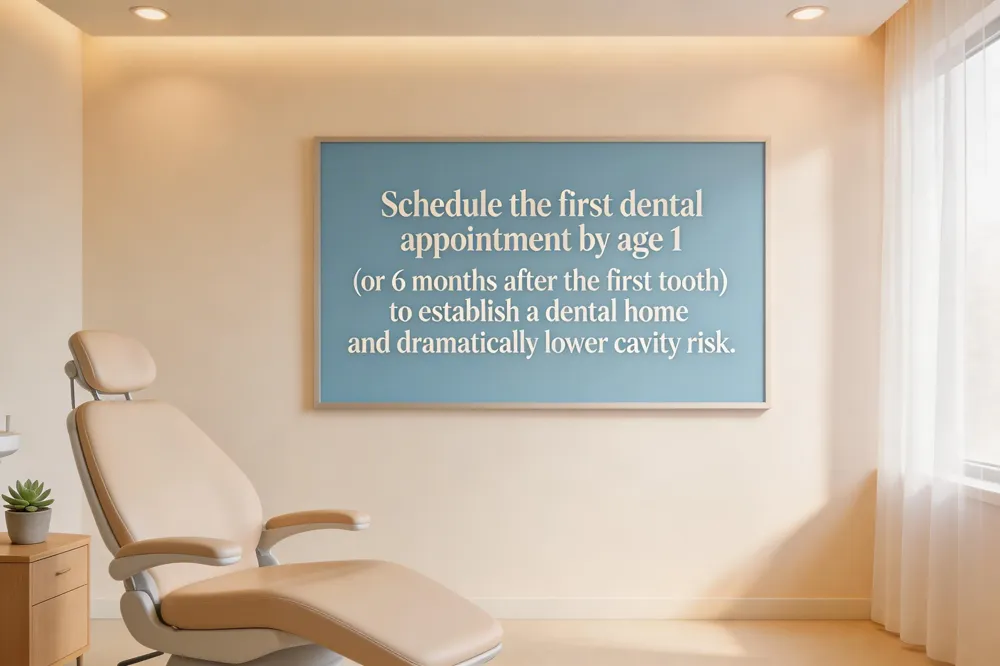 Professional guidelines for the first visit are clear: the American Academy of Pediatric Dentistry (AAPD), the American Dental Association (ADA) and the American Academy of Pediatrics (AAP) all recommend that a child’s first dental appointment occur by age one year, or within six months of the first tooth erupting. This early timing lets the dentist establish a "dental home," screen for early decay, and give parents personalized guidance on brushing, fluoride, diet and oral‑habit prevention.
Why the first birthday is the target: The AAPD emphasizes that the first birthday—or six months after the first tooth appears, whichever comes first—provides the optimal window to introduce gentle, child‑focused care. At Veenstra Family Dental we welcome infants and toddlers with a soothing environment, using pediatric‑trained staff and modern techniques such as fluoride varnish and silver diamine fluoride to arrest early lesions without invasive treatment.
Consequences of delaying the appointment: Children whose first visit is postponed beyond age one face dramatically higher odds of cavities—up to 20‑fold at age five—leading to pain, infection, emergency department visits and higher treatment costs (average $300–$360 more](https://www.aapd.org/globalassets/media/policy-center/year1visit.pdf). Delayed care also increases dental anxiety and reduces the chance of establishing lifelong oral‑health habits. Early visits prevent these outcomes and set the stage for a healthy, confident smile.
Finding a Pediatric Dentist in New Jersey
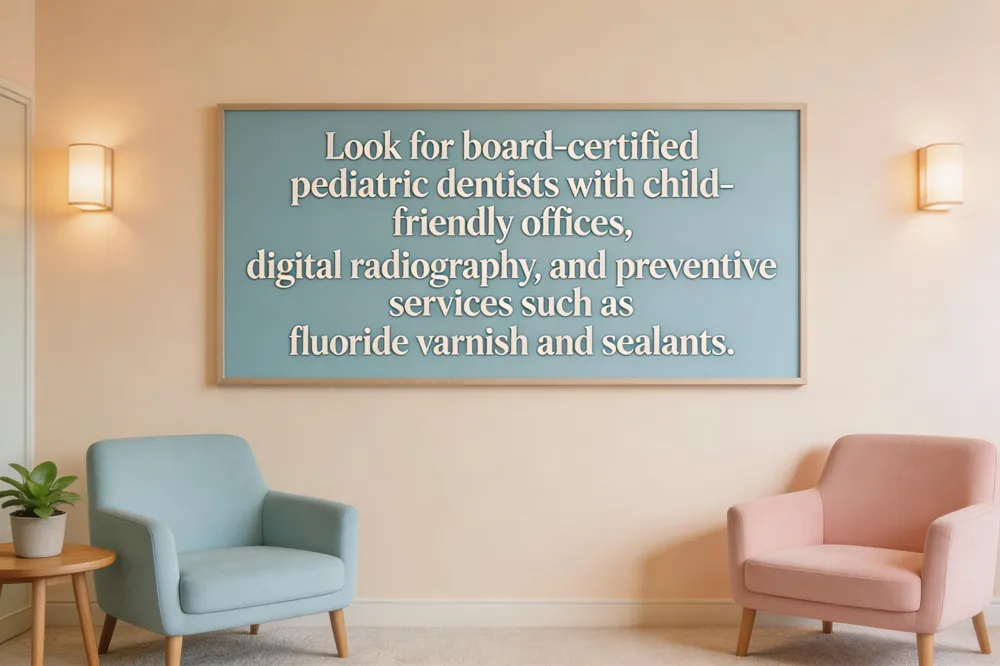 When looking for a pediatric dentist in New Jersey, start with a focused online search. Type terms such as “pediatric dentist + your city or ZIP code” and use filters to show only in‑network providers for your insurance. Good practices often highlight their child‑friendly atmosphere on their website—look for photos of bright, toy‑filled waiting rooms, a dedicated pediatric team, and modern technology like digital radiography that speeds up exams.
Ask your child’s pediatrician, school nurse, or other parents for referrals. These trusted sources usually know which dentists excel at gentle behavior management and can recommend a practice that makes visits low‑stress.
Key features to look for include a board‑certified pediatric dentist with extra training in child psychology, a knee‑to‑knee exam option, and preventive services such as fluoride varnish and sealants. In Midland Park, Veenstra Family Dental (Pediatric Dentistry & Orthodontics) offers exactly this blend of compassionate care and advanced tools at 6 Prospect Street, Suite 1A. Call (201) 972‑6846 or book online to start building a dental home for your child.
Establishing a Dental Home and Maintaining Ongoing Care
 A "dental home" is a continuous, family‑centered relationship with a pediatric dentist that begins no later than a child’s first birthday. This early partnership lets the dentist monitor growth, catch decay early, and deliver preventive services such as fluoride varnish and sealants in a welcoming, child‑friendly office equipped with gentle‑touch technology.
How often should a child go to the dentist after the first visit? After the initial exam, most children return for a routine check‑up and cleaning every six months. High‑risk kids may be seen every three to four months, while low‑risk children sometimes extend to a year with the dentist’s approval. Regular visits reinforce good habits and keep anxiety low.
What is the 3‑3‑3 rule for teeth? Brush three times a day, for three minutes each session, and replace the brush (or electric head) every three months. Pair this with daily flossing for optimal plaque control.
Why are early childhood dental visits important? Detecting cavities, bite issues, or developmental problems before they become painful reduces the need for invasive treatment, supports speech and chewing, and builds a lifetime of confidence.
What are the AAP dental recommendations for children? Establish a dental home by age one, start oral hygiene as soon as the first tooth appears (a rice‑sized fluoride smear for infants, pea‑size for toddlers), apply fluoride varnish at well‑child visits for high‑risk kids, limit sugary snacks, and schedule dental check‑ups at least twice a year.
What does the State Dental Practice Act do? It defines who may practice dentistry, sets licensure and competency standards, and protects the public by ensuring safe, ethical oral‑health care.
A modern, compassionate pediatric practice—like Veenstra Family Dental—uses digital radiography, laser dentistry, and a kid‑focused environment to make every visit a positive step toward lifelong oral health.
What Parents Can Expect at Their Baby’s First Dental Appointment
 Walking into a pediatric practice, parents are greeted by a bright, play‑filled waiting area with toys, books and a friendly staff member who offers a quick tour. The child can explore a colorful treatment room before the appointment, which helps reduce anxiety. During the visit the dentist (or hygienist) positions the baby on the parent’s lap in a knee‑to‑knee stance, puts on protective sunglasses and performs a gentle oral exam—counting erupted teeth, checking gums, jaw alignment and any early signs of decay. No routine cleaning or X‑rays are done unless a specific concern arises. The clinician then provides hands‑on education: how to wipe gums, use a rice‑sized smear of fluoride toothpaste, proper brushing technique once teeth appear, and nutrition tips to limit sugary drinks. Parents receive a “dental health bag” with a tiny toothbrush, fluoride toothpaste and floss, plus written resources. This first visit establishes a dental home—a continuous, caring relationship that begins by age one, builds trust, and sets a positive tone for lifelong oral‑health care.
Building a Lifetime of Healthy Smiles Starts Today
Early dental visits give children a head start by catching decay, developmental problems, or bite issues before they become serious, allowing simple, less invasive treatments such as fluoride varnish or sealants. Establishing a dental home by age one also builds trust, reduces future anxiety, and educates parents on proper brushing, diet, and habits. Veenstra Family Dental continues that partnership with bi‑annual check‑ups that monitor growth, apply preventive care, and adjust oral‑health plans as your child develops. Our kid‑friendly office features bright décor, gentle knee‑to‑knees exams, and the latest digital imaging to keep visits comfortable and efficient. With personalized guidance, modern techniques, and a warm, compassionate team, we help families maintain healthy smiles from the first tooth through adulthood. We offer scheduling and assistance to ensure every family can access care.