Why Probiotics Matter for Your Smile
Oral probiotics are live, beneficial bacteria—such as specific Lactobacillus, Bifidobacterium, and Streptococcus salivarius strains—that, when taken in adequate amounts, help keep the mouth’s microbial balance healthy. While modern preventive dentistry began with fluoride water and routine cleanings in the mid‑20th century, today’s dentists combine those time with cutting‑edge tools like digital imaging, sealants, and personalized risk‑assessment software. This evolution reflects a deeper understanding that the oral microbiome does more than affect cavities; it interacts with the body’s immune system and can influence conditions ranging from diabetes to cardiovascular disease. By gently crowding out cariogenic bacteria like Streptococcus mutans and supporting salivary defenses, probiotic products—delivered as lozenges, fortified yogurts, or mouth rinses—serve as a safe adjunct to brushing, flossing, and regular dental visits for children, adults, and seniors alike. In our welcoming clinic, we tailor probiotic recommendations to each patient’s needs, integrating them with the latest preventive techniques for a healthier, brighter smile.
Probiotics as a Scientific Tool Against Dental Caries
Key Findings on Probiotics for Caries Prevention
| Mechanism | Example Strains | Evidence Type | Reported Outcome |
|---|---|---|---|
| Competition for adhesion sites & pH modulation | L. paracasei, L. rhamnosus, B. lactis | In‑vitro & animal studies | ↓ S. mutans adherence, ↑ salivary pH |
| Production of bacteriocins & hydrogen peroxide | L. plantarum, L. salivarius, L. rhamnosus, L. paracasei (4‑strain blend) | Rat model (42 days) | >50 % reduction in S. mutans counts, ↓ caries scores (P < 0.05) |
| Clinical reduction of salivary S. mutans | Probiotic‑enriched milk, yogurt, lozenges, curd | Randomized trials | 20‑30 % fewer new lesions in children/young adults |
| Short‑term bacterial suppression | Same strains as above | Human trials (1‑2 weeks) | Detectable ↓ S. mutans; baseline returns after cessation |
| Breath freshness & plaque reduction | S. salivarius K12/M18 | Consumer reviews & small studies | Fresher breath, lower plaque index |
Take‑away: Targeted oral probiotics act as a real adjunct to fluoride and mechanical plaque control, especially when used continuously.
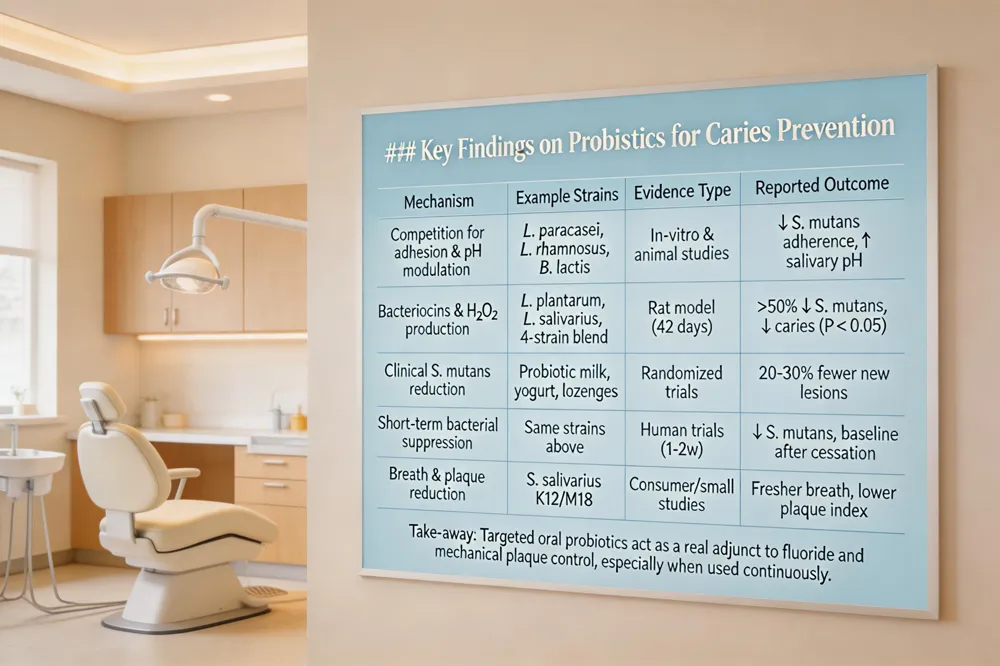 Probiotics are live, clinically‑studied microbes that can help keep the oral ecosystem balanced and protect teeth from decay. Mechanisms that inhibit Streptococcus mutans – Certain strains such as Lactobacillus paracasei, L. rhamnosus, and Bifidobacterium lactis compete with S. mutans for adhesion sites, produce bacteriocins, hydrogen peroxide, and raise salivary pH, thereby reducing acid‑driven enamel demineralisation. In‑vitro and animal‑model evidence – Laboratory studies show that a four‑strain blend (L. plantarum, L. salivarius, L. rhamnosus, L. paracasei) suppresses S. mutans biofilm formation. In a 42‑day rat model the same blend cut S. mutans counts on teeth by >50 % and lowered caries scores (Keyes method, P < 0.05). Clinical outcomes on caries incidence – Randomized trials with probiotic‑enriched milk, yogurt, lozenges, and curd report significant reductions in salivary S. mutans and, in several studies, a 20‑30 % decrease in new lesions in children and young adults. Short‑term vs. long‑term benefits – Bacterial reductions are evident after 1‑2 weeks of use, but counts often return to baseline after stopping, suggesting continuous or repeated intake for lasting protection. Dental probiotics reviews – Users note fresher breath, lower plaque, and fewer cavities when using products with proven strains (e.g., S. salivarius K12/M18). How do probiotics help rebuild teeth? – By lowering acid‑producing bacteria, they reduce enamel erosion, enhance salivary calcium/phosphate, and stimulate protective proteins, supporting natural remineralisation. Preventive effects of probiotics on dental caries in vitro and in vivo – The same multi‑strain blend shown in lab and rat studies demonstrates a practical, science‑backed approach to caries prevention. Probiotics for oral health: Myth or reality – Evidence confirms that targeted oral probiotics are a real adjunct, not a gimmick, complementing brushing, flossing, fluoride, and professional cleanings. Oral probiotics studies – Systematic reviews highlight strain‑specific benefits; patients should consult their dentist to select evidence‑based products that fit a personalized, family‑wide oral‑health plan.
Building a Strong Home Oral‑Care Routine
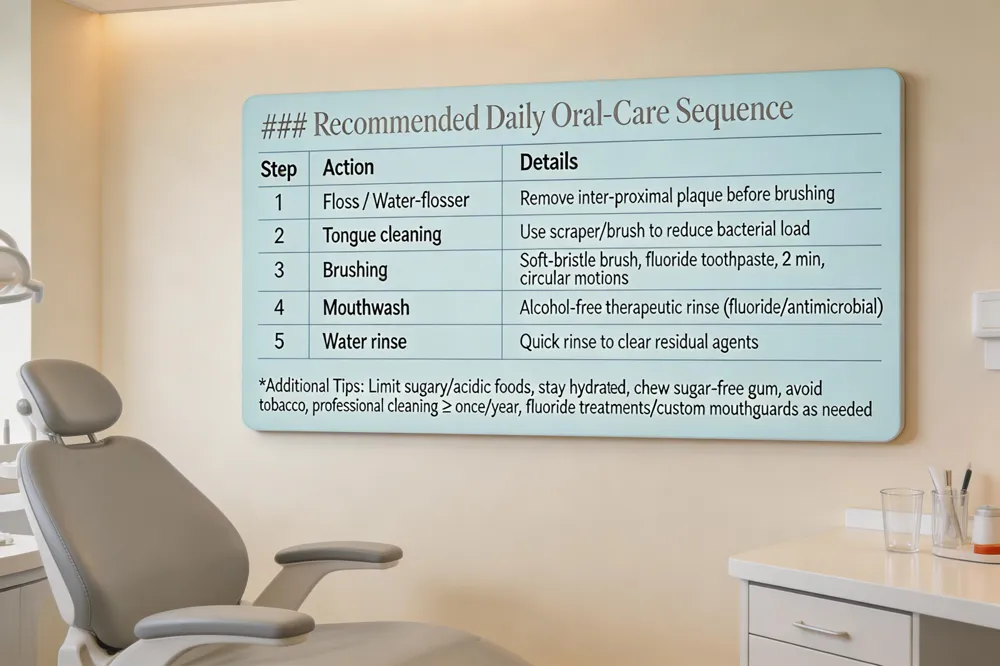
Recommended Daily Oral‑Care Sequence (Markdown Table)
| Step | Action | Details |
|---|---|---|
| 1 | Floss / Water‑flosser | Remove inter‑proximal plaque before brushing |
| 2 | Tongue cleaning | Use a scraper or brush to reduce bacterial load |
| 3 | Brushing | Soft‑bristle brush, fluoride toothpaste, 2 min, circular motions, quadrant‑wise |
| 4 | Mouthwash | Alcohol‑free therapeutic rinse (e.g., fluoride or antimicrobial) |
| 5 | Water rinse | Quick rinse to clear residual agents |
Additional Tips: Limit sugary/acidic foods, stay hydrated, chew sugar‑free gum, avoid tobacco, schedule professional cleaning ≥ once/year, and consider fluoride treatments or custom mouthguards as needed.
 A consistent, personalized oral‑care regimen is the cornerstone of a healthy smile for patients of every age. Teeth care tips at home – Brush twice daily with a soft‑bristle brush and fluoride toothpaste, using gentle circular motions that sweep the gum line. Follow each brush‑up with floss, interdental brushes, or a water flosser to clear plaque from between teeth. Limit sugary and acidic foods, stay well‑hydrated, and consider sugar‑free gum to boost saliva flow and protect enamel. Avoid tobacco and keep alcohol intake moderate, as both heighten the risk of cavities, gum disease, and oral cancer. Schedule a professional cleaning at least once a year, and discuss fluoride treatments or a custom mouthguard with your dentist.
Oral hygiene routine order – Start with floss or a water‑flosser, then clean the tongue with a scraper. Brush all surfaces for two minutes, dividing the mouth into quadrants. Rinse with an alcohol‑free therapeutic mouthwash, and finish with a quick water rinse. This sequence maximizes plaque removal and promotes gum health.
Types of oral hygiene – Mechanical cleaning (brushing, flossing), chemical hygiene (fluoride or antimicrobial mouth rinses), and professional hygiene (cleanings, sealants, fluoride applications) work together. Adjuncts such as water‑flossers and tongue scrapers enhance results.
Oral health tips for adults – Maintain the twice‑daily brush‑and‑floss habit, choose fluoridated water, stay hydrated, and protect your teeth with a mouthguard during sports. Regular dental exams are essential, especially for those with diabetes or other chronic conditions.
The 3‑3‑3 rule – Brush three times a day, spend three minutes each session, and replace your brush every three months to keep your oral ecosystem balanced and resilient.
Choosing the Right Probiotic Products for Your Family
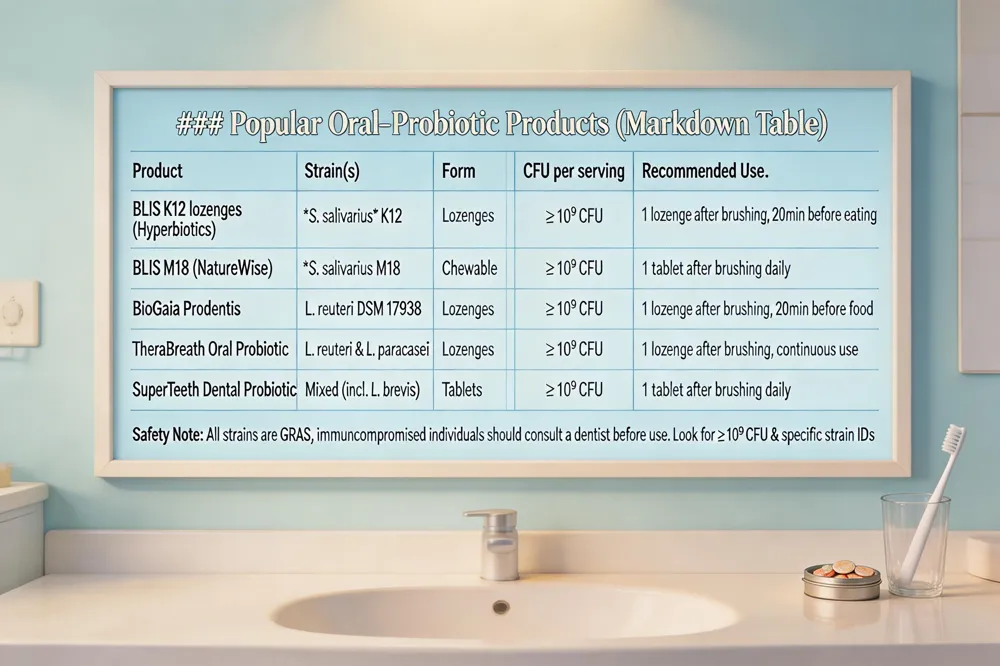
Popular Oral‑Probiotic Products (Markdown Table)
| Product | Strain(s) | Form | CFU per serving | Recommended Use |
|---|---|---|---|---|
| BLIS K12 lozenges (Hyperbiotics) | S. salivarius K12 | Lozenges | ≥ 10⁹ CFU | 1 lozenge after brushing, 20 min before eating |
| BLIS M18 chewable tablets (NatureWise) | S. salivarius M18 | Chewable tablet | ≥ 10⁹ CFU | 1 tablet after brushing, daily |
| BioGaia Prodentis | L. reuteri DSM 17938 | Lozenges | ≥ 10⁹ CFU | 1 lozenge after brushing, 20 min before food |
| TheraBreath Oral Probiotic | L. reuteri & L. paracasei | Lozenges | ≥ 10⁹ CFU | 1 lozenge after brushing, continuous use |
| SuperTeeth Dental Probiotic | Mixed oral strains (incl. L. brevis) | Tablets | ≥ 10⁹ CFU | 1 tablet after brushing, daily |
Safety Note: All strains are GRAS; immunocompromised individuals should consult a dentist before use. Look for products listing specific strain IDs and ≥ 10⁹ CFU per serving.
 Best probiotics for teeth and gums
The most effective oral probiotics target the oral microbiome directly. Strains such as Streptococcus salivarius K12 and BLIS M18, Lactobacillus reuteri, Lactobacillus brevis, and Lactobacillus rhamnosus have consistently lowered salivary Streptococcus mutans, reduced plaque, and eased gingival inflammation in clinical trials. Lozenges or chewable tablets (e.g., BLIS K12 lozenges, Hyperbiotics PRO‑Dental, TheraBreath Oral Probiotic lozenges, NatureWise Oral Health Probiotic) deliver live cultures where they are needed most. Pair these with twice‑daily brushing, flossing, and routine cleanings at Veenstra Family Dental for optimal protection.
Oral probiotics for teeth and gums
Oral probiotics are dietary supplements that introduce beneficial bacteria to balance the oral ecosystem. Evidence shows S. salivarius M18, L. reuteri and L. paracasei reduce plaque formation, gum inflammation, and cavity incidence. Products like BioGaia Prodentis and SuperTeeth Dental Probiotic provide these strains in lozenges that dissolve slowly after brushing, allowing colonization of oral tissues. Use one tablet after brushing, wait 20 minutes before eating or drinking, and continue daily for sustained benefit.
NatureWise Oral Health Probiotics
NatureWise offers sugar‑free chewable tablets with BLIS K12 (fresh breath) and BLIS M18 (gum health). Each 0.48 g tablet supplies a clinically studied dose; a 30‑tablet bottle provides a month’s supply. Take one tablet after brushing as part of a comprehensive oral‑care routine.
Best probiotics for mouth ulcers
Mouth ulcer relief benefits from L. reuteri and L. acidophilus, which modulate inflammation and crowd out pathogens. ProBiora lozenges and BLIS K12 lozenges keep the cultures in contact with ulcer sites, promoting faster healing. Use after brushing, avoid mouthwash for 30 minutes, and continue daily for several weeks.
Safety and product selection
All listed strains are Generally Recognized As Safe (GRAS); adverse effects are rare and mild. Immunocompromised patients should consult their dentist before starting any probiotic. Choose products that list specific strain IDs, provide ≥10⁹ CFU per serving, and have been validated in peer‑reviewed studies. Consistent use, combined with professional preventive care, helps maintain a healthy oral microbiome for every family member.
Integrating Probiotics with Traditional Preventive Dentistry
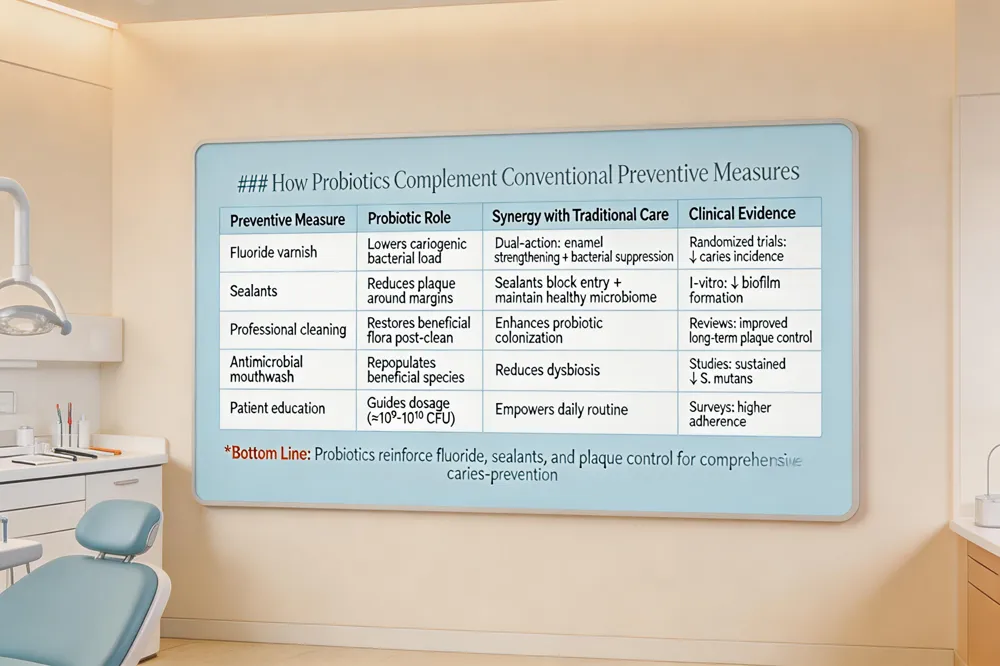
How Probiotics Complement Conventional Preventive Measures (Markdown Table)
| Preventive Measure | Probiotic Role | Synergy with Traditional Care | Clinical Evidence |
|---|---|---|---|
| Fluoride varnish | Lowers cariogenic bacterial load, allowing fluoride to remineralize more effectively | Dual‑action: chemical enamel strengthening + biological bacterial suppression | Randomized trials show ↓ caries incidence when combined |
| Sealants | Protect occlusal pits; probiotics reduce plaque colonization around sealant margins | Sealants block physical entry, probiotics maintain a healthy microbiome | In‑vitro studies demonstrate ↓ biofilm formation on sealed surfaces |
| Professional cleaning | Removes mature plaque; probiotics help re‑establish beneficial flora post‑cleaning | Cleaner surfaces enhance probiotic colonization | Systematic reviews note improved long‑term plaque control with probiotic adjuncts |
| Antimicrobial mouthwash | Targets broad bacteria; probiotics repopulate beneficial species after rinse | Reduces risk of dysbiosis; probiotics fill ecological niches | Clinical studies show sustained ↓ S. mutans when probiotics follow mouthwash use |
| Patient education | Informs about strain selection, dosage (≈ 10⁹‑10¹⁰ CFU), and duration | Empowers patients to integrate probiotics into daily routine | Surveys indicate higher adherence when counseling includes probiotic guidance |
Bottom Line: Probiotics act as a biologically‑based adjunct, reinforcing the effects of fluoride, sealants, and mechanical plaque control for a comprehensive caries‑prevention strategy.
 Can a dentist prescribe Ambien?
Yes. In offices that offer sedation dentistry, dentists with a DEA license may prescribe zolpidem (Ambien) for short‑term use to manage dental anxiety or aid sleep before a procedure. The prescription is tailored to the patient’s needs, and the dentist monitors drug interactions and side‑effects.
Can a dentist prescribe Ambien?
Yes. In offices that offer sedation dentistry, dentists with a DEA license may prescribe zolpidem (Ambien) for short‑term use to manage dental anxiety or aid sleep before a procedure. The prescription is tailored to the patient’s needs, and the dentist monitors drug interactions and side‑effects.
Do oral probiotics work for bad breath? Yes. Strains such as Streptococcus salivarius K12, delivered via lozenges or tablets, reduce volatile‑sulfur‑compound‑producing bacteria on the tongue and gums. Probiotics reshape the oral microbiome, but they work best alongside brushing, flossing, and antimicrobial rinses.
What is included in preventive dental care? Preventive care combines routine exams, professional cleanings, fluoride varnish, sealant placement, digital X‑rays, oral‑cancer screens, gum‑disease assessments, and personalized counseling on oral, and nutrition, and tobacco cessation.
Benefits of oral hygiene Consistent brushing, flossing, and professional cleanings keep the microbial balance, preventing plaque, cavities, gum disease, and halitosis. Good oral health lowers systemic infection of and apnea diabetes heart and diabetes long implants, complications, and. andn
Adjunctive role of probiotics Clinical trials show probiotic strains (e.g., L. paracasei, L. rhamnosus, B. lactis) lower salivary S. mutans counts, offering a natural adjunct to fluoride and sealants. Regular intake via fortified dairy, lozenges, or chewable tablets supports a balanced oral microbiome.
Synergy with fluoride and sealants Fluoride strengthens enamel while probiotics suppress cariogenic bacteria, creating a dual‑action defense. Sealants protect occlusal surfaces; when combined with probiotic supplementation, they further reduce new lesion development.
Patient education and counseling Our team explains strain selection, dosage (≈10⁹‑10¹⁰ CFU), and duration, emphasizing that probiotics complement—not replace—mechanical plaque control.
Future research directions Long‑term, large‑scale trials are needed to standardize regimens, explore synbiotic formulas, and confirm sustained caries‑preventive benefits across age groups.
Putting It All Together for a Healthier Smile
Probiotic‑based oral care can complement your daily brushing, flossing and fluoride use by lowering the levels of caries‑causing Streptococcus mutans, reducing plaque, and modestly easing gingival inflammation. Clinical trials show that strains such as Lactobacillus rhamnosus, L. reuteri and Bifidobacterium animalis, when delivered in lozenges, fortified yogurts or chewing gum, can cut new cavity formation by up to 20 % and boost salivary antimicrobial peptides. But these benefits are short‑term and work best when combined with regular professional care. Routine check‑ups, cleanings, and sealants allow us to catch early decay, monitor oral microbiome changes, and tailor probiotic recommendations to each family member—from toddlers to seniors.
If you live in Midland Park, our friendly, modern office invites families to schedule a preventive visit. Let us design a personalized oral‑health plan that blends proven hygiene practices with evidence‑based probiotic adjuncts, keeping every smile healthy and bright for years to come.