Why Replacing a Missing Tooth Matters
Tooth loss is common in the United States—about 69 % of adults 35‑44 have lost at least one tooth, and by age 74 roughly one‑quarter are completely edentulous. Missing teeth can disrupt the bite, making chewing uncomfortable and speech less clear. They also allow neighboring teeth to drift, leading to mis‑alignment, bite problems, and a loss of facial support that can change a smile’s appearance over time. To restore function and aesthetics, dentists offer fixed‑restoration options such as dental bridges and dental implants. Bridges anchor a false tooth to crowns placed on adjacent healthy teeth, while implants replace the root with a surgically placed titanium post that fuses to the jawbone. Both solutions prevent the gap from causing further oral‑health issues, but they differ in invasiveness, cost, longevity, and impact on surrounding teeth. Choosing the right option involves a personalized assessment of bone health, overall medical condition, budget, and aesthetic goals, all delivered in a modern, welcoming dental office.
When Dentists Recommend a Bridge
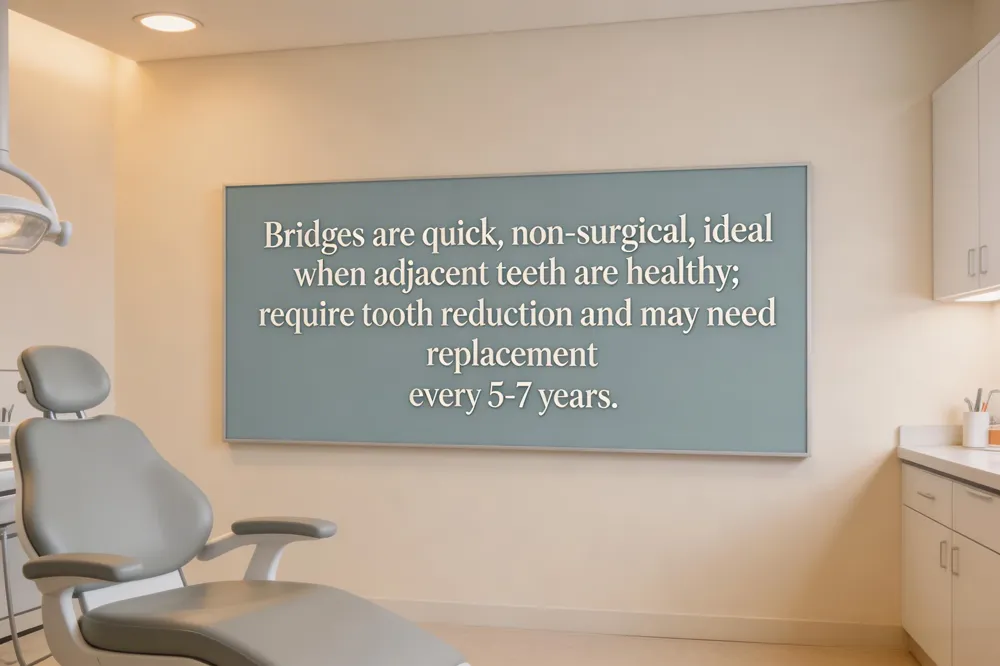 Dental bridges are a non‑surgical way to fill a missing tooth gap, making them ideal when a patient cannot undergo implant surgery. They are placed in just two visits, avoid the 2‑6‑month healing period implants require, and are often covered more fully by dental insurance, keeping upfront costs lower (≈$500‑$1,200 per unit plus crown fees). A bridge is a good option when the adjacent teeth are healthy enough to serve as abutments, preserving the smile without sacrificing additional tooth structure. However, bridges do require reduction of those neighboring teeth, can increase the risk of decay, and do not stimulate the jawbone, so they may need replacement every 5‑7 years. Patients with severe gum disease, insufficient adjacent tooth support, or poor oral‑hygiene habits are not ideal candidates. In cases where bone density is low, medical conditions make surgery risky, or a quick, affordable solution is needed, dentists often prefer bridges over implants while still offering a natural appearance and functional restoration.
What to Expect Before an Implant
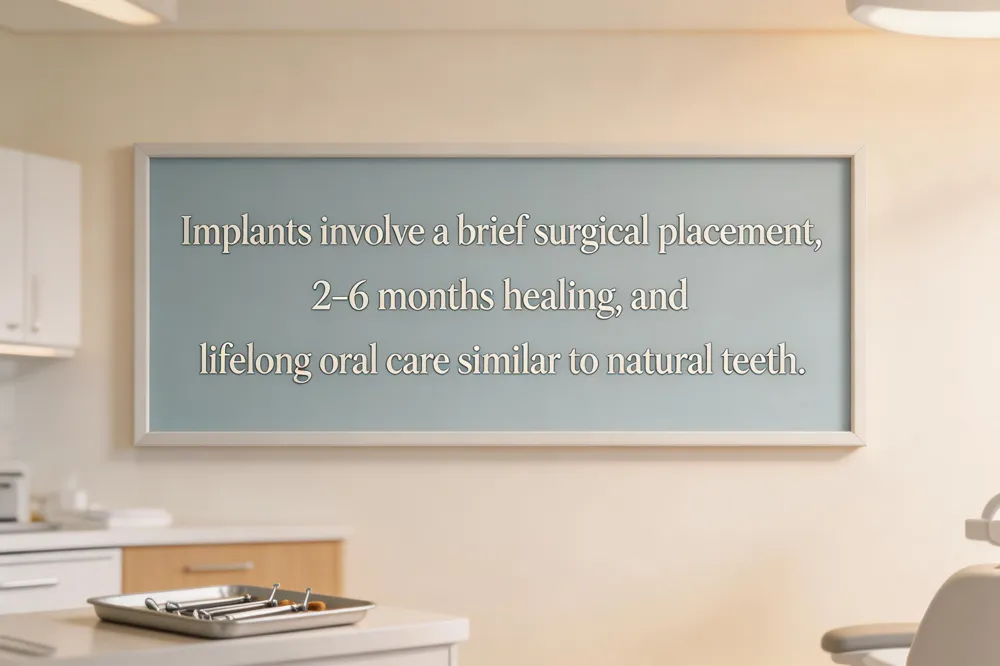 The surgical step is brief and done under local anesthesia. A titanium post is drilled into the bone, a temporary crown may be placed, and the site is closed. Healing (osseointegration) takes 2‑6 months, during which you eat soft foods and keep the area clean. Most post‑operative swelling and soreness subside within a week; pain is generally mild and manageable with over‑the‑counter medication.
What I wish I knew before dental implants? I learned that implants need daily brushing, flossing and regular check‑ups just like natural teeth, and that the healing timeline can be several months if bone grafting is required.
What is more painful, a bridge or an implant? Implants cause short‑term surgical discomfort, whereas bridges involve only mild grinding sensitivity after tooth preparation.
Minimum age for dental implants? Typically 18‑20 years, after the jaw has finished growing.
Dental implantation process? Assessment → possible bone graft → surgical placement → healing → abutment → permanent crown.
What is getting a dental implant like? A quick outpatient procedure under local anesthesia, followed by a few months of bone integration and then a natural‑looking, permanent tooth.
How many dental implants are placed each year? About 2.5 million in the United States alone, a number that continues to rise.
What is the 3/2 rule for dental implants? It requires at least 3 mm of bone thickness on the facial side and 2 mm of soft tissue between the implant and neighboring teeth to ensure stability and aesthetics.
Pros and Cons: Bridge vs. Implant
 When deciding between a dental bridge and an implant, consider four key factors:
Longevity and success rates – Implants boast a 97 % ten‑year success rate and can last 15 years or more, often a lifetime, with proper care. Bridges typically need replacement every 5‑7 years and may last up to 10‑15 years.
Impact on adjacent teeth and bone – Implants preserve neighboring teeth because no crowns are placed on them, and they stimulate the jawbone, preventing resorption. Bridges require preparation (shaving) of the two supporting teeth, increasing decay risk and offering no bone‑preserving benefit.
Aesthetic outcomes – Both restorations can be matched to natural tooth color, but implants usually maintain a more natural appearance longer because they emerge from the gum line like a real tooth, while bridges may lose their translucency over time.
Maintenance and oral hygiene – Implants are cleaned like natural teeth (brushing and flossing). Bridges need special flossers or water flossers to clean under the pontic and around the supporting crowns, which can be more demanding.
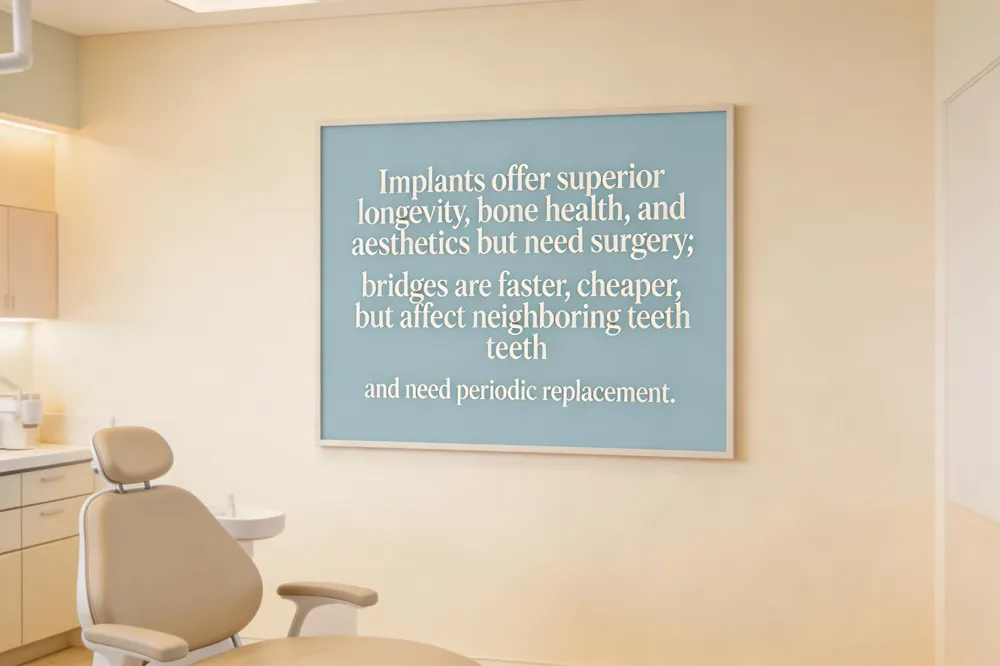
Pros & Cons Summary – Implants provide superior long‑term stability, bone health, and aesthetics but require surgery, a healing period, and higher upfront cost. Bridges are quicker, non‑invasive, and often covered by insurance, yet they involve altering healthy teeth and may need periodic replacement. The best choice depends on your oral health, budget, treatment timeline, and personal preferences; discuss these factors with your dentist to create a personalized plan.
Cost, Insurance, and Financial Planning
 When you’re deciding between a dental bridge and an implant, understanding the financial picture is essential.
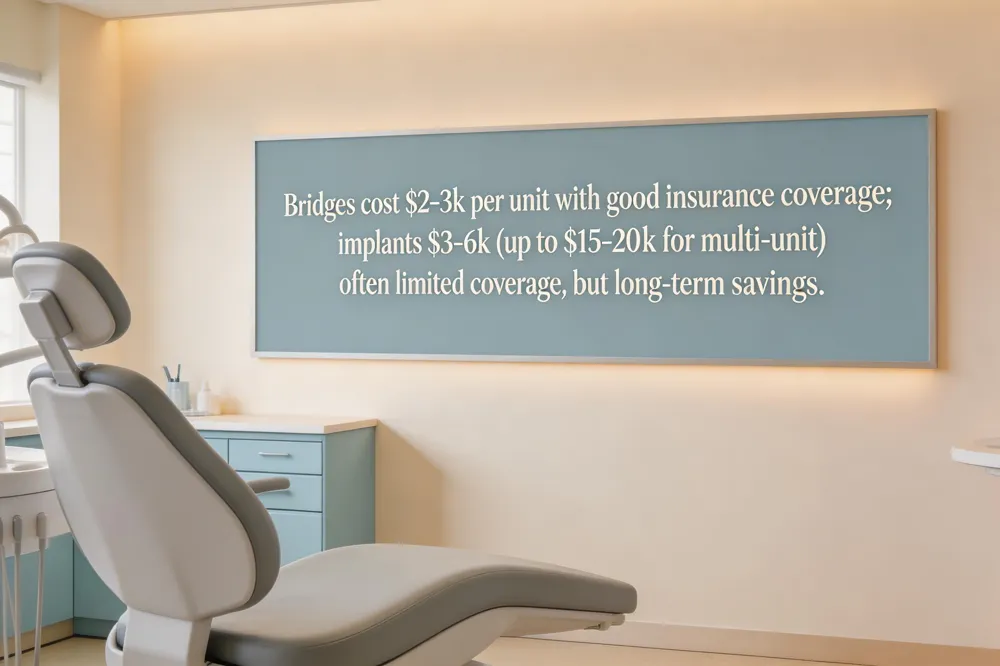
Up‑front price differences – A traditional three‑unit bridge usually costs $2,000‑$3,000 per unit, while a single‑tooth implant runs $3,000‑$6,000 (often $5,000‑$6,000 including the crown). Implant‑supported bridges are more expensive: a three‑tooth implant bridge is $9,000‑$15,000 and a four‑tooth version $12,000‑$20,000, because each titanium post and its components cost $3,000‑$5,000.
Typical insurance coverage – Dental insurance plans frequently cover bridges as a major restorative procedure, often paying 50‑80 % after the deductible, leaving a modest out‑of‑pocket amount. Implants are considered elective; coverage is limited or may only apply to the surgical portion, so the crown and abutment are usually your responsibility.
Long‑term cost analysis – Bridges generally need replacement every 5‑10 years, which can add up over a lifetime. Implants have a 10‑year success rate of about 97 % and can last 20‑30 years or more, often making them more cost‑effective despite the higher initial price.
Specialized bridge costs – Multi‑unit bridges (3‑unit, 4‑unit) fall in the $3,000‑$7,500 range for three units and $4,500‑$10,000 for four, depending on materials and any required preparatory work.
At Veenstra Family Dental we combine modern digital imaging, guided surgery, and flexible financing to create a personalized, affordable plan that fits your oral‑health goals and budget.
Special Cases: Front Teeth, Multiple Teeth, and Community Insights
 Dental Bridge vs Implant for Front Teeth:
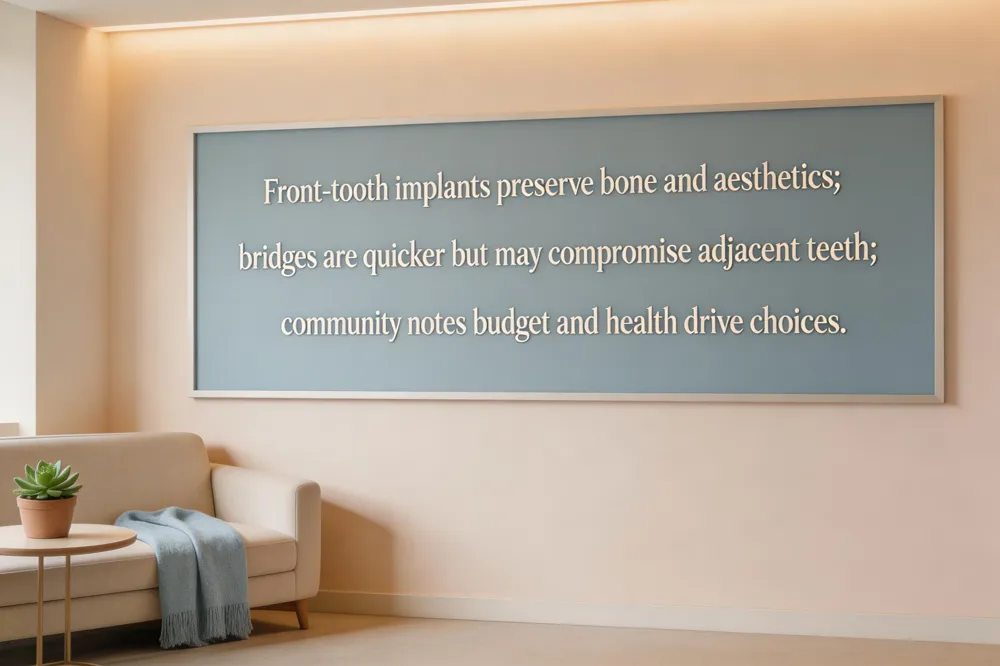
For a missing front tooth, a bridge offers a quick, non‑surgical solution using adjacent teeth as anchors. It requires minimal tooth reduction and can be completed in two visits, but the supporting teeth are shaved down and the restoration may need replacement every 5‑7 years. An implant places a titanium post directly into the jawbone, preserving bone and avoiding alteration of neighboring teeth. Though surgery and a 2‑6 month healing period are required, implants typically provide a more stable, long‑term aesthetic that feels like a natural tooth. If your side teeth are healthy and you need a faster, lower‑cost option, a traditional or Maryland bridge may be suitable; however, for a permanent, bone‑preserving result, an implant is often preferred.
Dental Bridge vs Implant for Front Teeth:
For a missing front tooth, a bridge offers a quick, non‑surgical solution using adjacent teeth as anchors. It requires minimal tooth reduction and can be completed in two visits, but the supporting teeth are shaved down and the restoration may need replacement every 5‑7 years. An implant places a titanium post directly into the jawbone, preserving bone and avoiding alteration of neighboring teeth. Though surgery and a 2‑6 month healing period are required, implants typically provide a more stable, long‑term aesthetic that feels like a natural tooth. If your side teeth are healthy and you need a faster, lower‑cost option, a traditional or Maryland bridge may be suitable; however, for a permanent, bone‑preserving result, an implant is often preferred.
Single Tooth Replacement – Bridge vs Implant‑Supported Restoration: A single‑tooth bridge bonds a pontic to crowns on the two neighboring teeth, which can accelerate bone loss in the empty socket. An implant‑supported crown or short bridge preserves adjacent teeth and stimulates the jawbone, offering superior durability and fewer long‑term maintenance costs. Bridges are less expensive upfront and completed in a few visits, while implants require surgery and months of healing but can last decades.
Reddit Community Perspectives: Reddit users frequently note that bridges are quicker and cheaper but compromise healthy teeth and may lead to bone loss. Implants, though more invasive and costly initially, preserve bone density, avoid altering neighboring teeth, and often last 15‑20 years or more. Many commenters stress that the decision hinges on budget, jawbone health, willingness for surgery, and desired longevity of the restoration.
Oral Hygiene, Maintenance, and Helpful Rules
 Keeping both implants and bridges clean is essential for long‑term success. For implants, brush twice daily with a soft‑bristled brush at a 45° angle to the gum line and floss once a day using thin‑ended floss or a water flosser to reach around the titanium post. Bridges require the same daily brushing, but because a pontic sits between two crowns, special tools—such as floss threaders, interdental brushes, or a water flosser—are needed to clean under the bridge and prevent plaque buildup. Follow the 3‑3‑3 rule: brush three times a day, spend three minutes each session, and replace your brush every three months. The 50‑40‑30 aesthetic guideline helps maintain a harmonious smile by keeping the contact widths of the upper front teeth at roughly 50 %, 40 % and 30 % of the central incisor height, respectively. By combining diligent oral hygiene with these simple rules, patients can enjoy durable, natural‑looking restorations while preserving gum health.
Making the Right Choice for Your Smile
Choosing between a dental implant and a bridge involves several personal factors. First, consider the health of the surrounding teeth and jawbone—implants preserve natural teeth and stimulate bone, while bridges require crowns on adjacent teeth. Next, evaluate your budget and insurance coverage; bridges often have lower upfront costs and broader coverage, whereas implants, though more expensive initially, tend to last a lifetime with fewer replacements. Treatment time matters, too—bridges can be placed in two visits, while implants need surgery and a 2‑6‑month healing period. Finally, think about long‑term oral health goals, such as preventing bone loss and maintaining a natural feel. At Veenstra Family Dental, our experienced team uses modern, minimally invasive techniques to assess your unique anatomy and health history. We invite you to schedule a personalized consultation so we can tailor a solution that fits your lifestyle, preserving your smile for years to come.