The Growing Need for Senior Dental Care
America’s senior population is expanding rapidly; by 2030 nearly 20 % of the U.S. will be 72 years or older. More adults keep their natural teeth longer, so dental problems such as cavities, gum disease, and dry mouth are becoming common in an otherwise healthy mouth. Research shows that untreated gum inflammation can worsen heart disease, diabetes, stroke, and even cognitive decline, while dry mouth increases infection risk and tooth decay. Regular, compassionate check‑ups using digital X‑rays, gentle scaling, and personalized hygiene coaching allow early detection and treatment, preserving teeth, comfort, and overall health. A welcoming, modern practice makes these essential visits easy and enjoyable for every senior through collaborative care today.
Understanding Geriatric Dentistry and Dental Aging
| Aspect | Details |
|---|---|
| Oral‑health focus | Tailored preventive and restorative care for seniors, addressing age‑related changes, chronic conditions, medication effects. |
| Dental aging | Enamel thins, gums recede, bone density declines, saliva production drops (xerostomia). |
| Risks of reduced saliva | Higher decay, infection, difficulty chewing, increased systemic disease risk. |
| Importance of hygiene | Plaque → gum disease → heart disease, diabetes complications, nutrition loss. |
| Evidence | Regular check‑ups linked to better hygiene habits, lower pain‑med use use, higher QoL (PMCID: PMC10136530). |
| Veenstra Family Dental approach | Digital X‑rays, gentle anesthesia, personalized education, bi‑annual visits for early detection. |
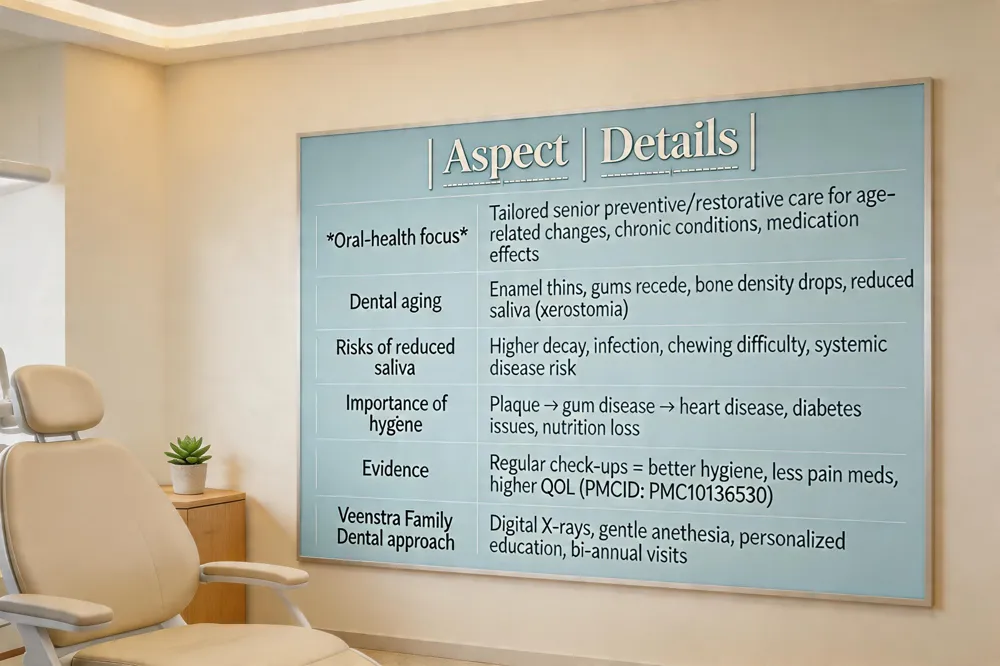 Geriatric dentistry is a specialty focused on the oral‑health needs of older adults, addressing age‑related changes, chronic medical conditions, medication effects, and providing preventive and restorative care tailored to seniors. Dental aging describes the natural, progressive changes in teeth, gums, and supporting bone: enamel thins, gums recede, bone density declines, and saliva production drops. Yes, older adults often produce less saliva (xerostomia) due to gland changes and many medications, increasing the risk of decay and infection. Good oral hygiene is especially important because plaque buildup can lead to gum disease, heart disease, diabetes complications, and nutrition loss. Studies show that seniors who attend regular dental check‑ups have better oral‑hygiene habits, lower medication use for dental pain, and higher quality‑of‑life scores. At Veenstra Family Dental we use modern digital X‑rays, gentle anesthesia, and personalized education to help seniors maintain functional dentition, comfort, and overall health. Regular bi‑annual visits enable early detection of cavities, periodontal disease, and oral cancer, preserving smiles and supporting systemic well‑being. This commitment continues throughout their life.
Common Oral Health Challenges for Seniors
| Challenge | Causes / Risk Factors | Prevention / Management |
|---|---|---|
| Dental caries (coronal & root) | Thin enamel, receding gums, dry mouth, high‑sugar diet. | Fluoride toothpaste, regular cleanings, diet control, sealants. |
| Periodontal disease | Plaque, smoking, diabetes, poor oral hygiene. | Twice‑daily brushing, flossing/water‑flosser, routine periodontal exams. |
| Xerostomia (dry mouth) | Medications (antihistamines, antidepressants, antihypertensives), systemic illnesses. | Hydration, saliva‑stimulating mouthwash, sugar‑free gum, medication review. |
| Denture issues | Ill‑fitting prostheses, poor hygiene. | Proper fitting, nightly cleaning, relining as needed. |
| Oral candidiasis | Dry mouth, denture wear, immunosuppression. | Antifungal treatment, maintain denture hygiene, manage xerostomia. |
| Oral cancer | Age, tobacco/alcohol use, HPV. | Annual oral cancer screening, avoidance of risk factors. |
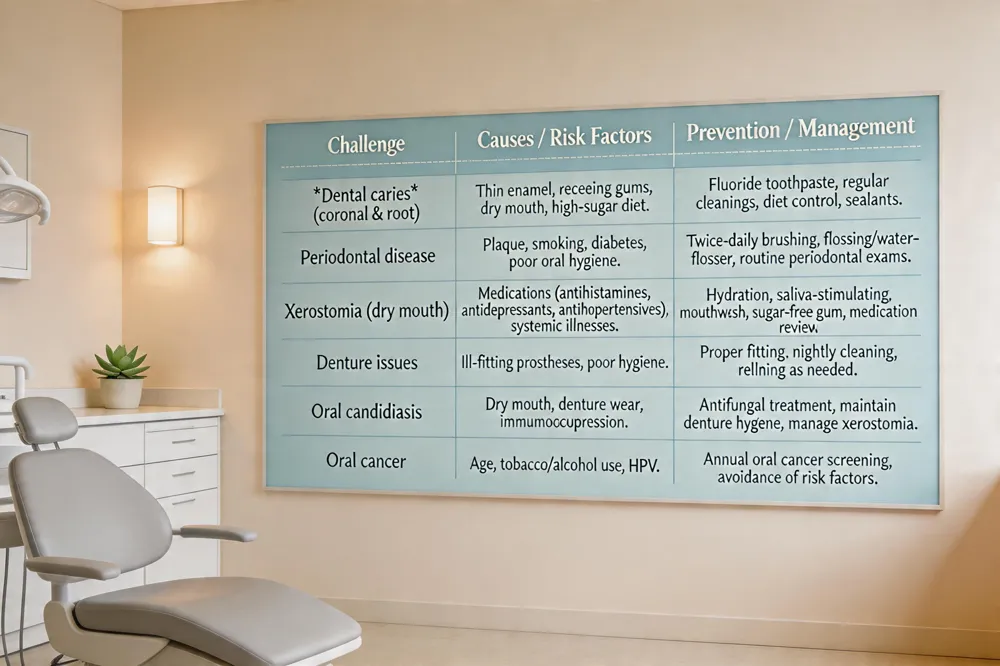 Common oral health problems in the elderly
Older adults most often face dental caries—including coronal decay and root caries that develop near the gum line—along with periodontal disease that causes gum inflammation, recession, and tooth loss. Xerostomia (dry mouth) is common because of medications and systemic illnesses, raising decay risk and discomfort. Denture‑related issues such as ill‑fitting prostheses, denture stomatitis, and angular cheilitis are prevalent among removable‑appliance users. Oral candidiasis and other fungal infections frequently accompany dry mouth or denture wear, while the incidence of oral cancer rises with age and tobacco or alcohol use. Systemic conditions like diabetes and cardiovascular disease both exacerbate oral disease and are worsened by poor oral health.
Common oral health problems in the elderly
Older adults most often face dental caries—including coronal decay and root caries that develop near the gum line—along with periodontal disease that causes gum inflammation, recession, and tooth loss. Xerostomia (dry mouth) is common because of medications and systemic illnesses, raising decay risk and discomfort. Denture‑related issues such as ill‑fitting prostheses, denture stomatitis, and angular cheilitis are prevalent among removable‑appliance users. Oral candidiasis and other fungal infections frequently accompany dry mouth or denture wear, while the incidence of oral cancer rises with age and tobacco or alcohol use. Systemic conditions like diabetes and cardiovascular disease both exacerbate oral disease and are worsened by poor oral health.
Oral health for healthy ageing Good oral health is a cornerstone of healthy ageing, enabling a varied diet and overall wellbeing. Brush twice daily with a soft‑bristle brush and fluoride toothpaste, and floss or use a water flosser each day to remove plaque. Schedule regular dental check‑ups and cleanings at Veenstra Family Dental, where early signs of gingivitis, periodontitis, or dry mouth can be treated before they affect nutrition or increase dementia risk. Stay hydrated, limit sugary snacks, and manage chronic conditions and medications that reduce saliva. Quit smoking to protect teeth, heart, brain, and lungs.
Why is regular dental care important for overall health? Routine dental visits keep harmful bacteria in check, preventing infections that can spread to other parts of the body. By reducing gum inflammation, cleanings lower the risk of cardiovascular problems such as heart disease and stroke. Early detection of oral issues also alerts dentists to systemic conditions like diabetes, osteoporosis, or early signs of Alzheimer’s disease. Healthy teeth and gums support proper nutrition and speech, promoting overall well‑being. In short, consistent dental care protects both your smile and your entire body.
Preventive Care: Exams, X‑rays, and the 3‑3‑3 Rule
| Care Item | Recommended Frequency | Notes |
|---|---|---|
| Professional dental exam & cleaning | At least twice a year (bi‑annual); more often if disease present. | Early detection of cavities, gum disease, oral cancer. |
| Digital X‑rays | Every 12–24 months for most seniors; annually for high‑risk patients. | Low‑dose, clear imaging; essential for monitoring bone loss and hidden decay. |
| 3‑3‑3 pain rule | 3 × 200 mg ibuprofen every 3 h, max 3 days (only if medically appropriate). | Short‑term inflammation control; not a substitute for dental care. |
| Daily oral‑care routine | Brush twice daily with fluoride toothpaste; floss or water‑flosser daily; stay hydrated. | Reduces plaque, caries, and systemic inflammation. |
| Denture maintenance | Clean nightly; inspect for fit issues. | Prevents stomatitis and mechanical irritation. |
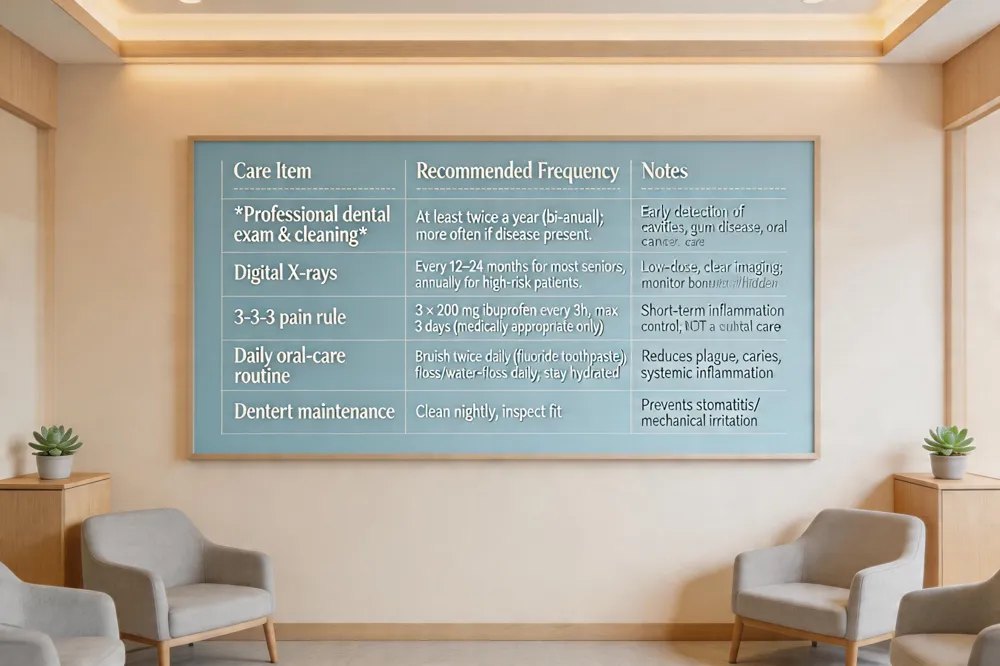 Regular dental examinations are the cornerstone of senior oral health. Most experts recommend a professional cleaning and check‑up at least twice a year, with more frequent visits for those who have gum disease, frequent cavities, or complex prosthetics. Modern low‑dose digital X‑rays are the preferred imaging tool for older adults because they deliver clear pictures while keeping radiation exposure minimal. Typically, seniors need new X‑rays every 12–24 months; patients with active disease or recent work may require annual imaging.
How often should seniors have dental X‑rays?
Seniors generally need dental X‑rays every 12–24 months, with many healthy patients receiving them approximately every 18–24 months. Those with gum disease, a history of cavities, or other risk factors should be imaged at least once a year.
What is the 3‑3‑3 rule in dentistry?
The 3‑3‑3 rule is a short‑term pain‑management guideline: take three 200 mg ibuprofen tablets (600 mg total) every three hours, for no more than three days, to reduce inflammation until a dentist can be seen. It is not a substitute for professional care and should be avoided by people with certain medical conditions.
Dental health for seniors
Brush twice daily with fluoride toothpaste, floss daily, stay hydrated, and use a saliva‑stimulating mouthwash to combat dry mouth. Limit sugary foods, avoid tobacco, and clean dentures each night. Promptly report any bleeding, sores, or loose teeth, and keep up with bi‑annual check‑ups for optimal health and quality of life.
Access and Affordability: Low‑Cost Options and Medicare
| Option | Description | Cost / Eligibility |
|---|---|---|
| NJDA Senior‑Dent Program | 15 % courtesy reduction with PAAD card. | NJ residents; low‑cost for preventive services. |
| Medicaid / State senior programs | Covers preventive care & basic procedures. | Low‑income seniors; varies by state. |
| Delta Dental insurance | Plans $46‑$63/month, annual caps up to $5,000. | Covers cleanings, fillings, crowns, some implants. |
| Federally Qualified Health Centers & Dental schools | Free or sliding‑scale services under supervision. | Open to all; priority to low‑income seniors. |
| Medicare Advantage (Part C) | Dental benefits included in many plans. | Requires enrollment; compare premiums & coverage. |
| Veenstra Care Plus plan | In‑house discount & flexible payment for fixed‑income patients. | Directly available through Veenstra Family Dental. |
 Low‑cost dental options for seniors
In New Jersey, seniors can begin with the NJDA Senior‑Dent Program, which offers a minimum 15 % courtesy reduction for patients who present a PAAD card. Medicaid or state‑run senior dental programs may also cover preventive care and basic procedures at little or no cost. Low‑cost dental insurance plans such as Delta Dental range from $46‑$63 per month with annual caps up to $5,000, covering cleanings, fillings, crowns and even some implants. Federally Qualified Health Centers, nonprofit community clinics, and dental‑school clinics provide free or sliding‑scale services under professional supervision. Veenstra Family Dental in Midland Park adds flexibility with payment plans and local resident discounts.
Dental care for seniors on Medicare
Original Medicare (Parts A & B) does not pay for routine dental services, except when medically necessary during an inpatient stay. Seniors can obtain coverage through Medicare Advantage (Part C) plans that include dental benefits, or by purchasing separate dental insurance or discount memberships. Some states also offer limited Medicaid dental benefits for low‑income seniors. Comparing premiums, out‑of‑pocket limits, and covered services helps choose the best plan, ensuring regular preventive care and reduced overall health costs.
Free dental care for senior citizens
Senior citizens can access free or low‑cost care via the NJDA Senior‑Dent Program, Medicaid, Federally Qualified Health Centers, and dental‑school clinics. Organizations like Dental Lifeline and local community health centers further assist with urgent or preventive needs. Contact Veenstra Family Dental to learn about eligibility for the NJDA discount and referrals to nearby free‑care resources.
Dental care for seniors near Midland Park, NJ
Veenstra Family Dental offers senior‑focused, compassionate care with modern technology (CEREC crowns, laser fillings, 3‑D CBCT imaging) and flexible scheduling. Their Care Plus in‑house plan lowers out‑of‑pocket costs for fixed‑income patients. Nearby practices such as Midland Park Family Dentistry and Ohana Dental provide gentle, minimally invasive treatments, accept major insurances and Medicaid, and offer senior‑friendly payment programs. Community health clinics in Passaic County and the Delta Dental network list additional dentists who accept Medicaid and Medicare Advantage plans, ensuring comprehensive oral‑health access for seniors in the area.
Special Considerations: Dementia, Dry Mouth, and Community Resources
| Condition | Care Tips | Resources |
|---|---|---|
| Dementia | Use soft‑bristled/electric toothbrush with easy grip; cue with verbal/visual prompts; adaptive devices (tennis‑ball‑grip brush, floss holders). | Caregiver guides, dementia‑friendly dental practices. |
| Xerostomia (dry mouth) | Stay hydrated, saliva‑stimulating mouthwash, sugar‑free gum, review medications, fluoride rinse. | Oral‑health education, pharmacist medication review. |
| Community resources | NJDA Senior‑Dent Program, Dental Lifeline, local health clinics, Veenstra referrals. | Contact Veenstra Family Dental for eligibility and referrals. |
| General senior oral‑health | Brush twice daily, floss, limit sugar, quit smoking, regular bi‑annual check‑ups. | Veenstra Family Dental, local senior centers, senior‑focused dental clinics. |
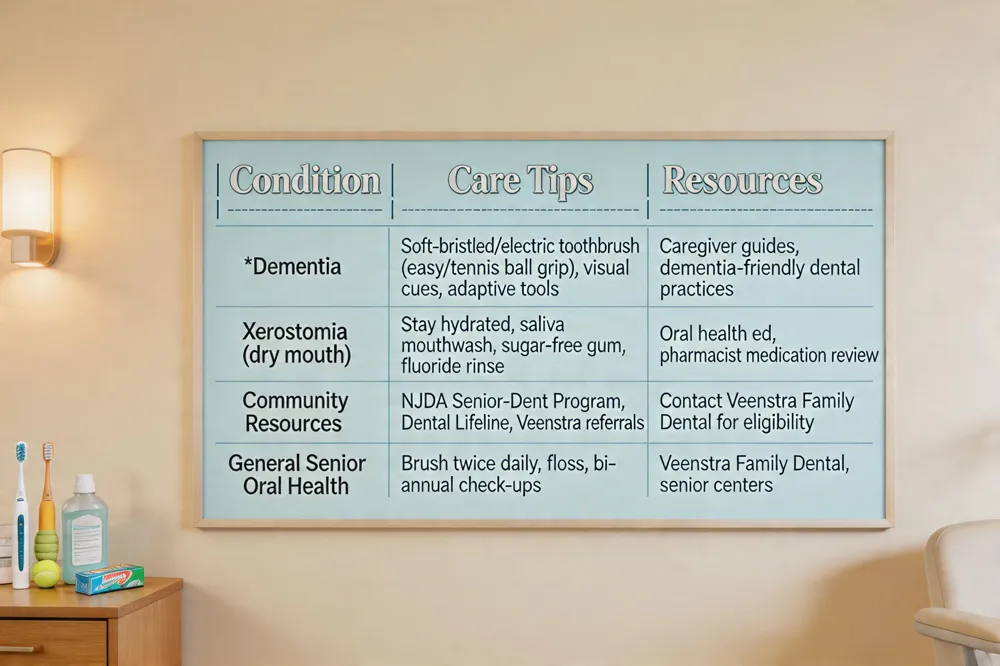 Caring for seniors with dementia requires a calm, predictable oral‑care routine. Use a soft‑bristled or electric toothbrush with a large, easy‑to‑hold grip, and a pea‑size amount of fluoride toothpaste. Caregivers can cue the task with short verbal prompts or visual cues, gently guiding the hand and offering choices to reduce resistance. Adaptive devices—such as a tennis‑ball‑grip toothbrush, floss holders, or a swish‑and‑spit mouthwash—help compensate for reduced dexterity or memory lapses. Inspect the mouth regularly for decay, gum inflammation, dry‑mouth discomfort, or ill‑fitting dentures, and schedule cleanings with a dentist experienced in dementia care.
Yes, older adults often produce less saliva (xerostomia). Age‑related gland changes, common medications (antihistamines, antidepressants, blood‑pressure drugs, diuretics), and conditions like diabetes or cancer treatments suppress flow. Reduced saliva raises the risk of decay, gum disease, and chewing difficulties.
Seniors should brush twice daily with fluoride toothpaste, floss, stay hydrated, and rinse with a saliva‑stimulating mouthwash. Limit sugary foods, avoid tobacco, and clean dentures nightly. Professional cleanings at least twice a year, plus prompt reporting of bleeding, sores, or loose teeth, support oral health and overall well‑being.
Prioritizing Dental Wellness for a Healthier Senior Life
Regular dental exams are a cornerstone of senior health, catching gum disease, cavities, dry mouth, and oral cancer early when treatment is simple and inexpensive. Studies show seniors who visit the dentist twice a year use far less pain medication, maintain better oral‑hygiene habits, and enjoy higher quality‑of‑life scores, including easier chewing and fewer dietary restrictions. Early detection also lowers the risk of systemic problems such as heart disease, diabetes complications, and pneumonia. In Midland Park, seniors can take advantage of Veenstra Family Dental’s digital X‑rays, cleaning techniques, and plans that respect mobility and medication issues. Call today to schedule a compassionate visit and protect your smile for years to come.