Introduction
At Veenstra Family Dental we offer a range of bridge options to restore missing teeth and keep smiles confident. Choices include porcelain‑fused‑to‑metal (PFM), all‑ceramic porcelain, and high‑strength zirconia restorations. Selecting the right material influences how long the bridge lasts, how natural it looks, and how it behaves under chewing forces. For front teeth, aesthetics often dictate porcelain or translucent zirconia, while posterior bridges benefit from the durability of PFM or zirconia. Our team evaluates each patient’s bite, gum health, metal sensitivities and budget before recommending a personalized solution. Using digital impressions and CAD/CAM milling, we create precise, comfortable restorations in a welcoming office that feels like home for patients of every age. Our friendly staff guides you through steps, ensuring total peace of mind.
Material Overview and Comparison
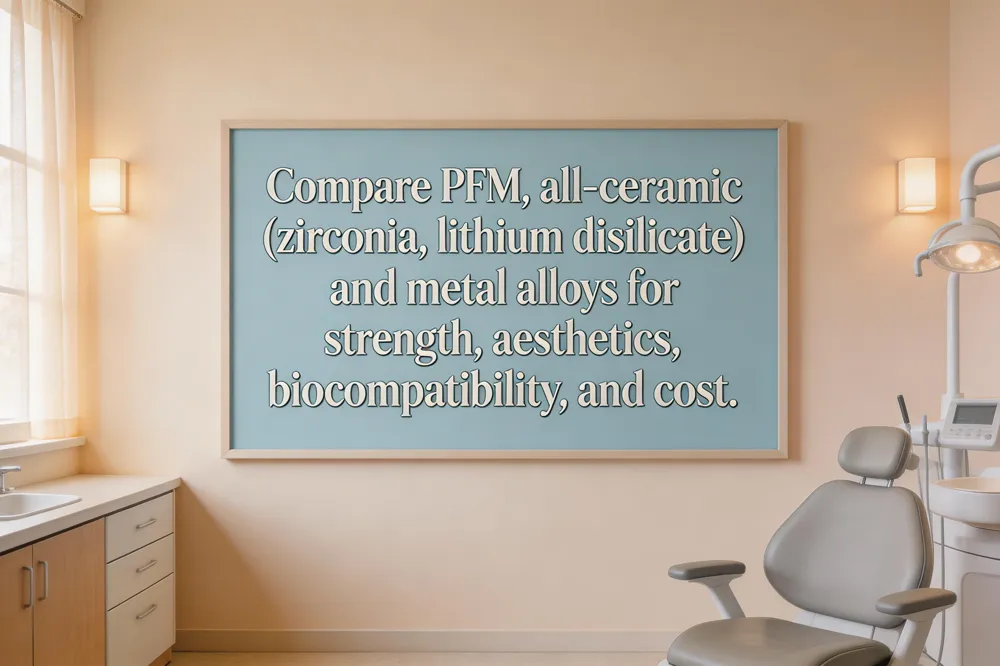 Dental bridges are most commonly made from porcelain‑fused‑to‑metal (PFM), all‑ceramic (such as zirconia or lithium disilicate), or metal alloys like gold or cobalt‑chromium. Porcelain offers the most natural translucency and excellent stain resistance, but it can chip or crack under heavy chewing forces especially on back teeth. All‑ceramic materials, especially zirconia, combine high strength with metal‑free aesthetics and good biocompatibility, though they tend to be pricier and slightly heavier than metal. Metal bridges provide superior durability and are ideal for posterior teeth, yet their metallic color is visible and they may cause allergic reactions in sensitive patients.
Dental bridge material comparison: PFM, all‑ceramic (zirconia, lithium disilicate), and metal alloys each have distinct strengths, aesthetics, and biocompatibility. Material choice depends on location, bite force, allergies, and budget.
Which dental bridge material is best? For most patients, high‑strength zirconia is the top choice because it offers a natural tooth‑like appearance, durability comparable to metal, and hypo‑allergenicity—making it ideal for families in Midland Park, NJ.
What is the strongest dental bridge material? Zirconia (zirconium dioxide) provides the highest flexural strength and fracture resistance, outperforming PFM, all‑ceramic, and acrylic options.
Which is better, zirconia or porcelain fixed bridge? Zirconia bridges are generally more durable (10‑15+ years) and hypoallergenic, while porcelain bridges excel in translucency but are more prone to chipping and have a shorter lifespan (5‑10 years). Zirconia is preferred when longevity and low maintenance are priorities; porcelain may be chosen for maximal aesthetic nuance and lower upfront cost.
Durability, Longevity, and Clinical Success
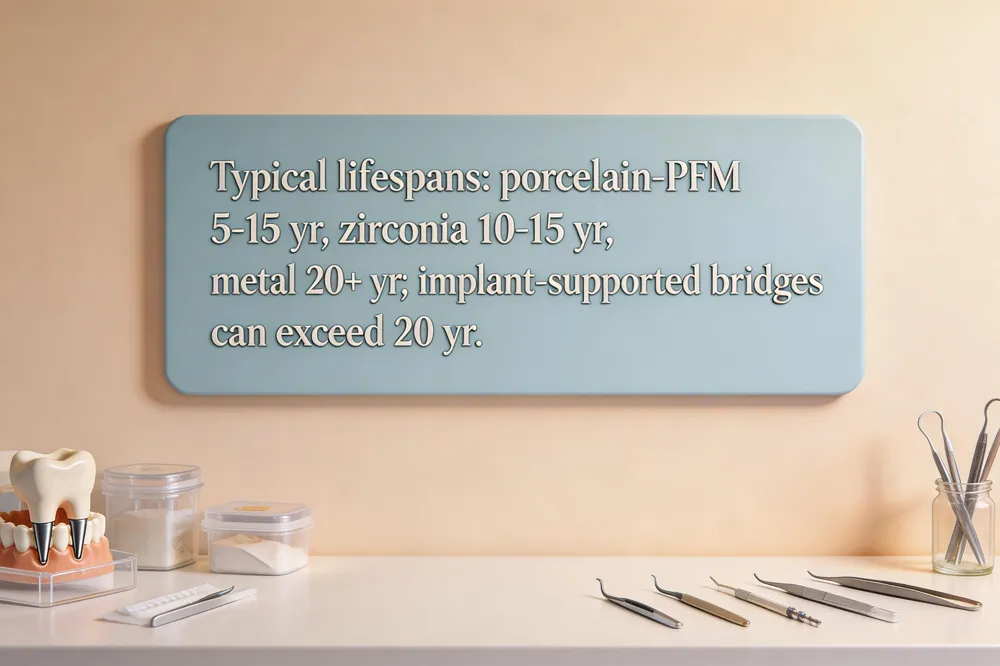 Typical bridge lifespans vary by material and support: porcelain‑fused‑to‑metal and all‑porcelain bridges usually last 5‑15 years, zirconia bridges 10‑15 years, and metal‑ceramic or gold bridges can exceed 20 years with proper care. Good oral hygiene and regular check‑ups dramatically extend these ranges, while excessive occlusal forces or bruxism shorten them. Implant‑supported bridges, anchored to titanium posts in the jawbone, often outlast tooth‑supported bridges—reaching 20 years or more—because they avoid decay of adjacent teeth. A dental bridge is a fixed restoration, not a lifetime fixture; diligent care is essential. The most reliable material for high‑stress areas is metal or zirconia, offering superior fracture resistance. For patients seeking the longest‑lasting option, Implant‑supported bridges provide the best clinical success, while traditional tooth‑supported bridges remain a reliable, less‑invasive alternative.
Aesthetic Choices and Patient Preferences
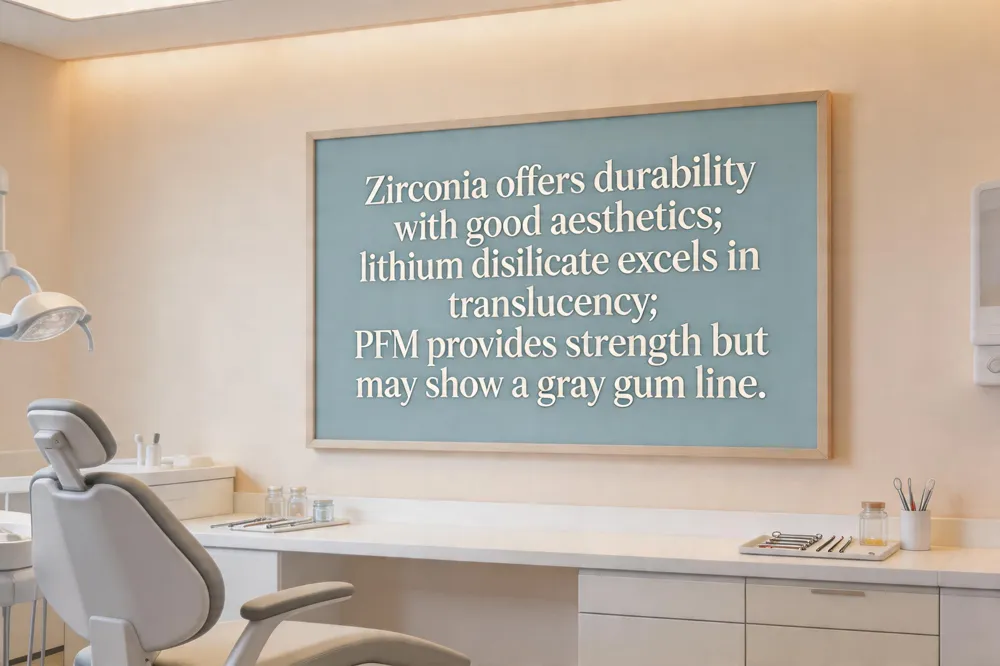 When choosing a bridge, patients often ask about translucency, color matching, and the best material for both looks and durability. Porcelain‑fused‑to‑metal (PFM) bridges combine a strong metal substructure with a porcelain overlay, giving solid strength but a risk of a gray gum line and porcelain chipping under heavy loads. Zirconia is a high‑strength ceramic, provides superior fracture resistance—ideal for posterior bridges and patients with strong bite forces—while modern multilayer zirconia can be layered for acceptable anterior aesthetics. lithium disilicate (E.max) excels in translucency and mimics natural enamel, making it the top choice for front‑tooth restorations where a lifelike appearance is paramount. Dentists are increasingly recommending zirconia because it is metal‑free, hypoallergenic, biocompatible, and offers a smooth, plaque‑resistant surface that supports gum health. In short, choose zirconia for function‑driven cases, E.max for cosmetic‑driven cases, and reserve PFM for situations where metal‑substructure is clinically necessary.
Cost, Insurance, and Financing
 When you choose a bridge at Veenstra Family Dental in Midland Park, NJ, the price depends on the material and span. Porcelain bridges typically run $2,000‑$5,000 for a single‑pontic unit, while zirconia bridges are $2,500‑$6,000 per unit because of their high strength and aesthetics. Metal‑only bridges are the most budget‑friendly, usually $500‑$1,500 per tooth, and a full three‑unit metal bridge often totals $1,000‑$3,000. Insurance plans frequently cover 50‑80 % of medically necessary bridges; you’ll still be responsible for deductibles and any co‑pay. Veenstra Family Dental offers flexible financing, including 0 % interest plans and payment schedules that spread costs over months. Our team will review your specific treatment plan, provide a personalized estimate, and help you maximize insurance benefits while keeping your out‑of‑pocket expenses manageable.
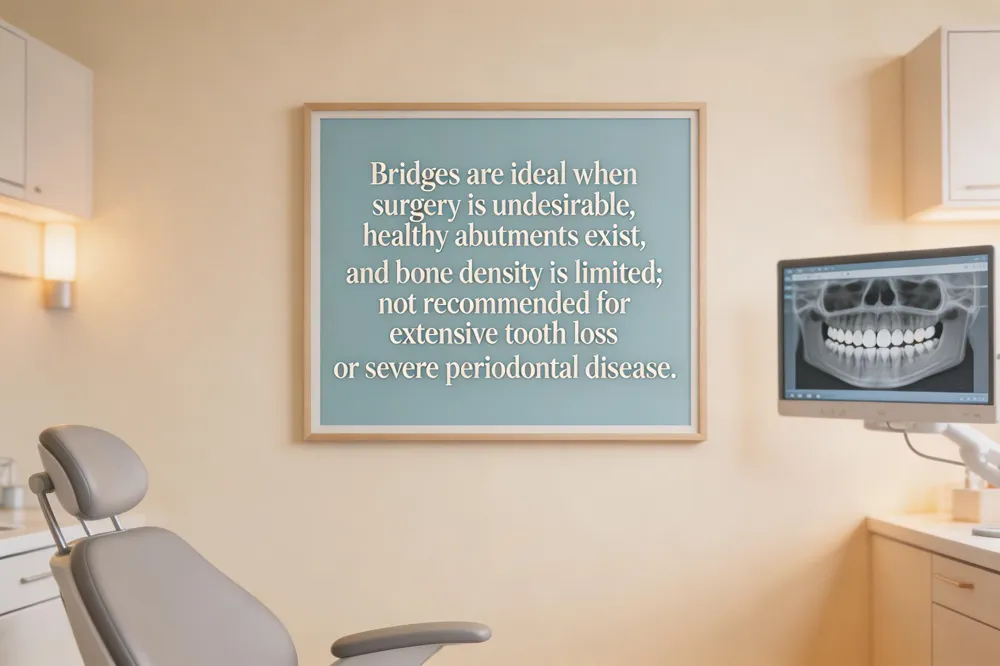
Clinical Indications, Patient Factors, and Treatment Planning
Maintenance, Common Problems, and Care Guidelines
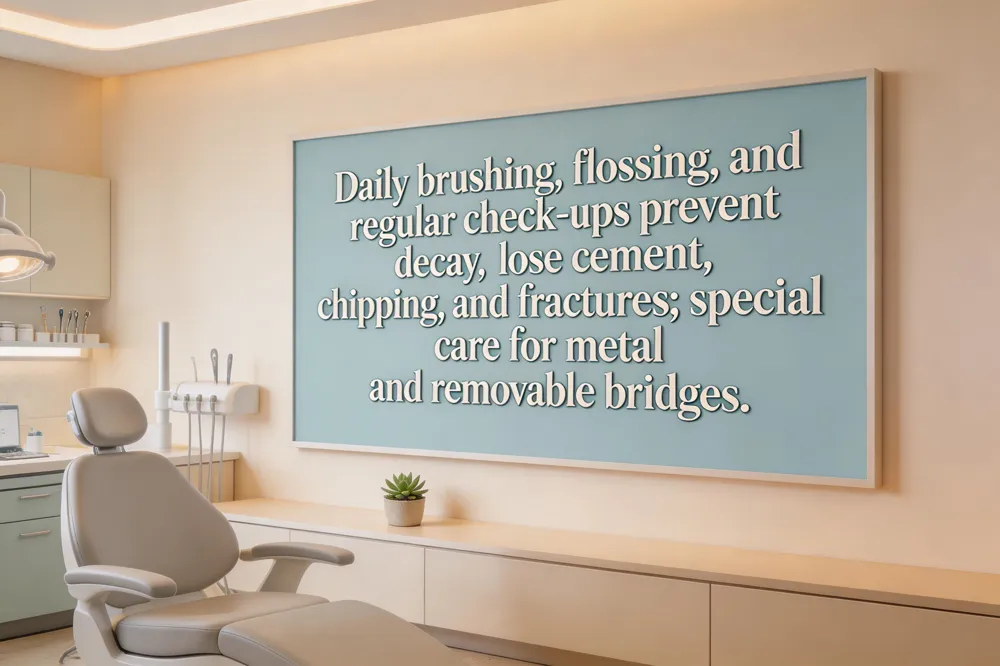 Keeping your dental bridge healthy starts with diligent daily oral hygiene. Brush twice a day with a soft‑bristled toothbrush, paying special attention to the gum line and the underside of the pontic. Floss using a threader or an interdental brush to remove food debris that can trap plaque and cause decay beneath the crowns.
Common bridge problems include a loose bridge from weakened cement, decay under the supporting crowns, gum irritation, and porcelain chipping or zirconia fractures under heavy bite forces. If you notice persistent sensitivity, pain while chewing, or a change in bite, schedule a check‑up promptly—early adjustments can prevent more extensive damage.
Special considerations for Metal bridges: they are generally MRI‑safe, but always inform your radiologist and dentist before the scan. Metal frameworks may cause a gray gum‑line if gum recession occurs, so regular periodontal care is essential.
A removable bridge (partial denture) offers an alternative for patients seeking a non‑permanent solution; it can be taken out for cleaning but may require an adjustment period for speech and comfort.
A porcelain bridge provides natural translucency and a fixed, durable restoration; with proper care it can last many years while preserving bite function and facial aesthetics.
Conclusion
Choosing the right bridge material begins with understanding each option’s strengths. Porcelain offers unmatched translucency for front‑tooth aesthetics but can chip under heavy loads. Zirconia provides superior fracture resistance and durability, making it ideal for posterior restorations and patients with metal sensitivities. Metal‑ceramic (PFM) bridges blend metal strength with porcelain appearance, while full‑metal bridges deliver the longest lifespan for high‑stress areas. At Veenstra Family Dental in Midland Park, NJ, we evaluate bite force, gum health, allergy history and budget to recommend the material that fits your lifestyle. Our practice utilizes CAD/CAM digital design, same‑day milling and gentle, friendly care, ensuring every bridge is precisely fabricated and comfortably placed for lasting confidence. We also provide thorough after‑care instructions and regular follow‑up visits to monitor long‑term success.