Introduction
A recent patient testimonial highlights how a cracked tooth was transformed into a natural‑looking smile at Veenstra Family Dental. Restorative dentistry that mimics the color, shape and translucency of real teeth is essential for both confidence and oral health. At Veenstra Family Dental in Midland Park, NJ, the team blends cutting‑edge digital imaging, CAD/CAM milling and compassionate care to deliver personalized, durable crowns and other restorations for patients of every age.
From Crack to Confidence: The Patient Journey
Timeline & Recommended Action
| Time Since Crack | Risks | Recommended Treatment |
|---|---|---|
| 0‑3 days | Minimal bacterial infiltration | Prompt evaluation; bonding or temporary seal if needed |
| 4‑14 days | Increasing risk of pulp inflammation | Diagnostic imaging; consider crown, bonding, or root canal |
| 15‑28 days | Sharp rise in infection risk, possible swelling | Immediate definitive treatment (crown, root canal) to prevent abscess |
| >28 days | High likelihood of abscess, bone loss, possible extraction | Urgent care; may require extraction or advanced restorative work |
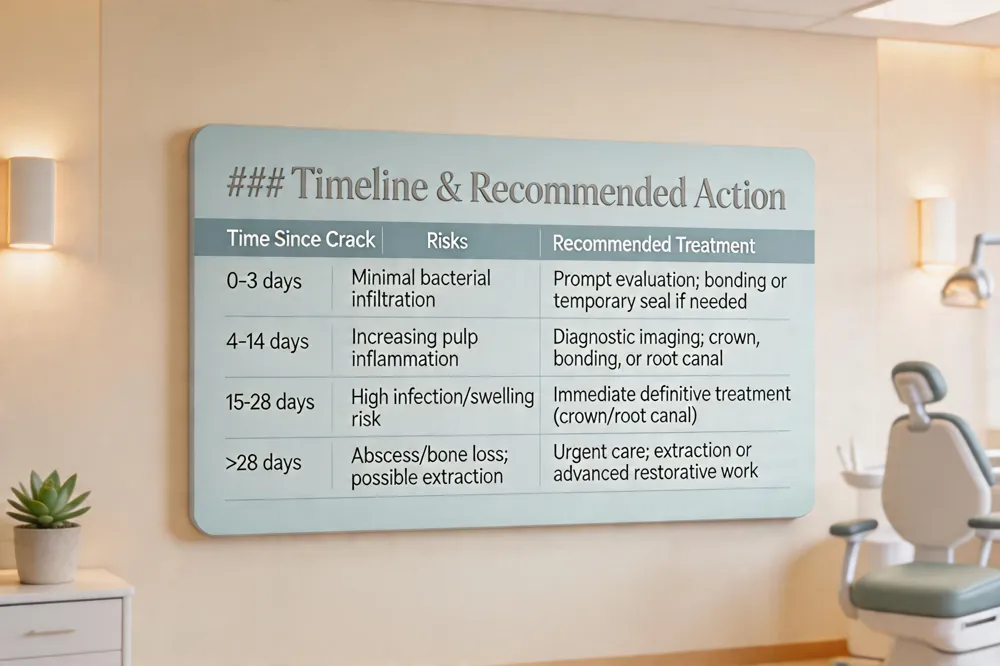 A cracked tooth is a dental emergency that should be evaluated within a few days and never later than one to two weeks. During that window the crack can deepen, allowing bacteria to infiltrate the pulp. After two weeks the infection risk rises sharply, and by three to four weeks the tooth may become swollen, develop an abscess, or require extraction. Prompt treatment—whether bonding, a custom‑fabricated crown, a root canal, or a crown—preserves the tooth and prevents painful complications.
Delayed care compounds the problem: the longer a crack stays untreated, the greater the chance of pulp inflammation, bone loss, and the need for more invasive procedures such as implants. Patients who wait a month or more often face an infection that can threaten surrounding teeth and facial structure.
At Veenstra Family Dental in Midland Park, NJ, we use intra‑oral scanners and CAD/CAM technology to design and mill a precise, natural‑looking crown in a single visit. This same‑day solution restores strength, aesthetics, and function while eliminating the inconvenience of multiple appointments. Our digital imaging ensures an accurate diagnosis, and the custom‑fabricated crown blends seamlessly with the surrounding dentition, turning a cracked tooth into a confident, natural smile.
FAQ How long can you leave a cracked tooth untreated? A cracked tooth should be evaluated by a dentist within a few days, and certainly no longer than one to two weeks. After two weeks the risk of infection rises sharply, and by three to four weeks the tooth may become infected, swollen, and more difficult to save. Waiting a month or more can lead to an abscess, bone loss, or the need for extraction. Prompt treatment—often a bonding, crown, or a root canal—helps preserve the tooth and prevents complications. What is the 80/20 rule in dentistry? The 80/20 rule, or Pareto principle, in dentistry means that roughly 20 % of a practice’s patients or services generate about 80 % of its revenue. These high‑value cases—often restorative, cosmetic, or implant work—drive the bulk of profitability. By focusing on nurturing those relationships, improving case acceptance, and offering the services patients actively seek, a practice can maximize earnings without simply adding more appointments. At the same time, protecting hygiene recall and retention for the remaining 80 % of patients ensures a steady flow of income and future growth. In short, concentrating on the small segment that yields most of the revenue while maintaining solid care for the rest creates sustainable, profitable practice expansion.
The Science Behind Natural‑Look Crowns
Materials & Their Aesthetic Features
| Material | Translucency | Strength (MPa) | Typical Use |
|---|---|---|---|
| Porcelain | High | 70‑90 | Anterior crowns, veneers |
| Lithium‑disilicate | Very high | 360‑400 | Full‑coverage crowns, onlays |
| High‑strength Zirconia | Moderate | 900‑1200 | Posterior crowns, implant-supported restorations |
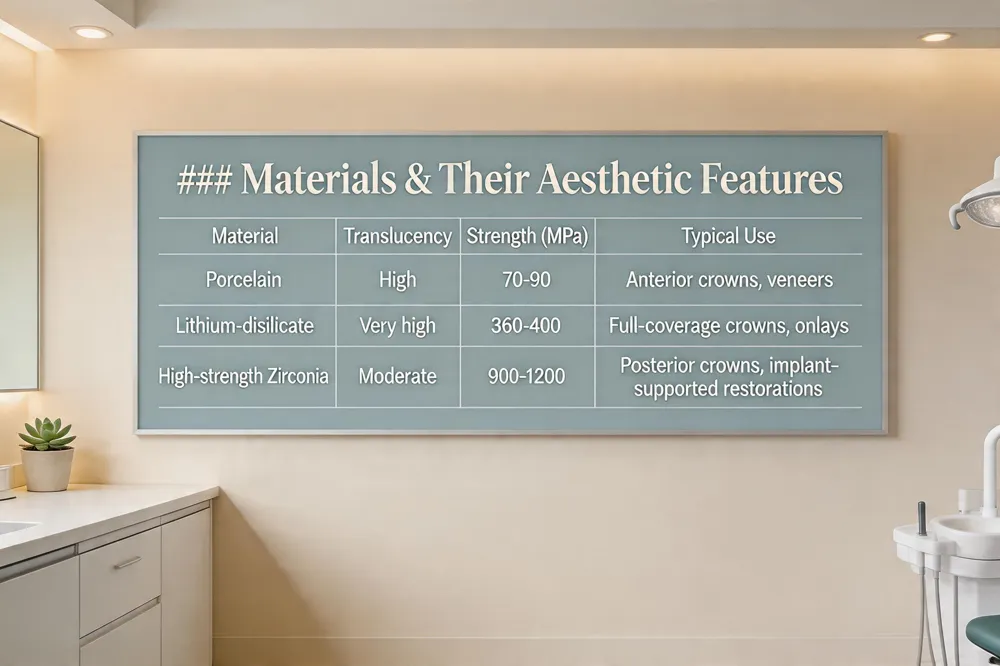 Modern crowns achieve a lifelike appearance by using materials that replicate the translucency of natural enamel. Porcelain, lithium‑disilicate, and high‑strength zirconia can be layered and stained to match the color, shimmer, and texture of surrounding teeth, giving a seamless smile.
Digital design and computer‑aided manufacturing (CAD/CAM) have revolutionized crown fabrication. Intra‑oral scanners capture a precise 3‑D model of the prepared tooth, and software designs a crown that fits exactly, reducing the need for multiple appointments. The crown is milled in‑office or sent to a lab, then glazed and shaded to blend with the patient’s dentition.
Dentists today face several challenges: balancing insurance and reimbursement constraints, managing staffing shortages, and covering rising overhead while integrating new technologies like AI‑driven imaging and CAD/CAM workflows. Meeting patient expectations for convenience, transparency, and high‑quality aesthetic results adds further pressure.
What is the 3‑3‑3 rule in dentistry? The 3‑3‑3 rule is a short‑term pain‑management guideline: take three 200 mg tablets of ibuprofen every three hours, for up to three days, to reduce inflammation and dental discomfort.
What do dentists struggle with the most? Dentists most often grapple with insurance and reimbursement pressures, staffing shortages, rising overhead costs, integrating new digital tools, and meeting growing patient expectations while maintaining productivity.
Statistics on Tooth Retention and Aging
Tooth Retention Statistics (U.S.)
| Age Group | % with Full Complement (28‑32 teeth) | Avg. Teeth Retained |
|---|---|---|
| 70‑79 | 8‑10% | 20‑22 |
| 80+ | <5% | 18‑20 |
Key Factors Influencing Retention: high biting forces, weakened enamel, bruxism, inadequate preventive care.
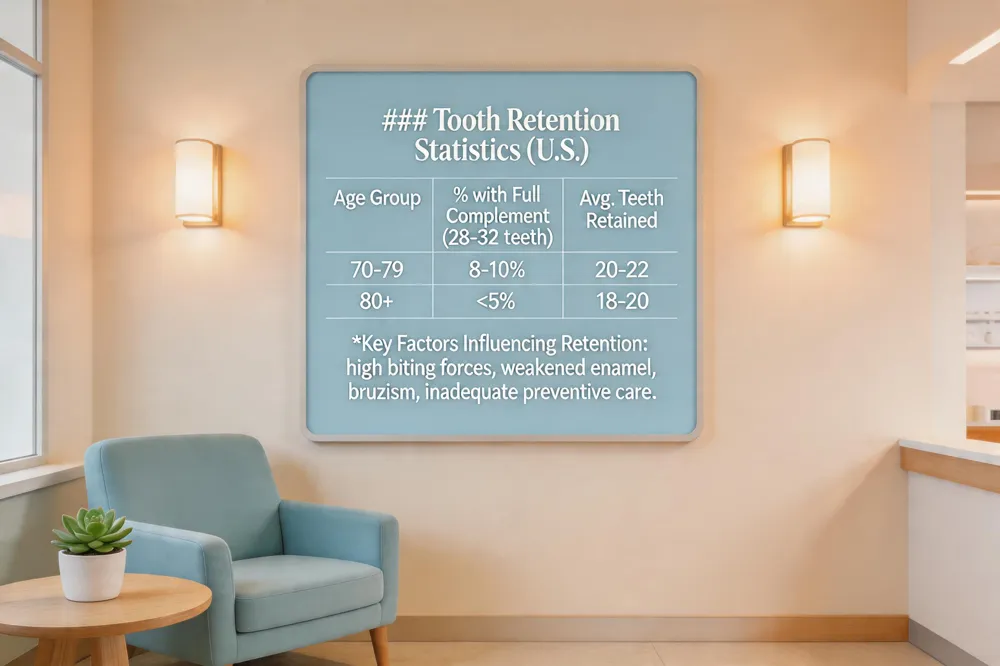 Only a small minority of 70‑year‑olds keep a full complement of natural teeth. National surveys show that fewer than one in ten—about 8 % to 10 %—still have all 28–32 teeth after wisdom‑tooth extractions. Most seniors retain roughly 20–22 teeth, with the remainder lost to decay, gum disease, or trauma. Routine preventive care, regular check‑ups, and modern restorative options such as same‑day crowns, composite bonding, or porcelain veneers dramatically improve long‑term tooth survival. Risk factors that lead to cracked teeth in older adults include high biting forces, weakened enamel from large or aging fillings, bruxism, and age‑related wear. With personalized, professional dental services that employ digital imaging, CAD/CAM crowns, and gentle, family‑focused care, patients can protect their smiles, reduce the likelihood of cracks, and increase the odds of maintaining a natural‑look restoration well into their senior years.
Managing Pain and TMJ Concerns
Post‑Restoration Pain Management
| Medication | Dose | Frequency | Duration |
|---|---|---|---|
| Ibuprofen | 200 mg | Every 3 h | Up to 3 days (max 3 doses/day) |
| Acetaminophen | 500 mg | Every 6 h | As needed |
| Muscle Relaxant (e.g., cyclobenzaprine) | 5 mg | Once daily | 3‑5 days if TMJ spasm |
Adjunctive Measures: soft diet 24‑48 h, ice packs 15 min on/off, nightguard for bruxism, gentle oral hygiene.
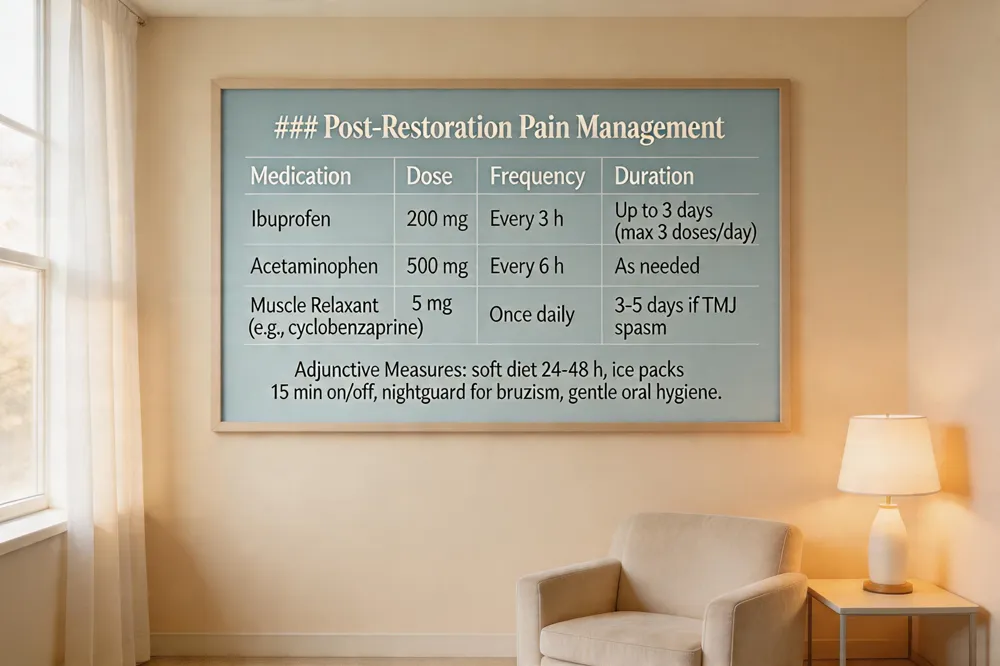 A cracked tooth can disrupt your bite, causing you to clench or grind unintentionally. This extra pressure often transfers to the temporomandibular joint (TMJ), leading to soreness, clicking, or limited opening. Can a cracked tooth cause TMJ? Yes—pain and altered bite from a cracked tooth may trigger clenching or grinding, which increases stress on the jaw joint and can exacerbate TMJ symptoms.
Pain‑relief protocols after restoration: Most dentists prescribe a short course of ibuprofen (or another NSAID) to reduce inflammation, following the 3‑3‑3 rule (every 3 hours, for 3 days, at a maximum of 3 doses per day). A soft diet for the first 24‑48 hours, ice packs, and a nightguard for bruxism further protect the tooth while the crown or bonding sets.
Post‑treatment habits to protect the new restoration: Brush twice daily with a soft‑bristle brush, floss gently, avoid chewing hard foods on the restored tooth, and schedule regular check‑ups. Using digital scans and CAD/CAM‑fabricated crowns ensures a precise fit, minimizing future stress on both the tooth and the TMJ.
Choosing Veenstra Family Dental for Restorative Success
Veenstra Family Dental Advantages
| Feature | Benefit |
|---|---|
| Intra‑oral scanner | Precise 3‑D data, no messy impressions |
| CAD/CAM same‑day crowns | Restores function & aesthetics in one visit |
| Digital smile design | Customized shade & shape matching |
| Family‑focused care | Comfortable environment for all ages |
| Advanced imaging | Early detection of cracks and pathology |
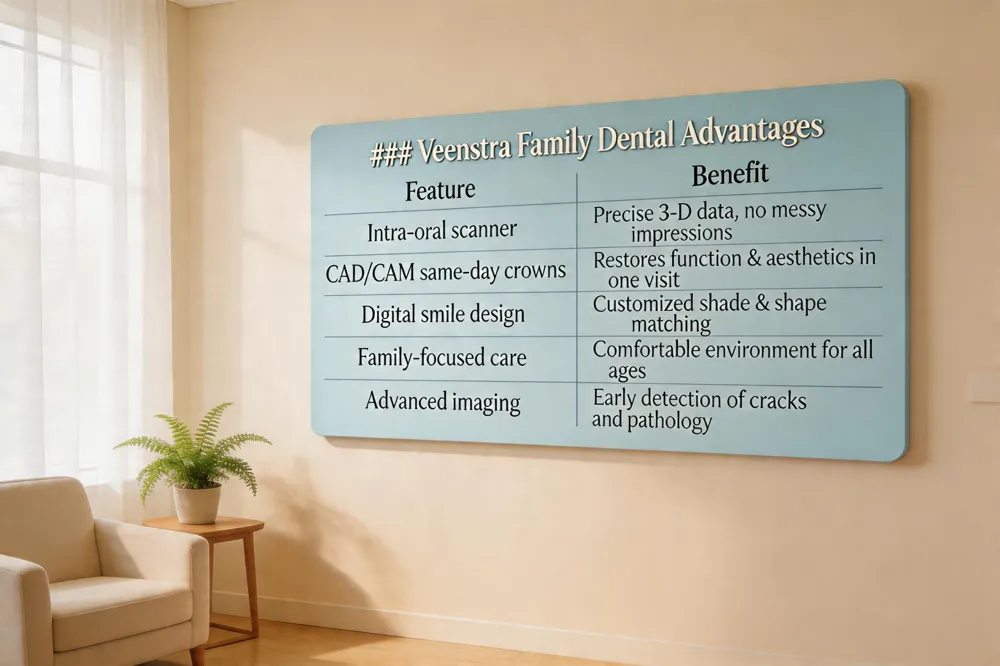 Veenstra Family Dental in Midland Park, NJ, blends family‑focused, compassionate care with cutting‑edge technology to deliver restorative results that look and feel natural. Using intra‑oral scanners, 3‑D printing, and digital smile design, the team creates precise, custom‑fabricated crowns, veneers or and bonding restorations that match the exact shade, translucency and shape of each patient’s teeth. This state‑of‑the‑art approach reduces appointments, eliminates uncomfortable impressions, and ensures a seamless, undetectable finish. Patient testimonials repeatedly highlight how cracked teeth are transformed into natural‑look smiles—people report renewed confidence, pain relief, and a restoration that blends flawlessly with their surrounding teeth. Whether you need a single crown after a chip or a full‑arch makeover, Veenstra’s experienced dentists personalize every treatment, making every visit comfortable, friendly, and results‑driven for patients of all ages.
Conclusion
Restoring a cracked or damaged tooth quickly with a custom‑crafted crown or bonding not only protects the remaining structure but also gives a seamless, natural‑looking smile that boosts confidence. Modern digital imaging, CAD/CAM milling, and high‑quality porcelain or composite materials ensure a precise fit and lifelike appearance, while our compassionate team guides you through every step. At Veenstra Family Dental in Midland Park, NJ, we combine advanced technology with a welcoming, family‑focused atmosphere to deliver durable, aesthetic results for patients of all ages. Call today to schedule your personalized consultation and experience the difference of caring, state‑of‑the‑art dental care for you.